





















Venezuela Shocks World as Political Prisoners Begin Walking Free
Venezuela releases political prisoners in a rare gesture after US pressure. Human rights groups react cautiously as political repression remains widespread.


The Venezuelan government has begun releasing prisoners whom human rights groups consider political prisoners, a move authorities described as a gesture of goodwill.
Spain's Foreign Ministry said that five of its citizens, including one dual national, had been released. Among them was human rights activist Rocío San Miguel.
The move comes after the US reportedly attempted to arrest Venezuelan President Nicolás Maduro in a surprise raid in the capital, Caracas, on Saturday, with the intention of bringing him to New York to face drug trafficking charges.
The release of political prisoners in Venezuela has been a long-standing demand of the US, particularly during periods of increased repression surrounding elections or protests.
Jorge Rodríguez, head of Venezuela's National Assembly and brother of interim President Delcy Rodríguez, announced on state television that a "significant number" of people would be released immediately, but he did not specify the number or identities of the prisoners being freed.
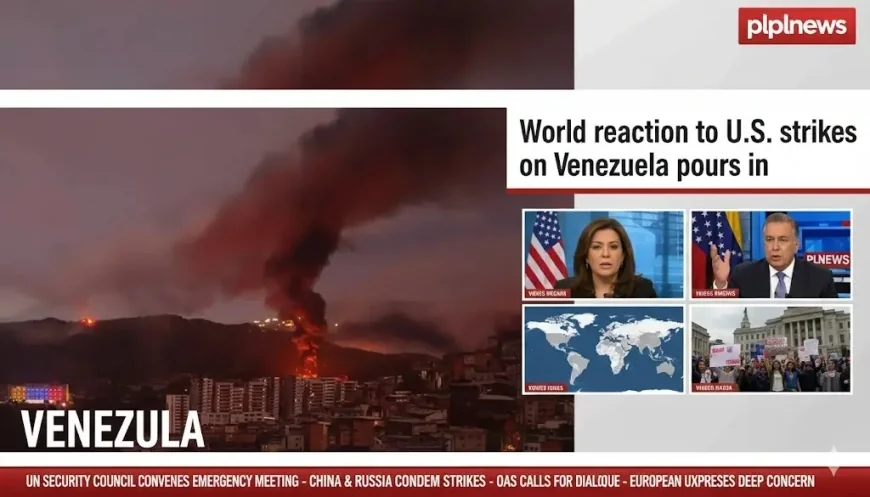
Hundreds of political prisoners remain incarcerated in Venezuelan prisons, with only a few having been released so far.
Jorge Rodríguez said the interim government was releasing them in the interest of "national unity and peaceful coexistence."
Ms. San Miguel, an expert on security, defense, and the Venezuelan military, was the first prisoner whose release was confirmed. She was arrested in February 2024 at Maiquetía Airport near Caracas.
At the time, Ms. San Miguel, a vocal critic of Maduro, was accused of involvement in a plot to assassinate the then-president and was charged with treason, conspiracy, and terrorism.
Venezuelan human rights organizations—some of whose members or founders are themselves imprisoned—greeted the news with cautious optimism. Despite being a key lieutenant of Maduro, Delcy Rodríguez's interim administration appears willing to cooperate with the United States since it arrested its leader and made sweeping pronouncements about the future of the South American nation.
Between 50 and 80 prisoners are believed to be held at the notorious El Helicoide prison, which U.S. President Donald Trump announced would be closed following Maduro's arrest.
Software Services
 |
All-in-one casino solution ready to launch — talk to our experts now |
The prison has gained international notoriety for allegedly holding political opponents, with human rights groups reporting torture, including beatings and electric shocks.
The Venezuelan human rights group Provea warned that the potential closure of El Helicoide should not distract from other detention centers operating throughout the country. Opposition leader and Nobel Peace Prize laureate María Corina Machado, several of whose close associates are imprisoned there, has repeatedly demanded their release.
Venezuelan opposition and human rights groups have long maintained that the government has used arrests to suppress dissent and silence critics.
Since the disputed 2024 election, the opposition has claimed that legal actions against activists, journalists, and political opponents have increased.
Attorney General Tarek Saab and others in the government have repeatedly denied that there are political prisoners in Venezuela, arguing that those arrested were detained for genuine crimes.
Thank you for reading this content.
What's Your Reaction?
 Like
0
Like
0
 Dislike
0
Dislike
0
 Love
0
Love
0
 Funny
0
Funny
0
 Angry
0
Angry
0
 Sad
0
Sad
0
 Wow
0
Wow
0