


















15% Tariff Bombshell: Trump Escalates Trade Policy
Trump unveils a 15% global tariff after a Supreme Court setback, using Section 122 of the Trade Act to reshape US trade policy and spark global tension.

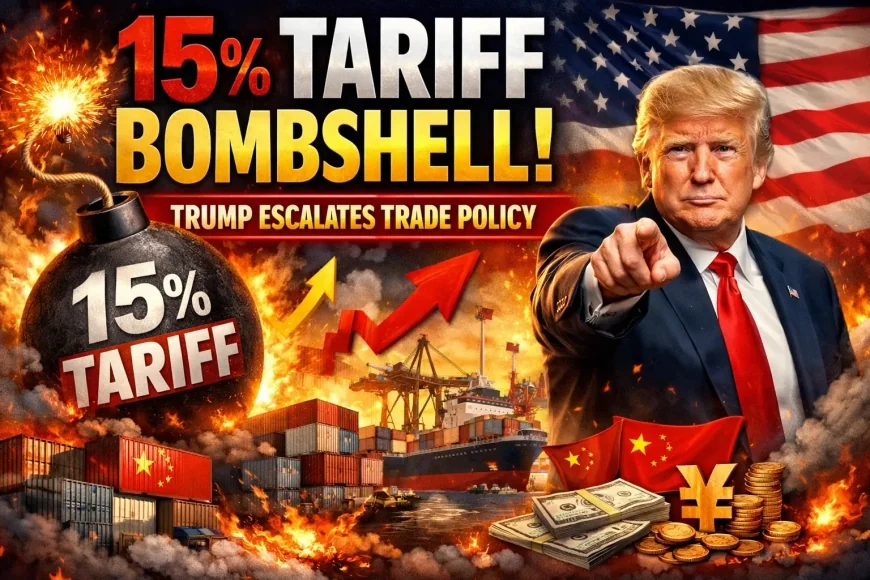
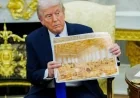
US President Donald Trump has said he will impose a 15% global tariff, as he protests the Supreme Court's decision that struck down his previous import tax.
Trump said on Friday that he would replace the tariffs struck down by the court with a 10% levy on all goods entering the US.
But on Saturday, he announced on Truth Social that the tariffs would be extended to the maximum under a trade law that has never been used.
This law allows these new tariffs to remain in effect for approximately five months, after which the administration must seek approval from Congress.
The 10% tariffs were scheduled to take effect on Tuesday, February 24. It is unclear whether the increased 15% tariffs will also be imposed after that.
The new 15% tax rate—a temporary solution under Section 122 of the 1974 Trade Act—raises questions for countries like the UK and Australia, which had agreed to a 10% tariff deal with the US. Trump said his administration decided to increase the levy after reviewing the Supreme Court's "absurd, poorly written, and deeply anti-American decision on tariffs issued yesterday."
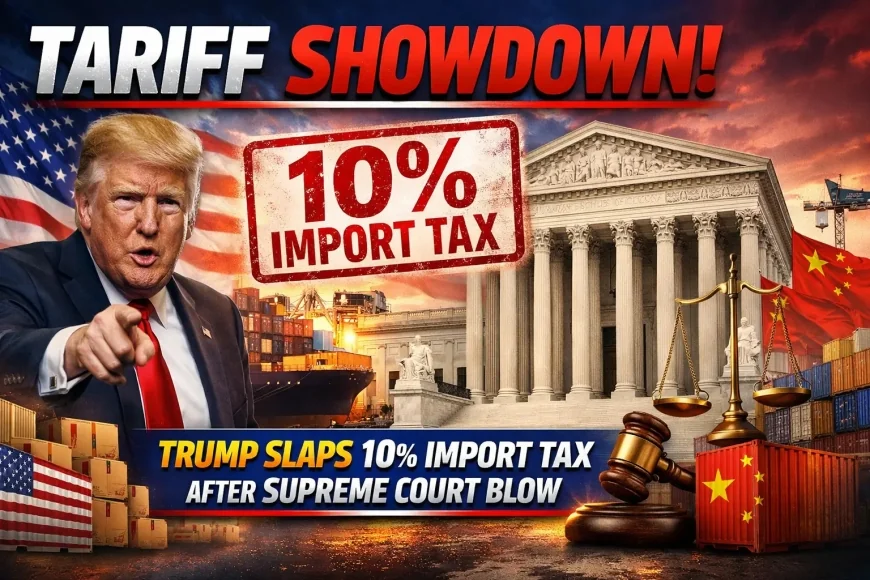
In a 6-3 decision, judges on America's highest court found that the president had abused his powers last year by imposing massive global tariffs using the 1977 International Emergency Economic Powers Act (IEEPA).
According to the most recent government data, the US has already collected at least $130 billion in tariffs using the IEEPA.
Immediately after the decision, Trump said he was "ashamed of some of the court's members" and called the judges who rejected his trade policy "fools."
The decision to lift the tariffs was made by the court's three liberal justices: Chief Justice John Roberts, a conservative nominated by George W. Bush, and two Trump-nominated justices: Amy Coney Barrett and Neil Gorsuch. Three conservative justices, Clarence Thomas, Brett Kavanaugh, and Samuel Alito, dissented.
Trump's tariffs are a key part of his economic policy, which he has said will encourage businesses to invest and manufacture goods in the US rather than abroad. But the High Court's decision significantly curbs his power and deals a major blow to his second-term agenda.
The US president has argued that his tariffs are necessary to reduce the trade deficit—the amount by which imports exceed exports—but the US trade deficit reached a new high this week, increasing 2.1% compared to 2024 and reaching nearly $1.2 trillion (£890bn).
Drew Greenblatt, owner of Marlin Steel Wire Products, a steel fabrication plant in Baltimore, said he was "very disappointed" by the Supreme Court's decision.
Software Services
 |
Launch your own casino platform today — get started now |
"This is a blow to poor people in America who had a chance to move into the middle class with good manufacturing jobs". But John Boyd, a Virginia soybean farmer and founder of the National Black Farmers Association, said: "This is a huge victory for me and a huge defeat for the president.
"I don't care how you look at it, President Trump lost on this."
Nevertheless, Eli Rennison, a former UK government trade adviser and director at SEC Newgate, said: "While this may seem like a good day for free trade, I think trade has actually gotten much messier."
He said businesses are now facing a "much more patchwork approach" to tariffs under the Trump administration.
This means US businesses will have to pay a 15% tariff on most goods imported into the US under Section 122 of the Trade Act of 1974.
But some products will be exempt, such as essential minerals, metals, and pharmaceuticals.
Read Also
Meanwhile, separate tariffs on steel, aluminum, lumber, and automotive goods—which were imposed using a separate US law—remain in place. The decision will remain, which is not affected by the Supreme Court's decision.
On Friday, a White House official said that countries that previously had trade deals with the US, including the UK, would face global tariffs under Section 122, not the tariff rate they had previously negotiated.
However, the UK's deals in the steel, aluminum, pharmaceuticals, auto, and aerospace sectors—which represent the majority of its trade with the US—were not affected.
The UK government said it expects Britain's "special trading position" with the US to remain and that it would be "up to the US to decide" whether those deals remain.
William Benn, head of trade policy at the British Chambers of Commerce, said he fears the president's reaction to the Supreme Court's decision "could be worse for British businesses."
The leader of a UK business group said the new 15% import tariffs are "bad for trade, bad for US consumers and businesses." are" and "will undermine global economic growth".
Speaking before Trump announced the new 15% levy rate, French President Emmanuel Macron said France would adopt it, adding that "the best rules involve mutual coordination, not unilateral decisions."
Similarly, German Chancellor Friedrich Merz warned of the "poison" of increased uncertainty surrounding tariffs.
Merz said he would work with other EU countries on a joint position before his upcoming visit to the US.
Merz said, "The biggest poison for the European and US economies is the constant uncertainty surrounding tariffs. And this uncertainty must end."
The Supreme Court's decision also opened the way for consumers and businesses to seek refunds from illegal tariffs, although the High Court has not ruled on whether reimbursements should be issued.
On Friday, Trump hinted that refunds would not be received without a legal battle, which, he claimed, could take years. Companies and trade groups have already vowed to seek such reimbursements.
But Neil Bradley, Chief Policy Officer of the US Chamber of Commerce, said: "A swift refund of illegal tariffs would benefit this country's more than 200,000 small business importers and contribute to strong economic growth this year."
While the National Retail Federation, which represents millions of American businesses, urged the court to "ensure a smooth process for US importers to receive tariff refunds."
It added: "Refunds would provide an economic boost and allow companies to reinvest in their operations, their employees, and their customers."
US Senator Maria Cantwell, a Democrat representing Washington State, has written a letter to US Treasury Secretary Scott Bessant, asking if the administration has a plan to refund businesses.
"Given that this administration has illegally collected hundreds of billions of dollars from American businesses, which must now be refunded, I am requesting detailed information about how the administration plans to properly and expeditiously refund those who paid these tariffs," she wrote to Bessant. However, Republican Senator John Kennedy of Louisiana said that if Democrats insist on refunds, it could backfire and help Republicans in the next election cycle.
He said it could be a benefit to the US business community, boosting the economy ahead of the midterm elections in November.
Thank you for reading this content.
Thank you for reading this content.
What's Your Reaction?
 Like
0
Like
0
 Dislike
0
Dislike
0
 Love
0
Love
0
 Funny
0
Funny
0
 Angry
0
Angry
0
 Sad
0
Sad
0
 Wow
0
Wow
0