































NY Fed Says US Consumers Bore Cost of Trump Tariffs
New research shows 90% of Trump’s tariff increases were passed to US consumers, pushing household costs up to $1,300 amid rising import prices.

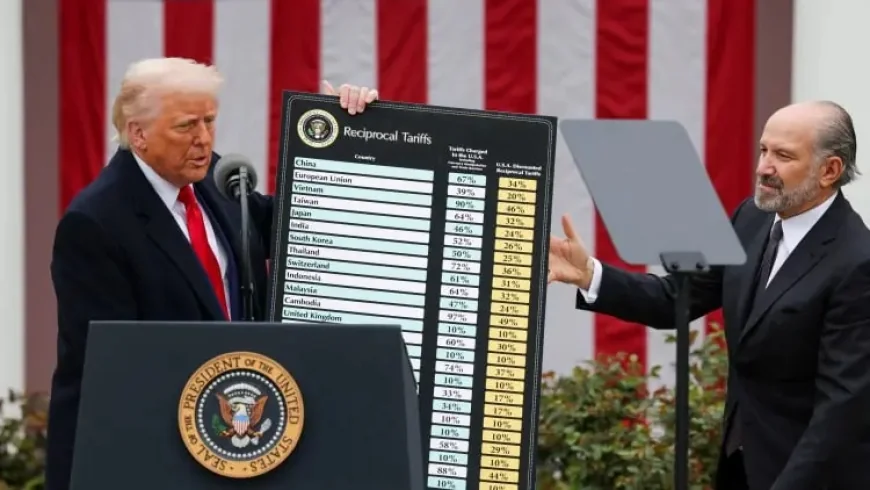
As President Donald Trump changed tariff agreements with numerous countries, one thing remained constant: goods became more expensive for US companies and consumers.
In research released Thursday by the Federal Reserve Bank of New York, a group of analysts and economists found that in 2025, the average tariff rate on imported goods increased from just 2.6% at the beginning of the year to 13%.
The New York Fed found that companies bore 90% of the cost of the tariff increases Trump imposed on goods from Mexico, China, Canada, and the European Union, and these were often passed on to buyers.
"US firms and consumers will continue to bear a large share of the economic burden of the higher tariffs imposed in 2025."
Despite the changes and increases in tariff rates last year, exporting countries did not reduce the cost of goods in an attempt to prevent any decline in US demand. Instead, exporters kept their prices the same, passing the cost of the tariffs onto any companies importing their goods, which in turn responded by raising the price of those goods for buyers.
The reaction of exporters in 2025 was roughly similar to that in 2018, when Trump imposed some tariffs during his first term – the New York Fed said at the time that the cost of goods for consumers increased, and no other economic impact was recorded.
Thursday's findings are consistent with research from another recent analysis.
The Kiel Institute for the World Economy, an independent German research firm, said in a report last month that it found "almost all of the impact of the tariffs on US import prices."
The Kiel researchers analyzed 25 million transactions and found that in exporting countries like Brazil and India, the price of goods from those countries did not decline.
"Instead, trade volumes fell," the Kiel report said, meaning exporters chose to reduce the amount of goods shipped to the US rather than lower prices. The National Bureau of Economic Research also found that the pass-through of tariffs was "nearly 100%," meaning the US, not the exporting country, is paying for the price increases.
Software Services
 |
Turn your casino idea into a live platform — start your journey today |
Similarly, the Tax Foundation, a Washington, DC-based think tank focused on US tax policy, found that increased tariffs on goods increased spending for every US household in 2025.
The Tax Foundation, describing the tariffs as a new tax on consumers, said that the increase would cost the average household $1,000 (£734.30) in 2025. In 2026, the tariffs would cost the same household $1,300.
The Tax Foundation said the "effective" tariff rate, an average rate that takes into account people buying fewer goods in response to increased prices, is now 9.9%, making it "the highest average rate since 1946."
With such an impact on people, the Tax Foundation said any economic benefits of the tax cuts included in Trump's "Big Beautiful Bill" will be completely wiped out.
Thank you for reading this content.
Thank you for reading this content.
What's Your Reaction?
 Like
0
Like
0
 Dislike
0
Dislike
0
 Love
0
Love
0
 Funny
0
Funny
0
 Angry
0
Angry
0
 Sad
0
Sad
0
 Wow
0
Wow
0