































Meta & YouTube Guilty in Shocking Social Media Trial
Meta Platforms and YouTube lose a $6M case over social media addiction, raising concerns about teen safety online.

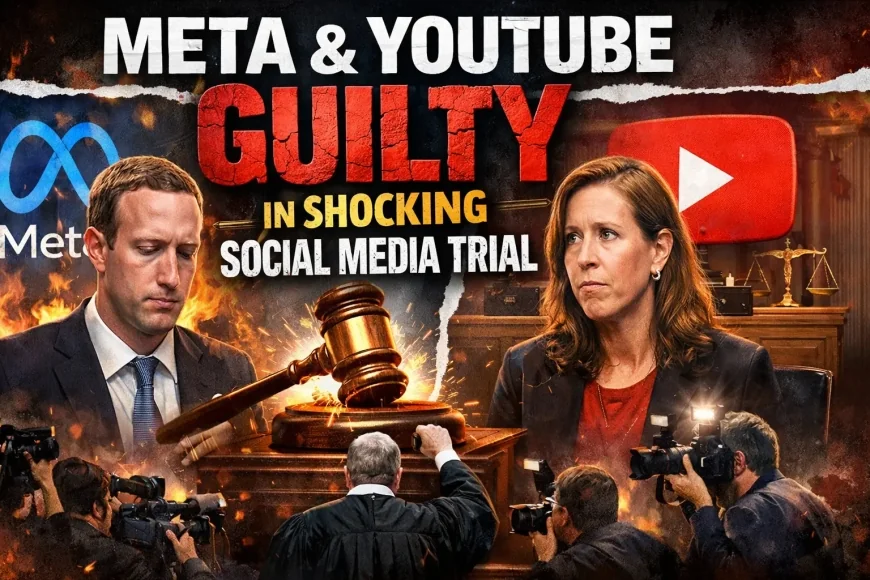
A Los Angeles jury has delivered a landmark verdict in favor of a young woman who sued Meta and YouTube over social media addiction.
The jurors found that Meta (which owns Instagram, Facebook, and WhatsApp) and Google (the owner of YouTube) intentionally designed social media platforms that were addictive, and which caused harm to the mental health of this 20-year-old woman.
The woman, identified as Kaley, has been awarded $6 million (£4.5 million) in damages. This verdict is expected to have an impact on hundreds of similar cases currently pending in U.S. courts.
Meta and Google issued separate statements asserting that they disagree with the verdict and that both companies intend to appeal it. Meta stated: "Teen mental health is a complex issue that cannot be attributed to any single app.
"We will continue to defend ourselves vigorously, as every case is unique, and we remain confident in our record of keeping teens safe online."
Read Also

A Google spokesperson said: "This case mischaracterizes YouTube; "This is a responsibly built streaming platform, not a social media site."
The jury ruled that Kaley should receive $3 million in compensatory damages, plus an additional $3 million in punitive damages, having concluded that Meta and Google acted with "malice, oppression, or fraud" in the way they operated their platforms.
Meta is required to pay 70% of the compensation awarded to Kaley, while Google must pay the remaining 30%.
Parents of other children—who were not parties to Kaley's lawsuit but claim to have also suffered harm from social media—were present outside the courthouse on Wednesday; they had attended the proceedings on numerous days throughout the five-week trial.
When the verdict was announced, parents like Amy Neville were seen celebrating, embracing other parents and supporters who had been eagerly awaiting the decision.
This verdict in Los Angeles comes just one day after a jury in New Mexico issued a ruling holding Meta accountable for the ways in which its platforms endangered children's lives and exposed them to obscene content and sexual predators.
Mike Proulx, Research Director at Forrester, stated that these consecutive verdicts clearly demonstrate the "breaking point" of the tension emerging between social media companies and the general public.
Software Services
 |
Start your own gaming platform for just $3,000 |
In recent months, countries such as Australia have implemented various restrictions aimed at preventing or limiting social media usage among children. The UK is currently conducting a pilot program to assess the potential effectiveness of a complete ban on social media access for individuals under the age of 16.
Proulx ...stated, "Negative sentiments toward social media have been brewing among the public for several years, and the issue has now finally reached its boiling point."
While appearing before a jury in February, Meta Chairman and CEO Mark Zuckerberg cited his company's long-standing policy, which prohibits users under the age of 13 from accessing any of its platforms.
When confronted with the company's own internal research and documents—which clearly demonstrated that underage children were, in fact, using their platforms—Zuckerberg stated that it has "always been his desire" to accelerate efforts to identify users under the age of 13. He emphasized that his company is "moving in the right direction... over time" regarding this matter.
Although Google—the parent company of the video-sharing site YouTube—was also named as a defendant in this case, the majority of the legal proceedings focused on Instagram and Meta.
Initially, Snap and TikTok were also named as defendants; however, prior to the trial, both companies reached undisclosed settlements with Kaley.
Kaley's lawyers argued that Meta and YouTube have created "addiction machines" and have utterly failed to fulfill their responsibility to prevent children from accessing their platforms.
Kaley recounted that she began using Instagram at the age of nine and YouTube at the age of six, and that—due to her young age—no attempts were made to prevent her from accessing these platforms.
During her testimony, Kaley stated, "I stopped communicating with my family because I was spending all my time on social media."
Kaley revealed that she began experiencing symptoms of anxiety and depression when she was just 10 years old. These were psychological issues that were diagnosed by a therapist several years later.
Furthermore, she began to obsess over her physical appearance. As a child, almost immediately after she started using this platform, she began applying Instagram filters that altered her physical features—making her nose appear smaller and her eyes larger, for instance.
Lawyers for Kaley said Wednesday that the jury's verdict "sends an unmistakable message that no company is above accountability when it comes to our children."
Another case against Meta and other social media platforms over their alleged harms to children is poised to begin in June in California federal court.
Thank you for reading this content.
What's Your Reaction?
 Like
0
Like
0
 Dislike
0
Dislike
0
 Love
0
Love
0
 Funny
0
Funny
0
 Angry
0
Angry
0
 Sad
0
Sad
0
 Wow
0
Wow
0