


























US Strikes Iranian Boats as Iran Hits UAE Oil Facility — Major Escalation
US destroys 7 Iranian boats as tensions rise in the Strait of Hormuz, triggering a global oil crisis and escalating the US Iran conflict in 2026.

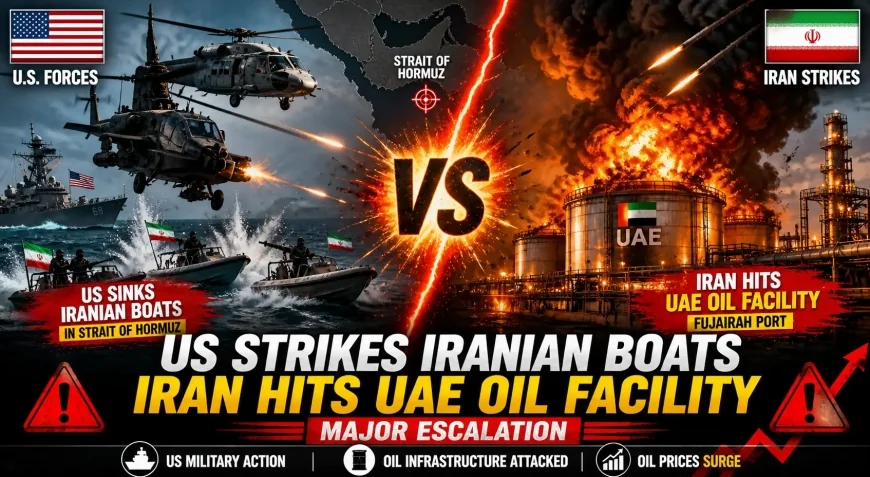
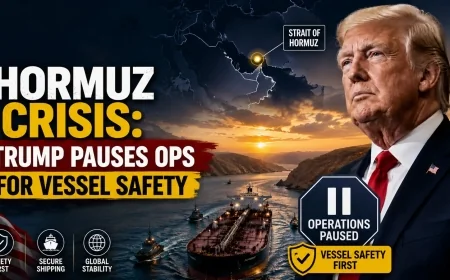
President Donald Trump states that the United States has struck seven Iranian "fast boats" in the Strait of Hormuz. Washington is attempting to extract vessels stranded in the Gulf through this waterway, which has remained largely closed.
On Monday, both the UAE and South Korea reported attacks on ships within this critical waterway. The UAE also reported that a fire broke out at the Fujairah oil terminal following an Iranian attack.
The shipping company Maersk reported that one of its U.S.-flagged vessels has safely exited the strait under the protection of the U.S. military—an operation President Trump has dubbed "Project Freedom."
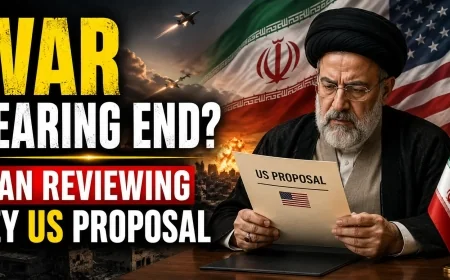
Iranian Foreign Minister Abbas Araqchi stated that the incidents occurring in this strait "make it clear that there is no military solution to any political crisis."
Maersk confirmed that the voyage of one of its commercial vessels was "completed without incident, and everyone on board is safe and sound."
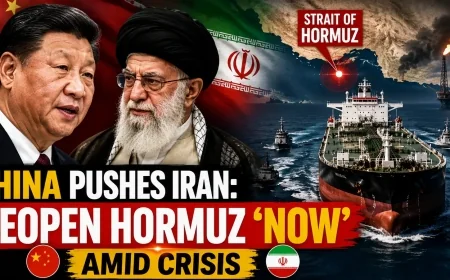
The Strait of Hormuz has remained largely closed since February, when the United States and Israel launched airstrikes against Iran. In retaliation, Iran blockaded this vital waterway—through which 20% of the world's oil and liquefied natural gas typically passes.
In early April, the U.S. and Iran announced a ceasefire, under which Iran halted its drone and missile attacks on Gulf nations, including the UAE; however, very few vessels have been able to transit the strait since that time. The United States, for its part, also imposed a blockade on Iranian ports. Trump stated: "We have taken out seven small boats—or, as they prefer to call them, 'fast' boats. That is all they have left now." The U.S. military reported that it had utilized helicopters to launch attacks on these vessels.
Subsequently, Iran's state media refuted Trump's claim that the U.S. had attacked those "fast boats." Citing a military source, the Tasnim News Agency reported that the actual targets of the attack were two small cargo vessels, resulting in the deaths of five civilians.
Earlier, the U.S. had reported that a naval destroyer and a U.S.-flagged merchant vessel had transited through the strait on Monday. Iran dismissed these claims as "completely false"; its military asserted that it had fired warning shots at a U.S. warship. The U.S. military denied this account. Later on Monday, the shipping company Maersk announced that its U.S.-flagged vessel, the *Alliance Fairfax*—which had been stranded in the Gulf since late February following a U.S.-Israeli strike on Iran—had successfully exited the Strait of Hormuz.
The company stated that the U.S. had contacted it and "offered the vessel the opportunity to exit the Gulf under U.S. military protection."
In a statement, the company further added: "Subsequently, the vessel departed the Persian Gulf in tandem with U.S. military forces."
Meanwhile, the UAE's Ministry of Foreign Affairs reported that a tanker affiliated with its state-owned oil company, ADNOC, had come under attack in the Strait of Hormuz. South Korea also reported that one of its vessels, anchored in close proximity to the UAE, had been struck by an explosion.
UAE officials also reported that air defense systems had successfully intercepted and shot down 12 ballistic missiles, three cruise missiles, and four drones. Local authorities confirmed that one of the attacks had sparked a major fire at the country's primary oil port, Fujairah, leaving three people injured. Abu Dhabi described these attacks as a "dangerous escalation" and stated that it reserves the right to respond. Citing an unnamed military official, Iran's state television reported that Iran "has no plans to target the UAE."
 |
Start your own gaming platform for just $3,000 |
French President Emmanuel Macron stated that these attacks were "unjustified and unacceptable." British Prime Minister Sir Keir Starmer said that the UK would "continue to cooperate in the defense of our partners in the Gulf."
Shortly after reports of the attack on Fujairah surfaced, the price of benchmark Brent crude oil surged past $115 per barrel—a gain of more than 5% for the day.
Fujairah is situated on the UAE's eastern coast, in the Gulf of Oman, just beyond the Strait of Hormuz. A pipeline runs from Abu Dhabi's oil fields to Fujairah, allowing limited quantities of crude oil to be loaded onto tankers and shipped to global markets, even in the event of an effective closure of the Strait.
Neighboring Qatar condemned the attack on the tanker linked to ADNOC and demanded the "unconditional reopening" of the Strait.
In Oman, state media reported on Monday that a residential building in Bukha—located on the coast of the Strait of Hormuz—was targeted, injuring two people. On Sunday, Trump announced that the U.S. would begin assisting in the extraction of vessels stranded in the shipping lanes under "Project Freedom." Since the outbreak of the U.S.
Thank you for reading this content.
What's Your Reaction?
 Like
0
Like
0
 Dislike
0
Dislike
0
 Love
0
Love
0
 Funny
0
Funny
0
 Angry
0
Angry
0
 Sad
0
Sad
0
 Wow
0
Wow
0