



























Peace Talks Restart? Iran Says US Responds to New Proposal
Iran’s 30-day peace plan sparks fresh diplomacy as US responds. Amid rising Middle East tensions, talks signal a possible shift toward ceasefire.

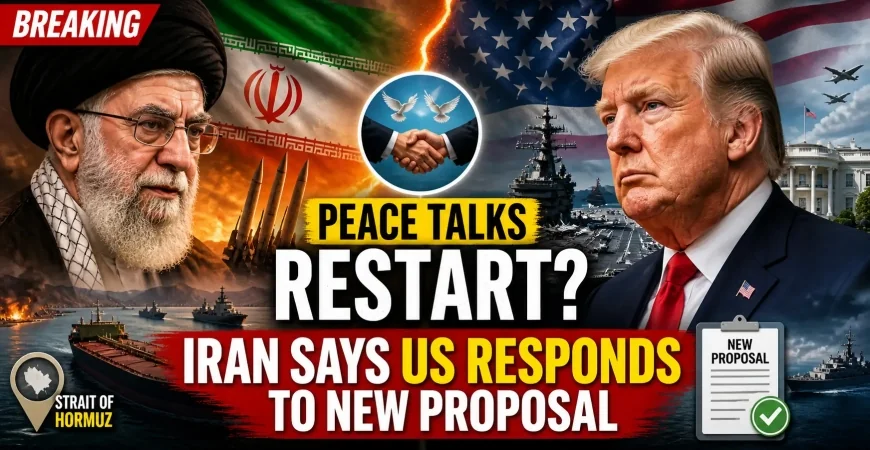
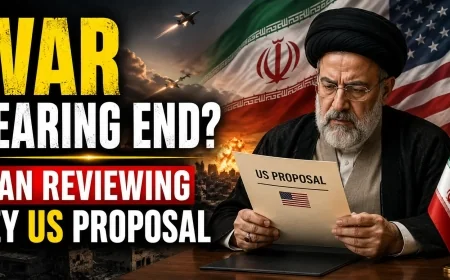
Iran's state media has reported that Iran has received the United States' response to its latest peace proposal.
Iran's state media stated that Tehran's 14-point peace plan calls upon Washington to withdraw its forces from near Iran's borders, lift the naval blockade of Iranian ports, and cease all hostilities—including Israel's offensive in Lebanon.
It also demands that an agreement be reached between the two nations within 30 days.
Iran's state media further added that the proposal urges both warring parties to focus on "ending the war" rather than merely extending the current ceasefire.
Citing Iranian Foreign Ministry spokesperson Ismail Baghai, state media reported, "At this stage, we are not conducting nuclear negotiations"—which had been a key demand of Washington.
Iran has repeatedly denied attempting to build a bomb, maintaining that its nuclear program is solely for peaceful purposes; however, it remains the only non-nuclear-weapon state to have enriched uranium to near-weapons-grade levels.
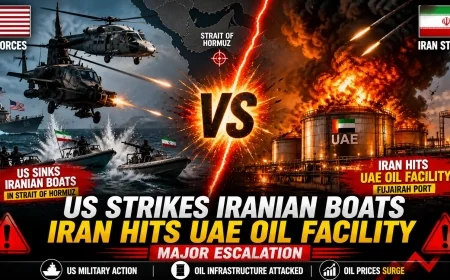
On Sunday, Trump announced that the United States would assist nations whose vessels are stranded in the Strait of Hormuz.
In a social media post, he stated, "For the well-being of Iran, the Middle East, and the United States, we have informed these nations that we will provide guidance to safely escort their vessels out of these restricted waterways, enabling them to continue their trade freely and efficiently"—though he did not specify which nations these were.
Trump noted that this process, which he has dubbed "Project Freedom," is set to commence on Monday; he further warned that should any obstruction arise, such interference would be "dealt with forcefully." Since the outbreak of the war in February, Iran has severely restricted traffic passing through this strait. The United States has also imposed a naval blockade on Iranian ports.
On Saturday, Trump confirmed that Washington had received Iran's latest peace proposal.
In a brief social media post, the U.S. President wrote: "I will soon review the plan Iran has just sent us, but I do not believe it will be acceptable, as they have not yet paid a sufficient price for everything they have done to humanity and the world over the past 47 years." Speaking to reporters in Palm Beach, Florida, on the same day, he stated that he had been briefed on the "concept of the deal," adding: "They are now going to provide me with the exact wording."
"If they act out. If they do something bad," he said. "But for now, we shall see."
The U.S. President did not appear to be in the mood to withdraw completely from the conflict; he stated, "We aren't going anywhere," and added, "We will handle this in such a way that no one has to come back two or five years from now."
Government agencies linked to Iran stated that Tehran's latest proposal was a response to the U.S. nine-point plan, which had proposed a two-month ceasefire.
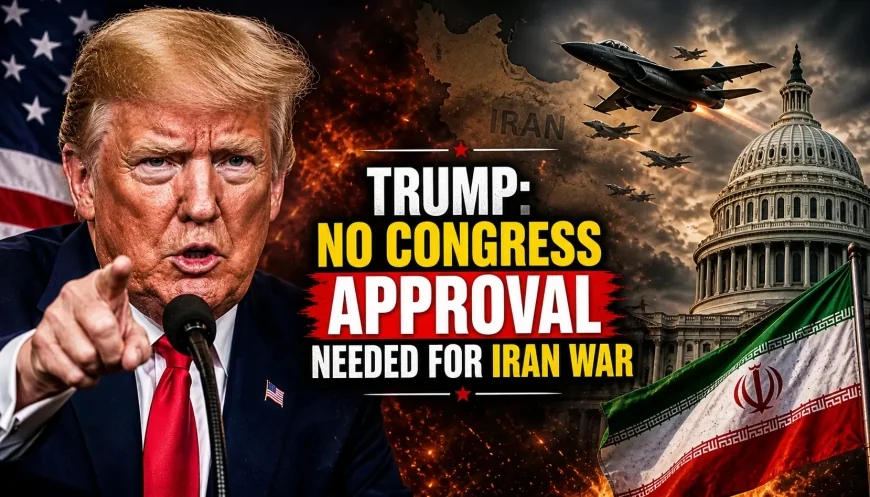
On Friday, Trump wrote to members of the U.S. Congress, arguing that he was not required to meet the legislative deadline for obtaining authorization for war, as the conflict had effectively "ended" following the implementation of a ceasefire on April 8—thereby nullifying any such obligation.
He asserted that the ongoing blockade of Iranian ports did not constitute an indication that the conflict was continuing.
 |
Turn your casino idea into a live platform — start your journey today |
Under the law, the U.S. President is required to obtain Congressional approval for any military action within 60 days of notifying lawmakers; failing to do so necessitates a halt to the military operation. Friday marked the completion of 60 days since Trump formally notified Congress on March 2 regarding attacks on Iran—two days after the strikes were launched by the U.S. and Israel.
During several public statements made on Friday, Trump reiterated his long-standing assertion that "Iran will never acquire a nuclear weapon."
Iran has repeatedly denied attempting to build a nuclear bomb, maintaining that its nuclear program is solely for peaceful purposes; however, it remains the only non-nuclear-weapon state in the world to have enriched uranium to near-weapons-grade levels.
These latest statements from Trump come at a time when U.S. lawmakers—including some members of his own Republican Party—are publicly expressing their growing frustration over the conflict; many view it as a costly and complex war with unclear objectives.
Republican Senator Josh Hawley of Missouri urged the Trump administration to begin withdrawing troops from the conflict zone, arguing that congressional authorization would be required to continue the war.
"I really don't want to do that," Hawley said. "I want to wind this down." Another Republican Senator, Lisa Murkowski of Alaska—a known critic of Trump—expressed skepticism regarding the success of the operation and the prospects of any potential negotiations.
Thank you for reading this content.
What's Your Reaction?
 Like
0
Like
0
 Dislike
0
Dislike
0
 Love
0
Love
0
 Funny
0
Funny
0
 Angry
0
Angry
0
 Sad
0
Sad
0
 Wow
0
Wow
0