

























Trump: No Congress Approval Needed for Iran War
Trump says a war powers deadline paused after Iran ceasefire, arguing Congress approval isn’t needed as tensions, sanctions, and talks continue.

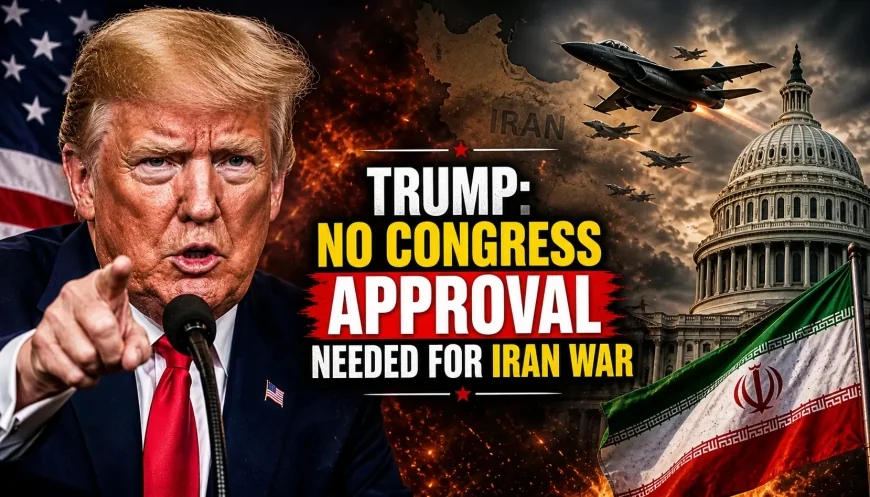
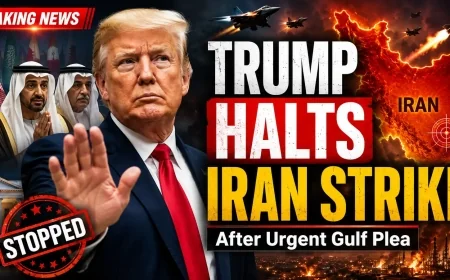
President Donald Trump has informed Congress that U.S. hostilities with Iran have "ceased" during the ongoing ceasefire. He argued that he is not required to meet the legal deadline for obtaining congressional authorization for war.
Under the law, the U.S. President is required to obtain congressional approval within 60 days of formally notifying lawmakers about any military action; otherwise, they must terminate the hostilities.
However, in a letter addressed to congressional leaders, Trump stated that he is not bound to comply with the War Powers Act, as the ceasefire established with Iran last month has effectively paused the timeline for any such legal obligation.
No long-term peace agreement has yet been reached between the U.S. and Iran through diplomatic negotiations, although Iranian media reported on Friday that Tehran has conveyed a new proposal via Pakistan.
On Friday—the 60th day since formally notifying Congress regarding attacks against Iran—Trump wrote to congressional leaders: "Since April 7, 2026, there have been no incidents of exchange of fire between U.S. forces and Iran."
"The hostilities that commenced on February 28, 2026, have now ceased."
According to Iran's state-run news agency, IRNA, a proposal regarding negotiations with the U.S. was submitted by Tehran to Pakistani intermediaries.
The news agency did not publish the specific details of this proposal, nor is it clear whether the proposal has actually reached the United States.
However, Trump told reporters: "We have just held discussions with Iran. Let's see what happens. But, I will say this: I am not pleased."
He added that reaching an agreement is proving difficult because the Iranian leadership is "highly confused" following the deaths of several of its top military commanders during the conflict. Trump stated that on Thursday, U.S. Central Command briefed him on several options, ranging from "launching a massive strike to wipe them out permanently" to "reaching a deal."
Later on Friday, Trump remarked: "They are not coming forward to make the kind of deal that we need."
"And we are going to finish this job properly. We won't walk away halfway through, only to have the same problem resurface three years later."
Meanwhile, the U.S. Treasury Department has issued a notice warning that any individual or company paying any form of "fee" to Iran to transit through the Strait of Hormuz risks violating U.S. sanctions. This vital shipping lane effectively remains closed—triggering economic repercussions across the globe.
In Congress, lawmakers are facing mounting questions regarding whether they intend to hold a vote in each chamber to determine whether formal authorization for war should be granted.
 |
Launch your own casino platform today — get started now |
The relevant U.S. statute—the War Powers Resolution of 1973—establishes specific conditions that the President must fulfill "within 60 calendar days" of deploying U.S. military forces into combat.
Under this law, the President is required to cease the use of such forces unless Congress formally declares war or grants the President an additional 30 days to "withdraw the troops as soon as possible."
This legislation was enacted in 1973 to curtail the power of then-President Richard Nixon to continue the war in Vietnam.
During a congressional hearing on Thursday, Defense Secretary Pete Hegseth argued that the statutory clock for obtaining congressional authorization has effectively stopped ticking.
Democratic Senator Tim Kaine responded: "I do not believe the law supports that interpretation." Democrats' efforts in both houses of Congress to rein in Trump regarding the situation with Iran have repeatedly failed.
Most Republicans have opposed these Democratic efforts, although some have indicated that they might reconsider their stance after the 60-day deadline expires.
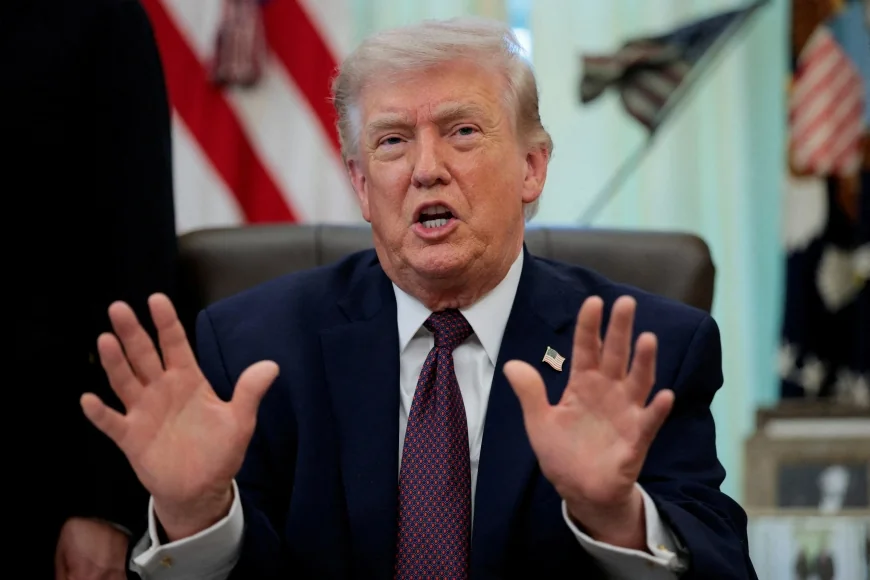
When asked on Friday about seeking congressional approval, Trump told reporters, "No other country has ever done that."He added, "Most people consider it completely unconstitutional."
Some experts have raised questions regarding the Trump administration's interpretation of the War Powers Resolution.
Heather Brandon-Smith, a professor at Georgetown University Law in Washington, D.C., stated that even if a ceasefire is legally in effect, it would not stop the 60-day countdown clock.
"A ceasefire does not mean that the conflict has ended permanently," she said. "In my view, only a permanent cessation of hostilities would truly satisfy the 60-day time limit."
She noted that if the Trump administration continues the conflict, the courts or Congress would be the only avenues left to halt the war.
This conflict began when the United States and Israel launched large-scale attacks on Iran, resulting in the death of the country's Supreme Leader. In retaliation, Iran launched attacks against Israel and U.S. allies in the Gulf region. The United States and Israel have led Western opposition to Iran's nuclear program, alleging that the country is attempting to develop a nuclear bomb—a claim Tehran has denied.
Thank you for reading this content.
What's Your Reaction?
 Like
0
Like
0
 Dislike
0
Dislike
0
 Love
0
Love
0
 Funny
0
Funny
0
 Angry
0
Angry
0
 Sad
0
Sad
0
 Wow
0
Wow
0