


























Oil Surges, Stocks Slide After Trump’s Iran Speech
Global markets tumble as oil price surge follows Trump’s Iran speech. Rising tensions and Strait of Hormuz risks spark investor fears worldwide.

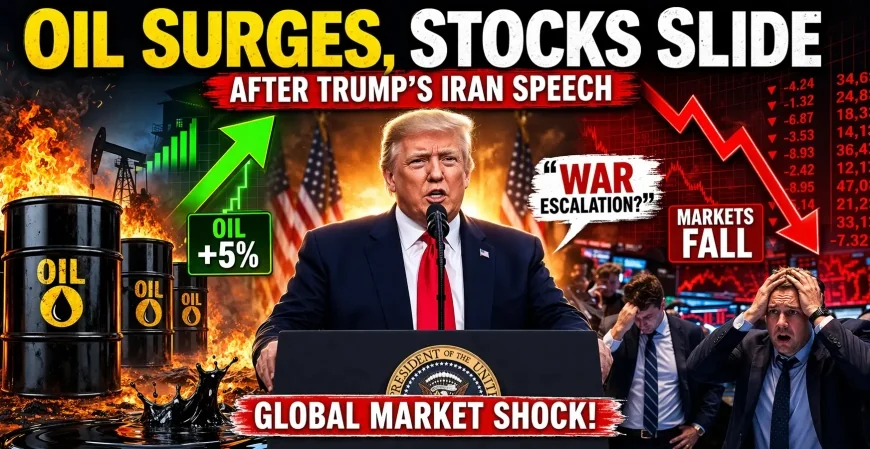
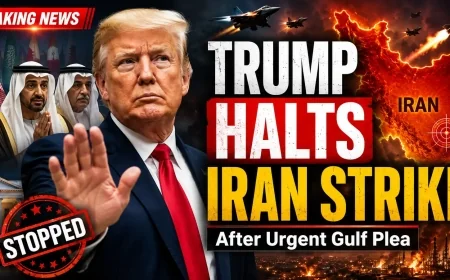
Oil prices rose and stock markets fell on Wednesday as US President Donald Trump delivered a primetime televised address regarding the ongoing conflict with Iran.
Speaking from the White House, Trump stated that his primary "objectives are nearly being met."
He also appealed to nations dependent on Middle Eastern oil to take the initiative in keeping a critical shipping lane—the Strait of Hormuz—open, arguing that the US no longer requires energy supplies from the region.
This strait is vital to the global economy, as approximately 20% of the world's energy supply typically passes through this narrow shipping channel. Since the onset of the conflict, the route has remained largely closed, as Iran—in retaliation for attacks by the US and Israel—had threatened to strike vessels utilizing the passage.
Read Also
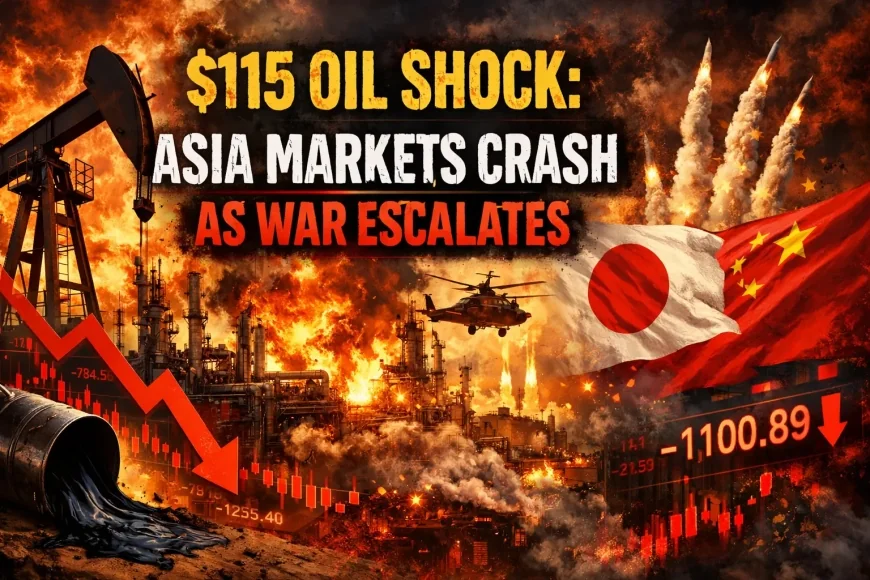
Prior to the President's address, benchmark Brent crude was trading at approximately $100 (£75.50) per barrel.
Following the speech, Brent surged 4.8% to reach $106.02, while West Texas Intermediate (WTI) crude climbed 4% to trade at around $104.
Alberto Bellorin of Intercapital Energy remarked that this surge serves as a "clear indication of market reality, running counter to earlier expectations that a ceasefire would be reached soon."
He further noted that Trump's speech failed to provide a "concrete timeline" for the reopening of the Strait of Hormuz, and that a return to normalcy could now take "months rather than weeks."
Bellorin added that by appealing to other nations to intervene, Trump has effectively dampened expectations that disruptions to the global energy supply will be resolved anytime soon. Tina Soliman-Hunter of Macquarie University stated that Trump has signaled that the conflict is likely to persist, leading investors to anticipate that oil supplies will remain constrained.
Software Services

Following the speech, major Asian stock indices declined, erasing their earlier gains.
Japan's Nikkei 225 fell 1.9%, South Korea's Kospi dropped 3.5%, and Hong Kong's Hang Seng slipped 1%.
Since the onset of the conflict involving Iran in late February, stock markets in the region have experienced significant volatility.
Asia is particularly sensitive to the impact of this conflict, as it relies heavily on the Middle East for its energy supplies. Meanwhile, US stock futures also declined—an indication that Wall Street is likely to open lower on Thursday morning. Futures for the Dow Jones and S&P 500 fell by approximately 1%, while Nasdaq futures dropped about 1.4%.
Stock market futures are contracts that allow investors to buy or sell a stock index at a fixed price on a predetermined future date.
They serve as a form of wager on the direction in which investors expect the market to move, and their prices reflect current market trends.
Thank you for reading this content.
Thank you for reading this content.
What's Your Reaction?
 Like
0
Like
0
 Dislike
0
Dislike
0
 Love
0
Love
0
 Funny
0
Funny
0
 Angry
0
Angry
0
 Sad
0
Sad
0
 Wow
0
Wow
0