

























Hormuz Crisis: Trump Pauses Ops for Vessel Safety
Trump halts key Strait of Hormuz crisis mission after 5 major developments, raising hopes for a US-Iran deal while tensions and global shipping risks remain.

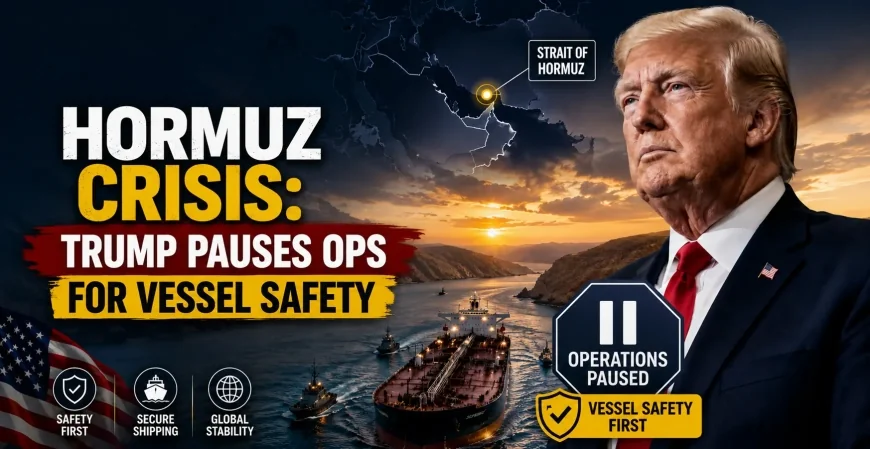
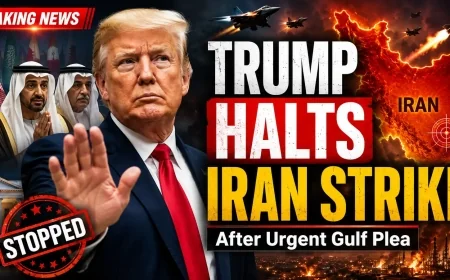
President Donald Trump announced on Tuesday evening that the U.S. operation to guide stranded vessels through the Strait of Hormuz would be paused "for a short time."
Trump stated that "Project Freedom," which had commenced just days earlier, would be halted by "mutual consent," as "significant progress" has been made toward reaching an agreement with Iran.
Iran's state media hailed this as a victory, asserting that the suspension proves Trump has "backed down" and withdrawn his forces following "repeated failures" to reopen this vital global shipping lane.
The U.S. President's announcement came shortly after Secretary of State Marco Rubio stated that the initial U.S.-Israeli strike on Iran—Operation Epic Fury—had concluded after achieving its objectives.
In a social media post, Trump indicated that he made this decision "at the request of Pakistan," which has been acting as a mediator between the United States and Iran. He also noted that the U.S. blockade of Iranian ports would remain in effect.
Trump's announcement may come as a surprise to some. It stands in contrast to statements made throughout the day by Rubio, Secretary of Defense Pete Hegseth, and Chairman of the Joint Chiefs General Dan Kane—all of whom had pledged that this operation would ensure freedom of navigation and commerce within the Strait of Hormuz and the Persian Gulf.
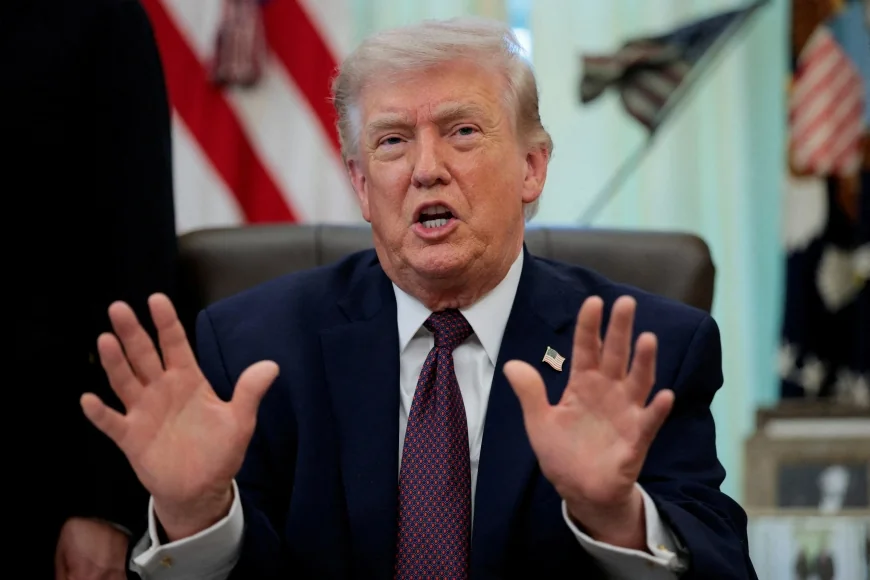
"We would prefer to pursue the path of peace," Rubio told reporters on Tuesday. "The President [Donald Trump] would prefer to reach a deal."
The administration had emphasized that Project Freedom was a "separate and distinct" campaign from the blockade, the latter of which is aimed at exerting economic pressure on Iran.
The objective of Project Freedom was to assist in restoring the flow of oil from the region and to help guide the global economy back toward normalcy by safely escorting stranded vessels out of the Gulf through this largely paralyzed waterway. However, if during this "halt," global shipping companies and their associated insurers face disruptions due to Iranian interference, it will be difficult for Trump to claim that the objective has been achieved.
On the other hand, the administration may hope that halting "Project Freedom"—which the Iranians had strongly opposed—will help bring them back to the negotiating table.
Rubio's comments earlier in the day followed a series of attacks in the Strait of Hormuz, fueling fears that the ceasefire between the U.S. and Iran could be in jeopardy. Tehran offered no comment on Rubio's statement; however, Iran's Parliamentary Speaker, Mohammad Ghalibaf, had previously stated: "We are well aware that the persistence of the current situation is intolerable for the U.S., whereas we have only just begun."
 |
Start your own gaming platform for just $3,000 |
Referring to talks held with the U.S. last month, Iran's chief negotiator, Ghalibaf, remarked: "The U.S. and its allies have jeopardized the safety of vessels and the flow of energy through ceasefire violations and blockades. However, their malicious designs are destined to fail."
Late Tuesday night, UK Maritime Trade Operations (UKMTO) reported that a credible source had informed them that a cargo vessel in the Strait of Hormuz had been struck by "an unknown object." No further details regarding this incident were immediately available.
Earlier in the day, the UAE stated that its air defense systems were engaging incoming missiles and drones from Iran for the second consecutive day. On Monday, it had accused Iran of launching missile and drone attacks—including a strike on an oil terminal in the Emirate of Fujairah. Fujairah is situated outside the Strait of Hormuz. The UAE characterized this attack as a "dangerous escalation."
On Tuesday, Iran denied having carried out any attacks against the UAE. An Iranian military spokesperson stated, "Had any such step been taken, we would have announced it with absolute firmness and clarity."
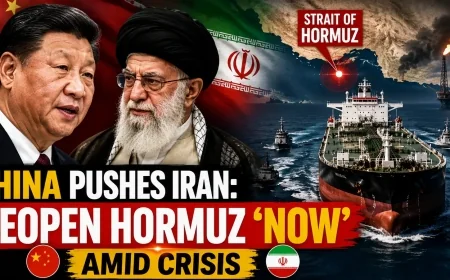
'Operation Epic Fury' commenced on February 28, when the United States and Israel launched a series of airstrikes against Iran. In retaliation, Tehran blockaded the critical waterway through which 20% of the world's oil and Liquefied Natural Gas (LNG) typically passes.
In early April, the U.S. and Iran announced a ceasefire, under the terms of which Iran halted its drone and missile attacks on Gulf nations, including the UAE. However, very few vessels have managed to traverse the strait since that time. The U.S., for its part, had also imposed a blockade on Iranian ports.
On Monday, the U.S. claimed to have attacked seven Iranian fast-attack boats within the strait, while Iran asserted that it had fired warning shots at a U.S. vessel. Both sides dismissed each other's claims. Two commercial vessels reported attacks, and one ship stated that it had safely exited the strait under U.S. military escort. This move was part of Donald Trump's plan to lift the blockade on the strait. Speaking at the White House, Rubio noted that while Trump sought a deal, "Iran has not yet chosen that path," adding: "What the future holds in this regard remains, for now, mere speculation."
He further stated that the U.S. and Israeli strikes on Iran would "inflict damage upon their economy for generations to come."
Thank you for reading this content.
What's Your Reaction?
 Like
0
Like
0
 Dislike
0
Dislike
0
 Love
0
Love
0
 Funny
0
Funny
0
 Angry
0
Angry
0
 Sad
0
Sad
0
 Wow
0
Wow
0