














Tariff Showdown: Trump Slaps 10% Import Tax After Supreme Court Blow
Trump unveils a 10% global tariff after a 6-3 Supreme Court ruling crushed his trade policy, escalating global trade tensions and market uncertainty.

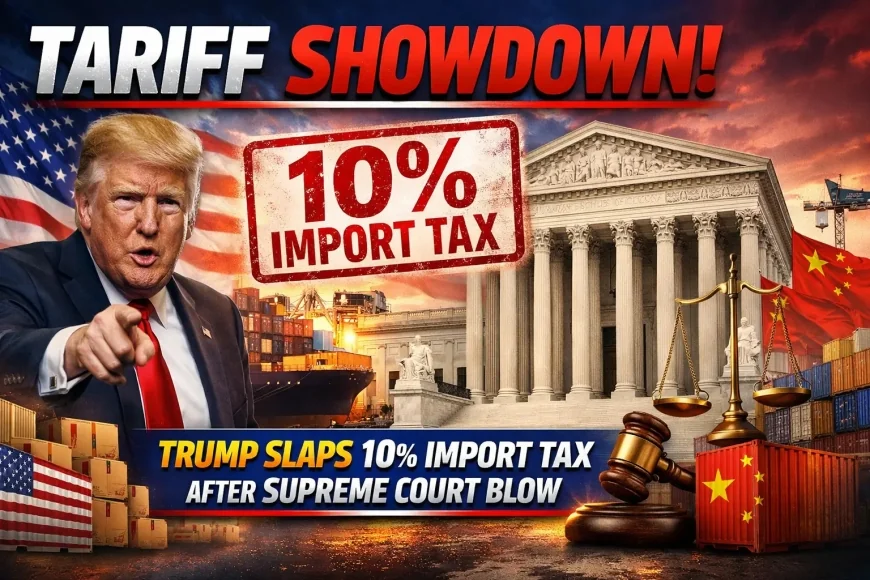
US President Donald Trump has imposed a new 10% global tariff to replace the tariffs struck down by the Supreme Court. He called the decision "very bad" and called the judges who rejected his trade policy "fools."
The president announced this plan after judges declared most of the global tariffs announced by the White House last year illegal.
In a 6-3 decision, the court acknowledged that the president had abused his powers.
The decision was a major victory for businesses and US states that challenged the duties, paving the way for billions of dollars in tariff refunds, while also introducing new uncertainty into the global trade environment.
Speaking from the White House on Friday, Trump hinted that the refunds would not be obtained without a legal battle, saying he expected the case to be entangled in court for years.
He also said he would resort to other laws to further enforce his tariffs, which he argues promote investment and manufacturing in the US.
He said, "We have options—great options, and we'll be even stronger because of this."
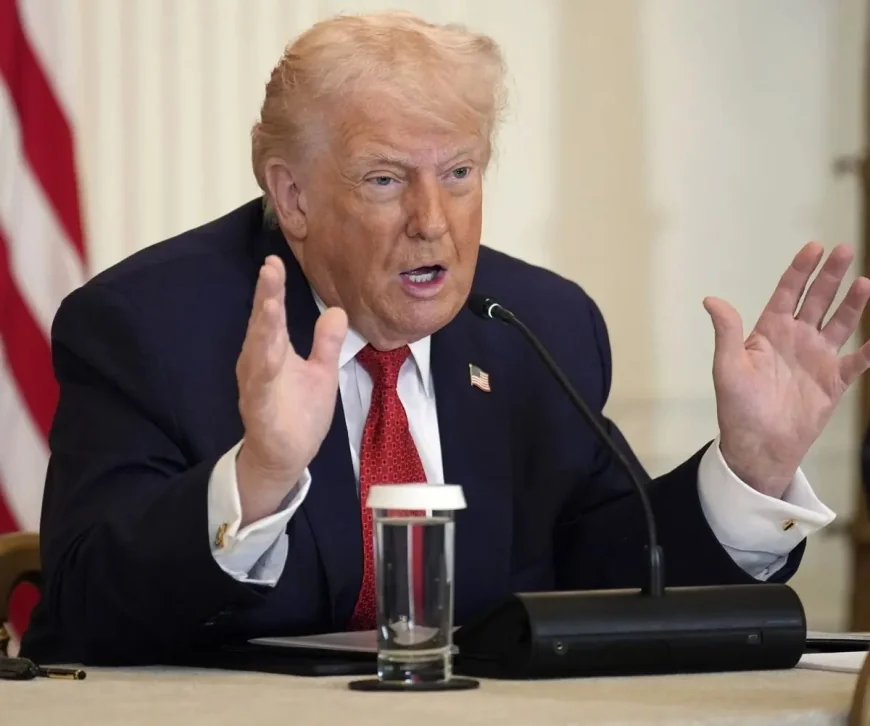
The court battle focused on import taxes that Trump imposed last year on goods from nearly every country in the world.
The tariffs initially targeted Mexico, Canada, and China, then were rapidly extended to dozens of trade partners on what the president called "Liberation Day" last April.
The White House cited a 1977 law, the International Emergency Economic Powers Act (IEEPA), which gives the president the power to "regulate" trade in an emergency.
But these measures sparked anger among companies at home and abroad, who faced sudden tax increases on shipments coming into the US, and fueled concerns that these levies would raise prices.
Arguing before the court last year, lawyers for the challenging states and small businesses pointed out that the law used by the president to impose the levies did not mention the word "tariff."
He stated that Congress never intended to delegate its taxing power to anyone else or to give the president "blanket power to override" other existing trade deals and tariff regulations.
In his opinion, Chief Justice John Roberts, a conservative, echoed this view.
Software Services
 |
Start your own gaming platform for just $3,000 |
He wrote, "When Congress has delegated its tariff power to someone else, it has done so clearly and under strict limitations."
"If Congress had intended to grant specific and exclusive power to impose tariffs, it would have done so explicitly, as it has consistently done in other tariff laws."
The decision to lift the tariffs included the court's three liberal justices, as well as two Trump-nominated justices: Amy Coney Barrett and Neil Gorsuch.
Three conservative justices, Clarence Thomas, Brett Kavanaugh, and Samuel Alito, dissented.
At the White House, Trump said he was "deeply ashamed" of the Republican appointees to the court who voted against his trade policies. He said they were "just being stupid and sycophantic" and "very unpatriotic and disloyal to our Constitution."
Wall Street stocks rose after the announcement, with the S&P 500 closing up about 0.7%, as businesses across the US cautiously welcomed the decision.
Beth Benicke, owner of Busy Baby Products in Minnesota, which manufactures products in China, said, "I feel like a thousand-pound weight has been lifted off my chest."
Nick Holm, chief executive of Terry Precision Cycling, one of the small businesses involved in the case, called the decision "a relief."
He said, "Although it will take months for our supply chain to return to normal, we are waiting for the government to refund these wrongfully levied duties."
However, expected refunds and relief from tariff costs may be difficult to achieve. On Friday, Trump signed a proclamation imposing a new 10% tariff under a never-before-used law called Section 122. This law empowers the government to impose tariffs of up to 15% for 150 days, after which Congress must intervene.
It will take effect on February 24th.
The order lists several exemptions, including certain minerals, natural resources, and fertilizers; certain agricultural products such as oranges and beef; pharmaceuticals; some electronics; and some vehicles.
For many exempted goods, the order is broad and does not clearly specify which items may be exempt.
Canada and Mexico will maintain tariff exemptions on most goods under the North American Free Trade Pact,USMCA.
Read Also
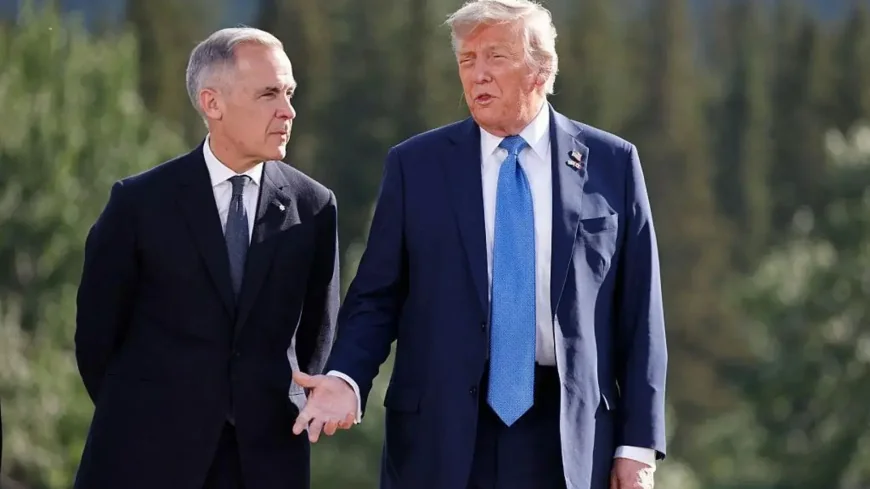
A White House official said that countries that have entered into trade deals with the US, including the UK, India, and the EU, will now face a global 10% tariff under Section 122, rather than the tariff rate they had previously negotiated.
The official said the Trump administration expects these countries to continue to adhere to the concessions they agreed to under the trade deal.
Analysts expect the White House to also consider other tools, such as Section 232 and Section 301, which allow import taxes to be imposed to address national security risks and unfair trade practices.
Trump has used these tools for tariffs before, including some announced last year on sectors such as steel, aluminum, and cars. The court's ruling did not affect them.
Jeffrey Gertz, senior fellow at the Center for a New American Security in Washington, said, "Things have become more complicated and more messy today."
Reaction from major trade partners was muted.
European Commission spokesperson Olof Gill wrote on social media, "We are paying attention to the U.S. Supreme Court's decision and analyzing it carefully."
Read Also
According to the most recent government data, the US has already collected at least $130 billion in tariffs using the IEEPA law. In recent weeks, hundreds of firms, including retailer Costco, aluminum giant Alcoa, and food importers like tuna fish brand Bumble Bee, have filed lawsuits challenging the tariffs to obtain refunds.
But most decisions do not directly mention refunds, potentially pushing the question back to the Court of International Trade to determine how the process would work.
In his dissent, Justice Brett Kavanaugh warned that the situation would become "messy."
Diane Swonk, chief economist at KPMG US, warned that the cost of litigation could make it difficult for small firms to obtain reimbursements.
"Unfortunately, I would say temper your enthusiasm, although I understand the desire for relief," she said.
Steve Baker, head of the law firm Pillsbury, said the "best thing" for businesses would be for the government to create a process that eliminates the need for litigation.
"I think companies can be fairly confident that they will eventually get their money back," he said. "How long that takes really depends on the government."
Thank you for reading this content.
Thank you for reading this content.
What's Your Reaction?
 Like
0
Like
0
 Dislike
0
Dislike
0
 Love
0
Love
0
 Funny
0
Funny
0
 Angry
0
Angry
0
 Sad
0
Sad
0
 Wow
0
Wow
0