































Russia’s Shock Move to Ban WhatsApp Sparks Outcry
Russia attempts to block WhatsApp, impacting over 100M users as authorities push state-backed messaging apps amid rising digital censorship concerns.

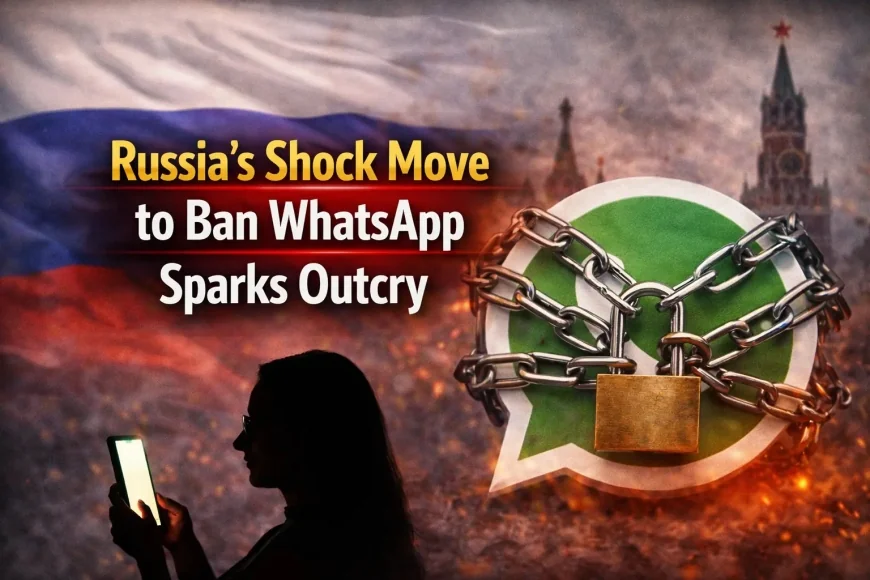
Russia has said it has "attempted to completely block" WhatsApp in the country after the Kremlin further tightened restrictions on messaging apps.
WhatsApp, owned by Meta, said the move was aimed at redirecting its more than 100 million app users in Russia to "government surveillance apps."
This comes after Russian regulators further restricted access to Telegram, citing security flaws. Telegram is estimated to have as many users in Russia as WhatsApp.
WhatsApp said in a statement, "Attempting to cut off more than 100 million users from private and secure communication is counterproductive and will undermine the security of people in Russia."
"We are doing our best to keep users connected."
Read Also

Russia's communications regulator, Roskomnadzor, has repeatedly warned WhatsApp to comply with local law.
State-run TASS media reported earlier this year that WhatsApp would be permanently blocked in the country in 2026.
A Russian official, Andrei Svintsov, was quoted as saying that "such drastic measures" were "absolutely justified" because Russia had declared Meta a radical organization.
Since that announcement in 2022, Meta apps like Instagram and Facebook have been blocked in Russia and can only be accessed through virtual private networks.
Moscow has made significant efforts to force Russians onto a government communication platform called Max.
This app has been compared to China's WeChat – a so-called "super app" that combines messaging and government services, but without encryption.
Software Services
 |
Create, launch, and scale your gaming platform — get instant access |
Russia has argued that both WhatsApp and Telegram have refused to store Russian users' data in the country, as required by law.
Starting in 2025, authorities have mandated that the Max app be pre-installed on all new devices sold in the country. Government employees, teachers, and students are required to use the platform.
Telegram's chief executive, Russian-born businessman Pavel Durov, said the government is blocking access to the service in an attempt to force its citizens to use its app for surveillance and political censorship.
Iran has adopted a similar strategy by banning Telegram and forcing its citizens to use government alternatives, but citizens have found ways to circumvent this, he wrote online.
"Curbing citizens' freedoms is never the right answer," Durov said.
Thank you for reading this content.
Thank you for reading this content.
What's Your Reaction?
 Like
0
Like
0
 Dislike
0
Dislike
0
 Love
0
Love
0
 Funny
0
Funny
0
 Angry
0
Angry
0
 Sad
0
Sad
0
 Wow
0
Wow
0