
























Tariff Ruling Deals Crushing Blow to Trump’s Second Term
A 6-3 Supreme Court ruling blocks Trump’s tariffs, curbing executive power and reshaping US trade policy ahead of major global negotiations.

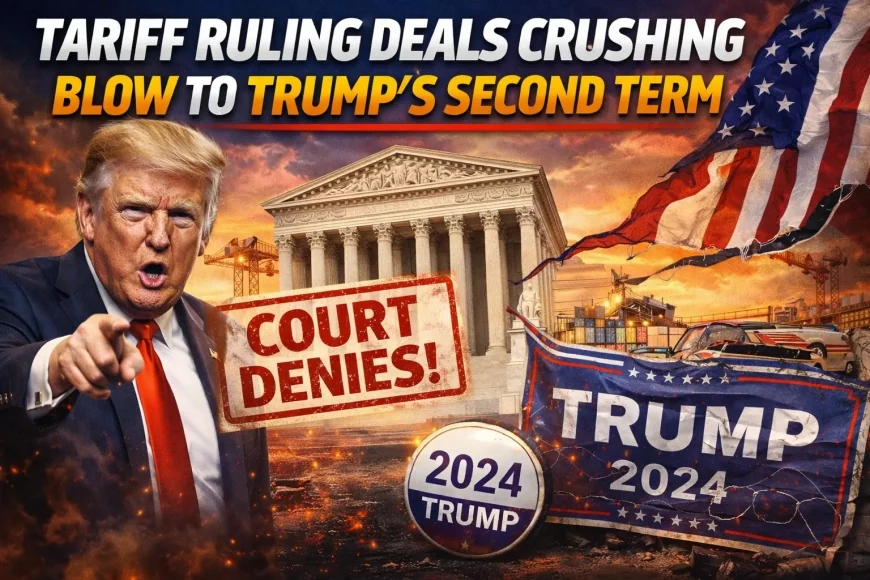
Donald Trump had been warning for months that such a Supreme Court decision would be disastrous.
He had said that if the court blocked his ability to impose these tariffs, it would be a "major economic and national security disaster."
On Friday, a majority of six Supreme Court justices ruled against the president, ignoring his concerns.
The judges ruled that Congress, not the president, had the authority to impose tariffs. And the law under which the president imposed his tariffs, the Emergency Economic Powers Act of 1977, did not grant Trump such broad authority.
In a hastily called press conference Friday afternoon, Trump lashed out at the judges who ruled against him. He said he was "ashamed" of the three conservatives who struck down his tariffs and called the three liberals on the court "shameful."
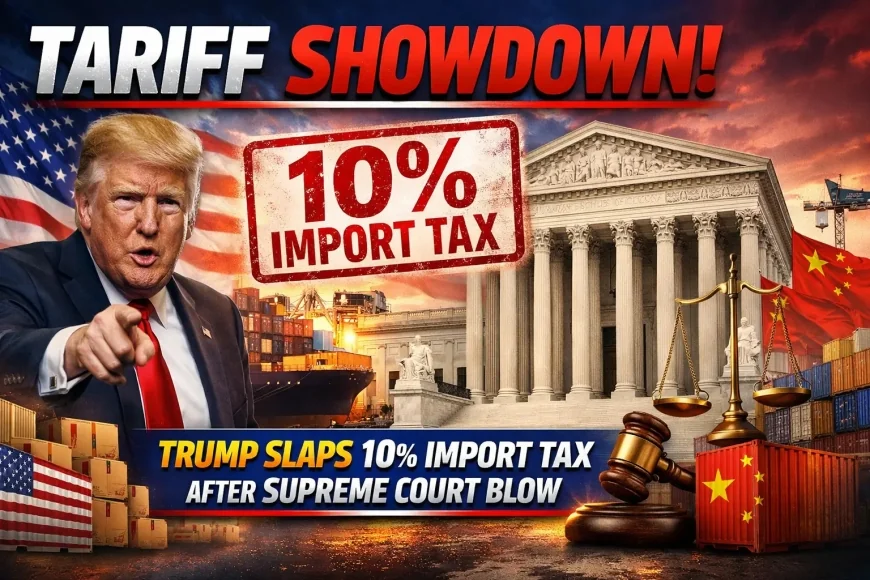
Trump subsequently promised to reimpose tariffs using presidential authority under other laws, including a new temporary 10% global tariff, which he said he would sign on Friday.
This court decision represents a significant check on this president's extensive use of executive power.
Read Also
Over the past year, most judges have shown a willingness to allow Trump to pursue his agenda, particularly on immigration and reshaping the federal government, even while facing legal challenges in the court system.
This case, which was quickly resolved by the court system as an emergency, closes the door to similar extensive use of presidential power.
This may not be the only setback for Trump in the coming months, given the numerous other major cases involving controversial uses of executive power, such as the attempt to repeal birthright citizenship and the removal of a Federal Reserve governor based on alleged misconduct.
At the very least, this decision weakens Trump's hand when he tries to force other countries to make concessions to the US and undermines his pretense of invincibility.
Weakness breeds weakness, and America's trading partners may be emboldened to take a tougher stance with the US now that the president's tariff powers have been curtailed.
It also raises the possibility that the Trump administration may have to return much of the tariff revenue collected last year.
The justices left this difficult case to a lower court decision, but Brett Kavanaugh warned in his dissent that the process was likely to be "messy."
The Trump administration had plenty of time to prepare for Friday's decision.
Software Services

Supreme Court precedent, and the attitude of several justices when the case was argued before the court last November, suggest that a bad outcome for the president is quite possible.
Trump's top trade adviser, Jamieson Greer, said last month that the White House has "a lot of different options" if the tariffs are lifted. He said, "The reality is that the president is going to impose tariffs as part of his trade policy going forward."
However, Trump's other options are more limited.
He needs detailed reports from government agencies to justify imposing tariffs, and there are limits on their scope and timing.
Gone are the days when the president could threaten or implement triple-digit tariffs by waving a pen or clicking on a risky social post.
He will take more time before imposing new tariffs.
This could ease the economic impact caused by the president's major "Liberation Day" tariff announcement last year, and give other countries more time to prepare their responses.
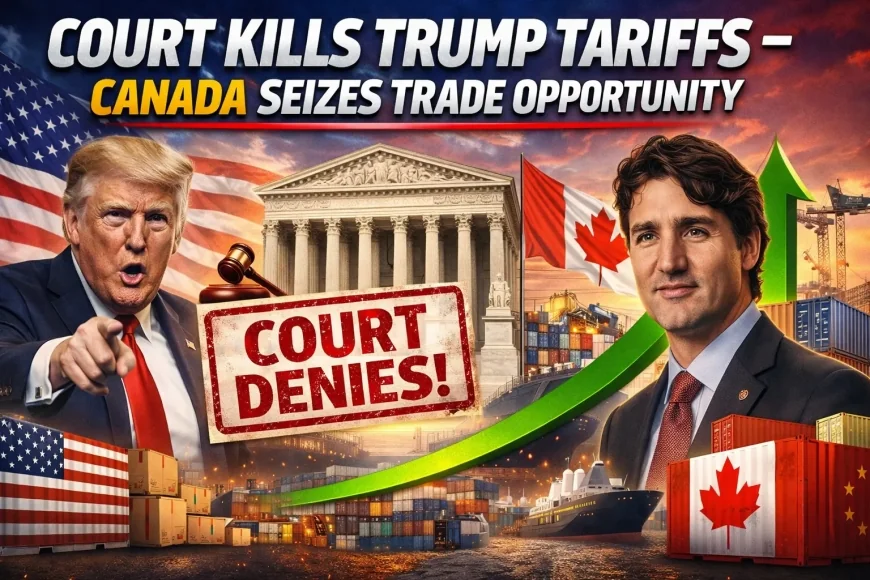
If Trump wants to regain his freedom to impose new tariffs, he can always seek the kind of explicit authorization from Congress that the Supreme Court has deemed necessary. But given the slim Republican majorities in the House and Senate and the upcoming midterm elections, such a move seems unlikely.
In fact, some of Trump's conservative allies in Congress may breathe a sigh of relief with this decision.
The president's tariffs—and the costs they impose on consumers—have been disliked by many Americans. Republican candidates in battleground states and congressional districts may have been bracing for Democratic attacks for supporting Trump's policies.
For now, that area of weakness has been reduced.
Friday's decision will create an awkward situation on Tuesday, when Trump delivers his annual State of the Union address to a joint session of Congress. Typically, several Supreme Court justices sit in the front row of the chamber.
After months of vehement warnings against the court, the president could be facing justices who undermined a key pillar of Trump's second-term agenda.
Thank you for reading this content.
Thank you for reading this content.
What's Your Reaction?
 Like
0
Like
0
 Dislike
0
Dislike
0
 Love
0
Love
0
 Funny
0
Funny
0
 Angry
0
Angry
0
 Sad
0
Sad
0
 Wow
0
Wow
0