































Youth Who Reject Jobs to Face Benefit Cuts, Says Minister
The UK government warns that young people who refuse taxpayer-funded job placements after 18 months of unemployment may lose their benefits.

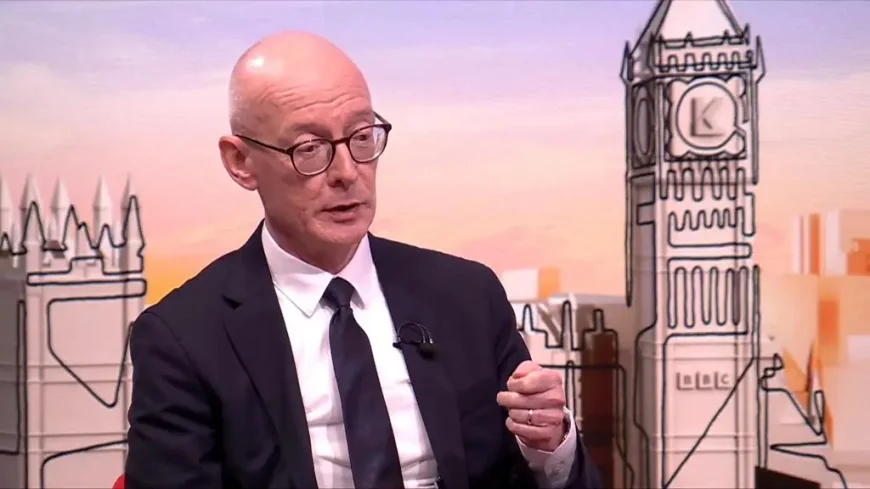
The Work and Pensions Secretary says that if young people refuse taxpayer-funded jobs after 18 months of unemployment, they will lose their right to receive benefits.
Pat McFadden explained that they will need "good reason" to refuse one of the 55,000 six-month placements starting next April.
The government has announced that these roles could be in sectors such as construction and hospitality – although the participating companies have not yet been confirmed.
McFadden's Conservative counterpart, Helen Whately, said that the scheme shows that Labour has "no plan for growth, no plan for creating real jobs."
Following the initial announcement of the scheme in September, the Department for Work and Pensions has confirmed that these placements will begin in six parts of the UK with high youth unemployment, and will begin in the spring of 2026.
The six-month roles will be "fully subsidized" for 25 hours a week, paid at the legal minimum wage from an £820 million pot announced in the budget, allocated until 2029, which will also fund training and work support.
These placements will be offered to people aged 18 to 21 who have Universal Credit and have been looking for work for 18 months.
Employers participating in the scheme have yet to be announced, but ministers have said new opportunities will be created in sectors such as construction, health and social care, and hospitality.
In total, the government plans to create 350,000 training and work experience placements.
McFadyen, speaking with Laura Kuenssberg on Sunday, was asked for more details about what could be considered a good reason to refuse a role.
He said this could also include those where a "family emergency" has prevented them from attending an appointment.
McFadden added: "On the one hand, this is an offer, but on the other, it's also a hope. Because we don't want a future for young people where they have to sit at home and rely on benefits, when they have other options."
The number of 16-24-year-olds not in work, study, or training – known as NEETs – has been rising since 2021, with new figures revealing that nearly one million young people are now neither earning nor learning.
It states that government-supported jobs will not necessarily be in the same sector, but will be located in the following areas:
- Birmingham and Solihull
- East Midlands
- Greater Manchester
- Hertfordshire and Essex
- Central and Eastern Scotland
- South-West and South-East Wales
The government says a total of 900,000 young people who are on Universal Credit and looking for work will receive a "dedicated work support session," followed by four more weeks of "intensive support."
An employment coach will then refer them to one of six pathways: work, work experience, apprenticeships, advanced training, learning, or a workplace training program with a guaranteed interview.
The government expects more than 1,000 young people to start jobs in the first six months of the scheme.
Shadow Work and Pensions Secretary Whately criticized other measures announced in the Budget, saying: "The Chancellor's tax increases are increasing youth unemployment, robbing a generation of young people of their careers."
He added: "This scheme is nothing more than a money grab."
Further plans are expected to be finalized in the coming week as the government prepares to publish its National Youth Strategy.
Chancellor Rachel Reeves previously announced that the government would fund a scheme to make apprenticeship training "completely free" for those under 25 in small and medium businesses.
In the three months to September, 946,000 young people in the UK were Neet – 12.7% of all 16-24 year olds.
A quarter of people report long-term illness or disability as a barrier to work or study, while the number of people claiming health and disability benefits is also rising.
Last month, the government announced it was launching an independent review into the rising number of young people not working or studying.
What's Your Reaction?
 Like
0
Like
0
 Dislike
0
Dislike
0
 Love
0
Love
0
 Funny
0
Funny
0
 Angry
0
Angry
0
 Sad
0
Sad
0
 Wow
0
Wow
0