













Trump Secures Deal as 9 Big Pharma Firms Cut Drug Prices
Fourteen pharma giants agree to cut U.S. drug costs under Trump’s deal, tying prices to global rates and expanding most favored nation pricing benefits.

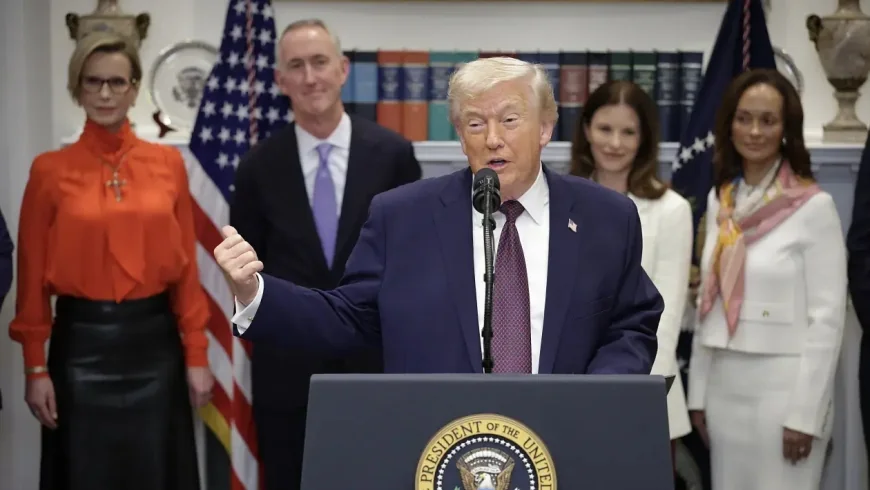
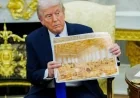
Several of the largest pharmaceutical companies in the U.S. and Europe struck a deal with President Donald Trump on Friday, agreeing to sell their drugs at lower prices. The Trump administration is attempting to link drug prices in the U.S. to lower prices paid for the same drugs abroad.
The companies involved include Merck, Bristol Myers Squibb, Amgen, Gilead, GSK, Sanofi, Roche's Genentech, privately held Boehringer Ingelheim, and Novartis.
In exchange, the companies agreed to a three-year grace period during which their products would be exempt from pharmaceutical-specific tariffs that Trump could impose – provided the drug companies invest further in U.S. manufacturing.
One of the most significant commitments made Friday was that Bristol Myers Squibb would provide its blockbuster blood thinner and most prescribed drug, Eliquis, to Medicaid for free.
These companies represent most of the 17 drug companies that Trump sent letters to in July, urging them to lower prices under his "most favored nation" policy. Trump signed an executive order in May to revive that policy, which aims to lower prices by tying them to prices paid outside the U.S. and "ending global freeloading."
"As of today, 14 of the 17 largest pharmaceutical companies... have now agreed to substantially lower drug prices for the American people and American patients," Trump said at an event Friday. "This is the biggest victory for affordable drugs for patients in the history of American healthcare, and every American will benefit."
Johnson & Johnson, AbbVie, and Regeneron are among the remaining large companies that have not signed on to the drug pricing deal. But Trump said Johnson & Johnson "will be here next week."
How the drug pricing deals will work
The full terms of the deals were not immediately released, making it unclear how far-reaching their impact will be. Nine pharmaceutical companies have agreed to take steps to lower drug prices in the U.S., including selling their existing treatments to Medicaid patients at the lowest "most favored nation" prices and guaranteeing prices for new drugs. Trump said the companies also agreed to list their most popular medications on his upcoming direct-to-consumer website, TrumpRx, which is launching in January.
Software Services
 |
Launch your own casino platform today — get started now |
Several companies also launched or expanded new or existing direct-to-consumer offerings for certain medications. For example, Gilead said in a release that it will launch a program that will allow patients to access its hepatitis C treatment and medication, Epclusa, at a discounted price.
Sanofi said it will offer discounts of up to 70% on certain medications for infectious diseases and cardiovascular and diabetes conditions on TrumpRx and other direct-to-consumer platforms.
Merck said it will offer three diabetes medications—Januvia, Janumet, and Janumet XR—at a discount of approximately 70% to cash-paying patients through a direct-to-patient program. According to the company, if the program is approved in the U.S., it will be expanded to include the company's experimental daily cholesterol pill.
During the press conference, Merck CEO Robert Davis said, "I commend you on your goal of making medicines more affordable and accessible for Americans, but also, at the same time, increasing prices outside of the U.S." "And we 100% support your efforts."
Meanwhile, Amgen will expand its existing direct-to-patient program to include the migraine prevention drug Aimovig and the autoimmune treatment Enbrel at discounted monthly prices of 60% and 80%, respectively. Earlier this year, Trump announced agreements with Eli Lilly, Novo Nordisk, Pfizer, AstraZeneca, and EMD Serono to sell certain drugs directly to patients at discounted prices, in exchange for exemptions from his planned pharmaceutical tariffs and other benefits, such as expedited review of new drugs.
According to a 2024 study by the RAND Corporation, prescription drug prices in the U.S. are, on average, nearly three times higher than in other countries. The report found that prices for branded drugs were more than four times higher.
In May, Trump signed an executive order to reinstate a most-favored-nation policy, calling for higher prices outside the U.S. and an end to "global freeloading."
The trade association PhRMA, which represents many major pharmaceutical companies, has said that most-favored-nation pricing is not the best way to lower drug costs for Americans and instead blamed pharmacy benefit managers for price disparities.
The U.S. is the most important market for many drug manufacturers, regardless of their country of origin. Despite being across the Atlantic, European pharmaceutical companies are heavily reliant on the U.S. market, with half of the continent's 10 largest companies generating the majority of their sales in the U.S.
Thank you for reading this content
What's Your Reaction?
 Like
0
Like
0
 Dislike
0
Dislike
0
 Love
0
Love
0
 Funny
0
Funny
0
 Angry
0
Angry
0
 Sad
0
Sad
0
 Wow
0
Wow
0