


























Hormuz Tensions: Trump Urges UK to Send Warships
Donald Trump urges six nations to deploy warships to the Strait of Hormuz shipping lane after tanker attacks and rising Middle East tensions threaten global oil supplies.

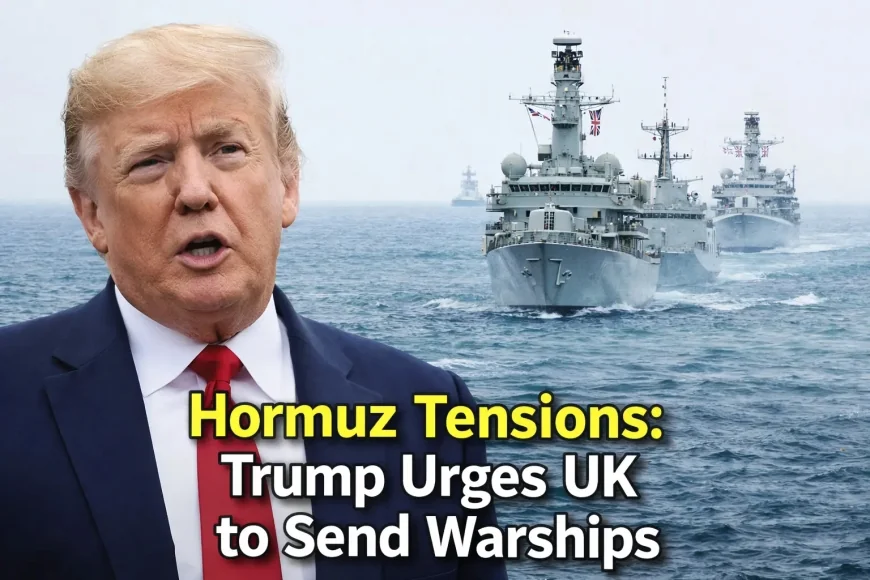
Donald Trump has urged the UK and other nations to dispatch warships to the Strait of Hormuz to help secure this vital shipping lane leading out of the Middle East.
The US President stated that he expects China, France, Japan, and South Korea to also deploy their vessels to this route. According to reports, several tankers have been attacked along this route over the past two weeks, since the US and Israel initiated military actions against Iran.
Responding to Trump's remarks, the UK Ministry of Defence stated that it is discussing "various options to ensure the security of shipping in the region" with its allies.
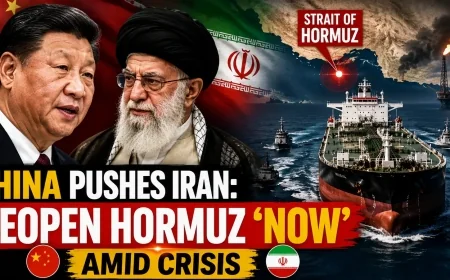
Tehran has announced that it will keep the strait—the world's busiest oil shipping channel, through which approximately 20% of the global oil supply typically passes—closed.
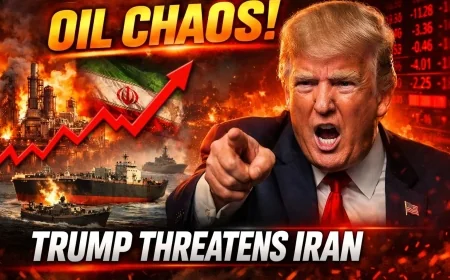
In addition to its effective closure, attacks on shipping and energy infrastructure since the outbreak of hostilities have triggered a sharp surge in global oil prices.
Writing on his "Truth Social" platform on Saturday, Trump stated that "many countries" would join forces with the US to deploy warships to help keep the strait "open and safe."
He claimed that "100% of Iran's military capability" has already been destroyed; nevertheless, Tehran could still "send a drone or two, drop a mine, or fire a short-range missile anywhere within or around this waterway."
"Hopefully, China, France, Japan, South Korea, the UK, and other nations affected by this artificial obstruction will deploy their vessels to the region, thereby ensuring that the Strait of Hormuz no longer faces any threat from a country whose military capability has been completely destroyed." He further stated: "Meanwhile, the United States will conduct heavy bombardment along the coastline and will continue to relentlessly destroy Iranian boats and vessels as long as they remain in the water. One way or another, we will soon ensure that the Strait of Hormuz remains open, safe, and free!"
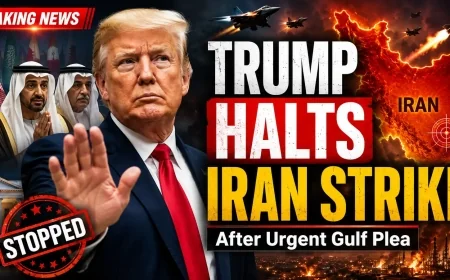
In another post later on Saturday, Trump reiterated his appeal—extending it to "all those nations of the world that receive oil via the Strait of Hormuz"—and stated that the U.S. would provide "substantial" assistance to any country participating in this effort. Furthermore, the President issued a threat, warning that if the Iranian leadership attempts to "interfere" with vessels attempting to transit the Strait of Hormuz, he would target Iran's critical oil infrastructure located on Kharg Island. He noted that on Friday, the U.S. had "completely destroyed" military bases situated on a small island off the Iranian coast, describing the operation as "one of the most powerful bombing attacks in the history of the Middle East."
Software Services

The Iranian military announced that if the island's oil infrastructure were to be attacked, the oil and energy infrastructure of companies collaborating with the U.S. would be "immediately destroyed."
Tehran has been escalating such attacks on energy facilities within the Gulf; this strategy has become a significant component of its response to attacks carried out by the U.S. and Israel. On Thursday, it issued a warning stating that any tanker bound for the U.S., Israel, or their allies would be considered a legitimate target.
In its latest update issued on March 12, UK Maritime Trade Operations (UKMTO) reported that since hostilities commenced on February 28, there have been reports of attacks on 16 vessels within and around the Strait.
Currently, the U.S. Navy is not actively providing security for tankers transiting this narrow shipping lane. Trump's message came a week after a statement in which he claimed that the US did not need the UK to deploy aircraft carriers in the region, and accused Prime Minister Sir Keir Starmer of attempting to "join the war after we had already won."
He had previously criticized Sir Keir for failing to participate in the initial strikes against Iran, and for initially refusing to allow the US to use UK bases for its joint operations with Israel—going so far as to remark that he was "no Winston Churchill."

Subsequently, the Prime Minister authorized US "defensive" actions against Iranian missile sites—launched from RAF Fairford in Gloucestershire and Diego Garcia in the Indian Ocean—stating that Iran's response posed a threat to Britain.
The UK's first and only warship present in the region—the Type 45 destroyer HMS Dragon—departed for Cyprus on Tuesday; there, it will reinforce RAF Akrotiri, which had been subjected to drone attacks.
The Royal Navy had previously deployed minesweepers in Bahrain, but following the recall of HMS Middleton, it no longer possesses this capability.
Ministers have emphasized that the UK had already bolstered its RAF presence in the region prior to the outbreak of the conflict, with the specific objective of safeguarding British military personnel.
Liberal Democrat leader Sir Ed Davey stated on Saturday that Sir Keir should have "flatly refused to deploy British ships, simply because Trump..."
Thank you for reading this content.
Thank you for reading this content.
What's Your Reaction?
 Like
0
Like
0
 Dislike
0
Dislike
0
 Love
0
Love
0
 Funny
0
Funny
0
 Angry
0
Angry
0
 Sad
0
Sad
0
 Wow
0
Wow
0