



















Trump Warns of $130bn Chaos as Tariff Ruling Nears
Trump, Tariffs, Supreme Court, US trade policy, Trade war, Import duties, Economic chaos, Tariff refunds, Presidential power

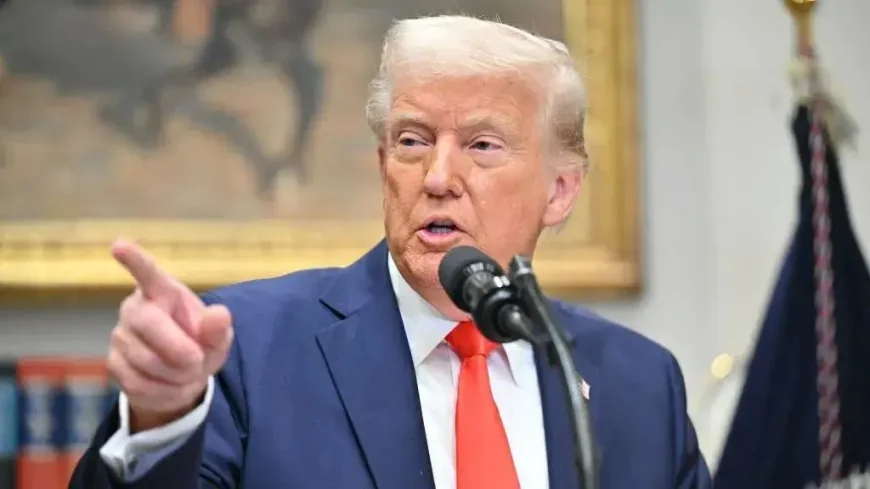
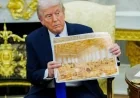
US President Donald Trump argued that a "total mess" would ensue if the Supreme Court strikes down his tariffs, comments that signaled his anxiety about the upcoming ruling.
His posts on social media Monday underscored how much is at stake in the decision, which could come as early as Wednesday, and the challenges it would create if companies claim refunds.
"It would take many years to figure out what numbers we are even talking about and, even then, who to pay, when and where," Trump said.
In recent months, Trump has repeatedly lamented the legal challenges to his trade strategy. Those challenging his administration's tariffs argue that Trump exceeded his authority.
If the Supreme Court doesn't uphold his tariffs: "We will be ruined," the president wrote Monday.
Read Also
The tariffs, which include the sweeping taxes first announced by Trump last April, are being challenged by several small businesses and a group of US states. They argue that the president overstepped his authority in imposing the additional taxes, which are levied on goods entering the country.
If the Trump administration loses the case, the government could be forced to return some of the billions of dollars it has collected.
According to the most recent data, tariffs imposed under the International Emergency Economic Powers Act (IEEPA) have generated more than $130 billion. That's more than half of all tariff revenue — but a small fraction of the total revenue collected by the government.
Trump argued Monday that refunds would be "almost impossible for our country to pay."
He added, "Anyone who says this can be done quickly and easily is giving a wrong, incomplete, or completely misunderstood answer to this very large and complex question." Before the case reached the Supreme Court, two lower courts found that Trump did not have the authority to impose global tariffs. Companies and investors are anxiously awaiting a decision from the nation's highest court – which has a 6-3 conservative majority.
Software Services
 |
Start your own gaming platform for just $3,000 |
At a hearing in November, most of the justices, including several conservatives, expressed skepticism about the White House's justification for the import duties, which the president has claimed are necessary to restore America's manufacturing base and correct its trade imbalances.
The White House has said that if the court does not rule in its favor, officials will explore alternative avenues. These could include existing laws that allow the president to impose tariffs of up to 15% for 150 days.
Trump has called the fight over tariffs a crucial battle, warning that a loss would tie his hands in trade negotiations and jeopardize national security. He has said that if he doesn't win the case, the U.S. will be "weakened" and plunged into "financial turmoil" for years to come.
But many businesses in the U.S. and abroad, which have been paying the price since Trump imposed the global tariffs last year, are hoping the court will declare the taxes illegal.
Lawyers for the challenging states and private groups argue that the International Emergency Economic Powers Act (IEEPA) – the 1977 law the Trump administration used to impose most of the tariffs – does not even mention the word "tariffs." They contend that only Congress can levy taxes under the U.S. Constitution.
Opponents have also questioned whether the issues cited by the White House, particularly the trade deficit, constitute an emergency.
At the November hearing, the justices spent relatively little time on questions of refunds. Judge Amy Coney Barrett, whom Trump appointed to the Supreme Court, said that any refund process could be "a complete mess"—a sentiment echoed by Trump himself.
Some businesses have indicated that if the government is forced to issue refunds, they will attempt to recover the money, but these payments would not compensate for the disruptions caused by the Trump administration's trade policies.
Thank you for reading this content.
Thank you for reading this content.
What's Your Reaction?
 Like
0
Like
0
 Dislike
0
Dislike
0
 Love
0
Love
0
 Funny
0
Funny
0
 Angry
0
Angry
0
 Sad
0
Sad
0
 Wow
0
Wow
0