






























Nvidia Smashes Expectations: $215B Revenue Amid AI Fears
Nvidia reports $215.9B in record revenue as AI chip demand surges, beating forecasts and silencing doubts over artificial intelligence growth.

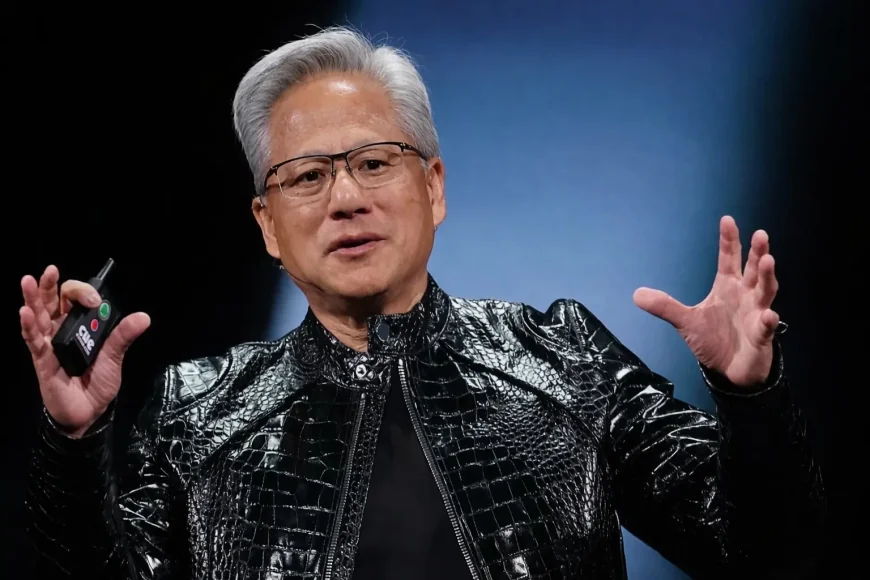
Chip giant Nvidia has reported record annual revenue of $215.9 billion (£159.1 billion), despite investors doubting its excessive spending on artificial intelligence (AI) technology.
The firm also beat analyst estimates, with sales in the final three months of its financial year rising 73% compared to the previous 12 months.
"Demand for computing is growing rapidly," said boss Jensen Huang. "Our customers are rushing to invest in AI compute – these factories are powering the AI industrial revolution and their future growth."
In addition to supplying chips to companies in the AI sector, Nvidia has also outlined plans in recent weeks to boost demand with its new technology.
Nvidia is the world's most valuable publicly traded company, with a stock market value of approximately $4.8tn.
It has become a central player in building AI infrastructure, providing advanced chips to major AI model developers like OpenAI and Meta.

Gene Munster, managing partner at Deepwater Asset Management, said the buildout is likely to continue for a long time.
"AI is growing so fast that people who aren't using these tools can't even understand it," Munster wrote on the social media platform X on Wednesday.
Nvidia has come under scrutiny from investors concerned about its ever-growing web of deals with other companies.
Critics have expressed fears of "circular financing" deals, in which Nvidia's investments in other companies could obscure how strong AI demand actually is.
Meanwhile, the company is caught in the geopolitical tug-of-war between the US and China.
Nvidia's outlook released on Wednesday did not include expectations for chip revenue in China.
Last month, the Trump administration began allowing Nvidia to sell its H200 chips—Nvidia's second-most advanced type—to Chinese customers under certain conditions. But this week, a US Commerce Department official told lawmakers that none of those chips have yet been sold to Chinese customers.
Software Services

Nvidia is also expanding its own product line to include more physical products with AI embedded in them.
Last month at the CES technology trade show in Las Vegas, Huang showcased a new tech platform for self-driving cars.
Huang said that the open-source AI model, which the company is calling "AlpaMayo," will bring reasoning to autonomous vehicles.
Nvidia also said it plans to launch a robotaxi service by next year in partnership with an undisclosed partner.
Nvidia chips are ahead in training AI models, but they have faced competition in inference, the process in which a trained model is applied to real-world data to generate answers through reasoning.
During the fourth quarter, Nvidia acquired competitor Groq in a $20 billion deal, which will increase its expertise in inference.
Thank you for reading this content.
Thank you for reading this content.
What's Your Reaction?
 Like
0
Like
0
 Dislike
0
Dislike
0
 Love
0
Love
0
 Funny
0
Funny
0
 Angry
0
Angry
0
 Sad
0
Sad
0
 Wow
0
Wow
0