






















US Revives Cold War Fury With Murder Charges Against Raúl Castro
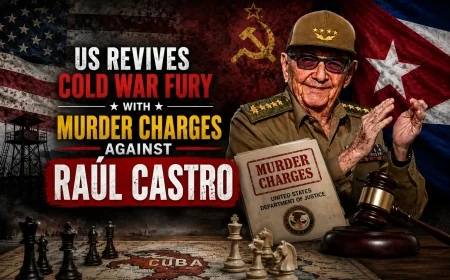
US files 4 murder charges against Raúl Castro over the 1996 plane attack, reigniting Cuba-US tensions and Cold War controversy.

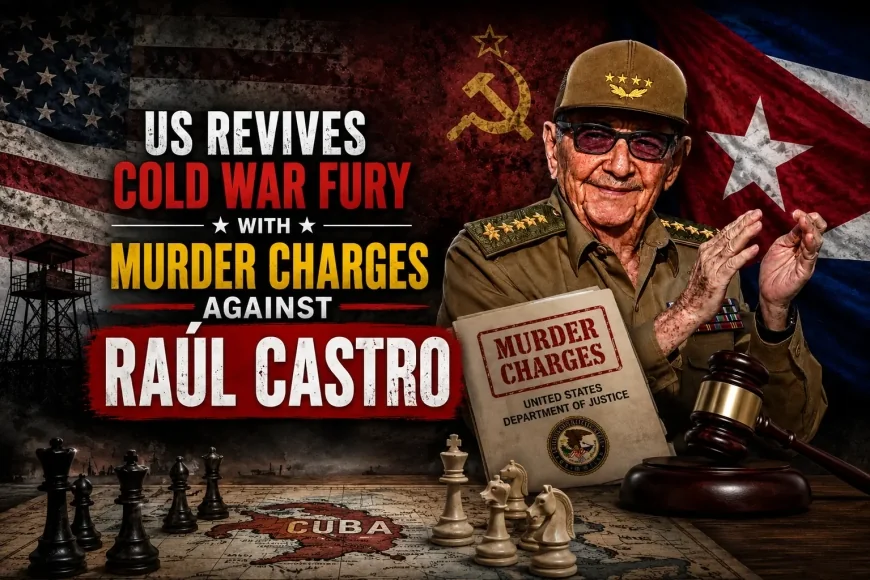
The United States has charged former Cuban leader Raúl Castro with conspiring to murder U.S. citizens and committing other crimes in connection with the 1996 downing of two aircraft between Cuba and Florida.
In this case, unsealed on Wednesday, Castro and five others are accused of shooting down planes belonging to the Cuban-American group "Brothers to the Rescue" and murdering four individuals, including three U.S. citizens.
Castro, now 94 years old, was the country's military chief at the time and faced severe international criticism over the incident.
As the U.S. intensifies pressure on Cuba's communist regime, President Miguel Díaz-Canel has dismissed these charges as "a political maneuver with no legal basis."
Speaking from the "Freedom Tower" in Miami, Acting Attorney General Todd Blanche announced that the U.S. would also charge Castro with the destruction of the aircraft, as well as four separate counts of murder in the deaths of Armando Alejandre Jr., Carlos Alberto Costa, Mario Manuel de la Peña, and Pablo Morales.
Read Also
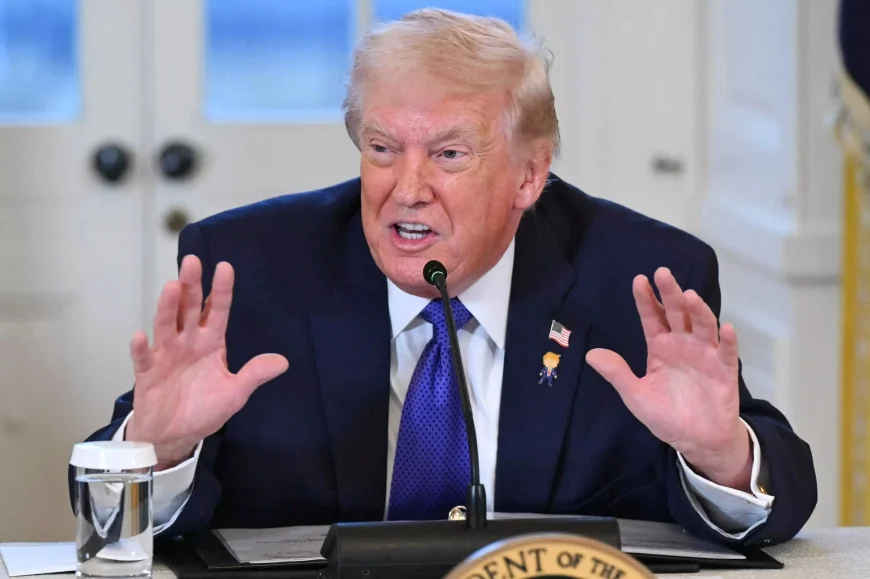
These charges will be adjudicated in a U.S. court, and some of them carry a potential penalty of life imprisonment. For each count of murder, the maximum penalty is the death penalty or life imprisonment.
These new charges from the Department of Justice target a prominent figure within Cuba's communist leadership, coming at a time when Cuba is facing immense pressure from the U.S. to implement significant political and economic reforms within its one-party system. William LeoGrande, an expert on Latin American politics at American University, stated, "I think the strategy is to gradually escalate the pressure to the point where the Cuban government yields at the negotiating table and surrenders."
The U.S. has imposed sanctions on the country and halted oil supplies to Cuba, resulting in power outages and food shortages.
Earlier on Wednesday, U.S. Secretary of State Marco Rubio issued a message to the Cuban people on the occasion of Cuba's Independence Day.
Rubio told the citizens of the island nation that a military-controlled conglomerate known as GAESA is primarily responsible for the power outages and food shortages that the country is currently enduring. GAESA owns or operates most of the profitable sectors of the Cuban economy—ranging from seaports to gas stations and five-star hotels.
Software Services
 |
Start your own gaming platform for just $3,000 |
In response to Rubio's message, Díaz-Canel accused the U.S. of lying and imposing collective punishment on the Cuban people.
Díaz-Canel also asserted that the charges leveled against Castro are being used to "justify the folly of a military attack against Cuba," and accused the U.S. of distorting the facts surrounding the downing of the aircraft.
He maintained that Cuba had taken "appropriate defensive action within its own territorial waters."
When asked by reporters about the likelihood of bringing Castro to the U.S. to face the charges, Blanche replied that an arrest warrant for him has already been issued.
He did not confirm whether the U.S. would attempt to apprehend Castro, but remarked, "We fully expect him to end up here—whether of his own volition or by other means." Leogrande of American University stated that he believes the U.S. is prepared to apprehend the former Cuban leader "if the Cuban people are unwilling to come to the negotiating table."
In January, the U.S. launched a military operation to capture former Venezuelan President Nicolás Maduro and bring him to the United States; this move was taken after the Department of Justice had formally indicted Maduro.
This event fundamentally altered relations between Venezuela and Washington. Leogrande cautioned that the impact might not be the same in Cuba's case, as Castro retired from politics nearly a decade ago.
Read Also
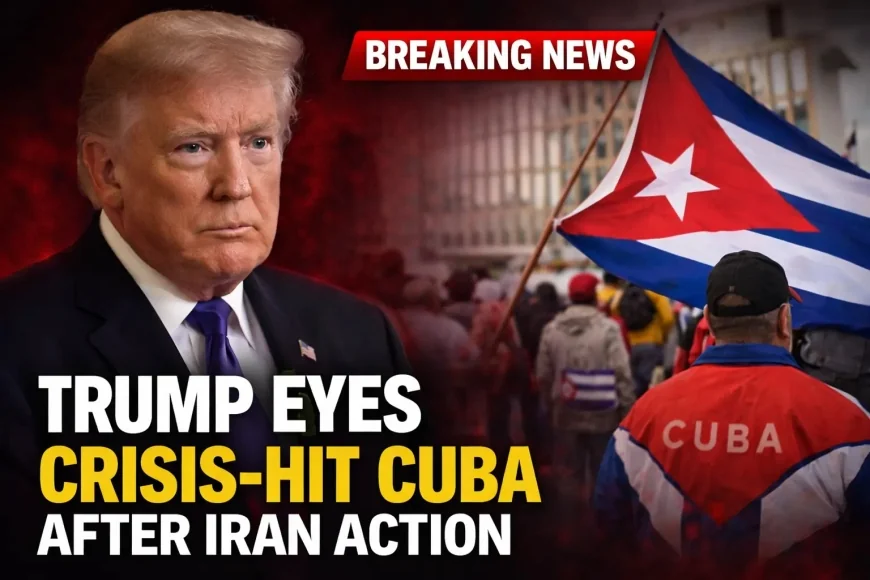
Castro—who is approximately 95 years old and the brother of the late Cuban leader Fidel Castro—remains an influential figure today. In Cuba, he is recognized as the "living leader of the Cuban Revolution."
He has stepped down from his active roles within the government and the party; however, during his presidential tenure from 2008 to 2018, he and former U.S. President Barack Obama spearheaded a brief thaw (improvement) in relations between Washington and Havana.
Blanch stated that he would not "draw a direct comparison" between the cases of Castro and Maduro.
On Wednesday, President Donald Trump was asked about the political implications of the charges that had been filed.
"Many of these people are connected to me in one way or another, because I have had very good relations with the Cuban-American community," Trump said. He added, "On a humanitarian basis, we are here to help." Although Castro is not expected to be extradited or to appear in court regarding this matter, all options appear to remain open, according to attorney Lindsey Lazopoulos Friedman, who works at the U.S. Attorney's Office in Miami.
Cuba Will Not Surrender Without a Fight
The center in Miami where U.S. officials announced the indictment of Raúl Castro was packed with Cuban-Americans. Most of those present represented Cuban exile organizations that have opposed the Cuban government from within the United States for decades.
Surrounded by photographs of the four individuals killed in the 1996 plane crashes, many in the Miami audience expressed their jubilation at the news.
"It was high time; that bloody regime has endured for 67 years," said Isela Fitre. Fitre added, "Raúl Castro did not kill merely four people. Over the years, he has killed countless others."
Read Also
She remarked that justice is never too late in coming and expressed her gratitude to the Trump administration for taking this step.
"I am overjoyed. Justice has been served," she said. "It is crucial that the victimized families can now close this chapter—and that we, the Cuban people, can do the same."
Roxana Vigil, an International Affairs Fellow at the Council on Foreign Relations, noted, "Even following Blanche's announcement, a question remains: will the Trump administration utilize this indictment in the same manner it did the charges against Maduro—namely, as a pretext for military action under the guise of law enforcement?"
"It is highly unlikely that the Cuban regime will capitulate to the United States without a fight," Vigil observed. "Furthermore, any move involving cooperation with the Cuban regime would be extremely difficult for the Cuban diaspora in the United States to accept." Representatives from the U.S. and Cuba—including Raúl Castro's grandson, Raúl Guillermo Rodríguez Castro—have held "talks" in recent months; however, these contacts are unlikely to proceed smoothly in light of the U.S. allegations leveled against the former president.
Conversely, signals from the Cuban side suggest that they will stand even more firmly by their stance of "neither surrender nor concession" in the face of U.S. pressure. Cuban state media outlets have harshly criticized these allegations, labeling them "false accusations."
Thank you for reading this content.
What's Your Reaction?
 Like
0
Like
0
 Dislike
0
Dislike
0
 Love
0
Love
0
 Funny
0
Funny
0
 Angry
0
Angry
0
 Sad
0
Sad
0
 Wow
0
Wow
0