
































76,475 Canadians have died by MAID. Is that too many?
One in 20 Canadians now die via medical assistance in dying (MAID). Critics warn safeguards are weakening as assisted death becomes routine care.

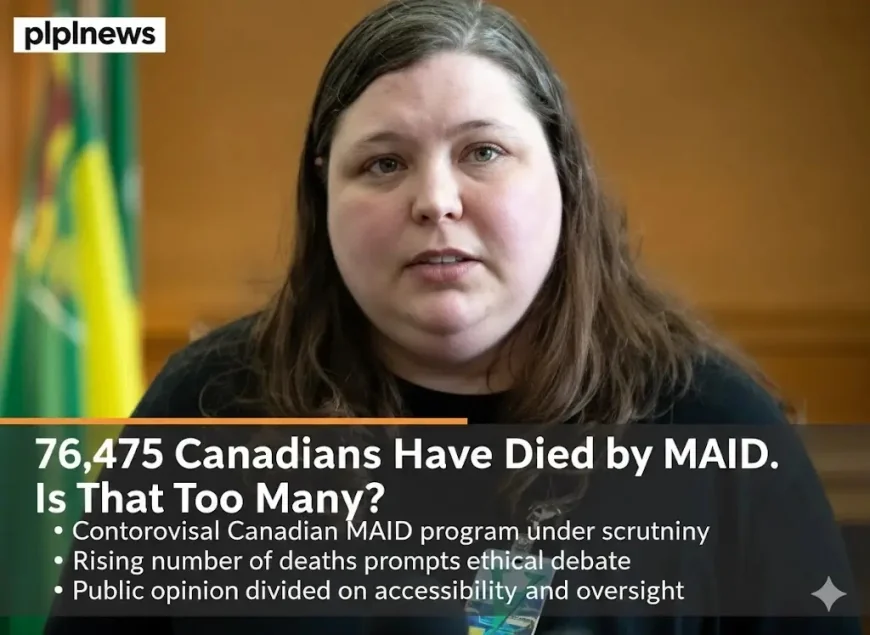
It was presented to Canadians as an exceptional option to an already approaching natural death. How did doctor-assisted dying become so popular?
Nearly a decade after the Criminal Code was amended to permit doctors to end, under certain conditions, a consenting person’s life, one in 20 deaths in Canada now involve medical assistance in dying (MAID).
 |
Start your own gaming platform for just $3,000 |
While proponents say the numbers reflect a pent-up demand for an end-of-life option that’s long had broad support among Canadians, critics fear MAID is being sold as a medicine, a “death therapy,” and that some lives are being ended based on overly loose and questionable interpretations of the law.
“I think most people in Canada would at least acknowledge that we’ve gone way beyond an exceptional practice that is a last resort measure,” said Trudo Lemmens, a University of Toronto health law and policy professor.
The curve may be flattening: The year-over-year rate of growth has fallen further and faster than some expected. However, the number of Canadians who died by a doctor-administered lethal injection in 2024 reached its highest level, a total of 16,499 people, to date.
What was once considered antithesis to the Hippocratic oath by the country’s largest doctors’ organization — actively expediting death — has become a relatively common medical act.

But how many assisted deaths are too many?
While a new paper argues Canada should expect the absolute number of MAID deaths to rise as the population grows older, and that there’s no ideal or correct number of assisted deaths, others are calling for an overhaul of the system, arguing reviews of select MAID cases in Ontario point to some serious problematic practices.
“It is troubling that documented problematic applications of MAID have not yet resulted in either criminal or professional regulatory intervention,” Lemmens wrote in a special issue of the Canadian Journal of Bioethics devoted to MAID.
In Ontario, all MAID deaths are retrospectively — after the fact — reviewed by the Office of the Chief Coroner.
In January 2024, a special MAID death review committee was also set up to highlight cases chosen to “generate discussion, thought and considerations” to improve practices.
Of 4,356 MAID deaths in Ontario in 2024, most, 88 per cent, met all legislative requirements, according to the coroner’s office.
But concerns flagged by the death review committee, of which Lemmens is a member, include lax interpretations of legislated safeguards, minimal or sloppy assessments of a person’s capacity to choose an assisted death, minimal discussions around alternative means to relieve someone’s suffering, risks of coercion from family members or burned out caregivers and doctors accepting nods and hand squeezes as signs of final consent in the moments before the first injection.
The law no longer requires that a person’s natural death be reasonably foreseeable, nor must people exhaust all available options to relieve suffering. For those whose natural deaths are near, same-day or next-day MAID are possible. In Canada’s wait-list-beleaguered health system, it can be easier to get access to MAID than to needed care, Lemmens and others have argued.

In B.C., a grieving mother whose daughter died by MAID in July 2023 is pushing for a review of a decision by the provincial doctors’ regulator dismissing her complaint that her daughter would not have opted to end her life if doctors had provided appropriate care for her psychiatric condition, which would have made her better able to manage her physical condition. The mother alleges that her daughter died due to inadequate care and “an overall failure of the health care system,” according to a health services review board ruling granting her an extension to apply for a review of the complaint dismissal.
This month, American conservative commentator Glenn Beck offered to pay for Saskatchewan’s Jolene Van Alstine to travel to the U.S. for surgery for a rare parathyroid disease that has left her virtually housebound with extreme pain and nausea. Van Alstine has said that if she can’t get treatment, she will choose an assisted death.
Thank you for reading this content.
If you find it helpful, then checkout :
https://plplnews.com/this-christmas-moment-is-reminding-the-world-what-really
Also check out the latest Bentley : https://plplnews.com/bentley-speed-six-continuation-1929-revival
What's Your Reaction?
 Like
0
Like
0
 Dislike
0
Dislike
0
 Love
0
Love
0
 Funny
0
Funny
0
 Angry
0
Angry
0
 Sad
0
Sad
0
 Wow
0
Wow
0