




























Inside 2025: The Massive Federal Overhaul Under Trump
Discover how Trump reshaped Washington in 2025—from DOGE cuts to immigration crackdowns and tariffs—revealing a major federal government overhaul.


This year has been a tumultuous one for President Donald Trump since his return to the White House in January after winning the 2024 presidential election.
From the outset, his second administration made headlines over who he would appoint to cabinet positions and whether he would fulfill his campaign promises. In the months following his inauguration, Trump has made sweeping changes to the federal government in Washington, D.C., and beyond, while also pressuring Congress to pass his signature “One Big Beautiful Bill Act,” which would permanently extend the tax cuts passed during his first term.
Here’s a look at some of the other actions of the Trump administration that have made 2025 a year of federal upheaval.
January: The Demise of DOGE
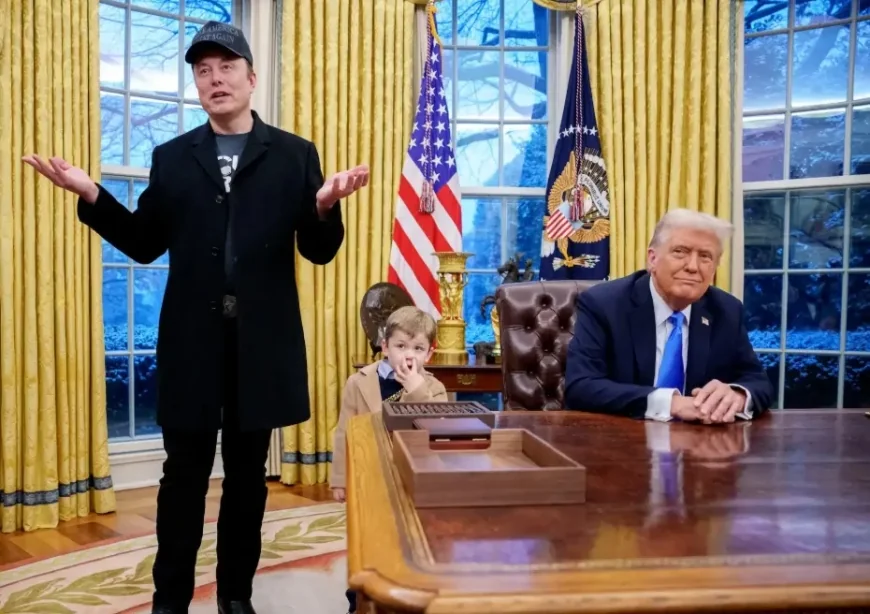
Trump had promised to shrink the size of the federal government in an effort to manage the nation’s spending. On his first day back in office, he signed an executive order establishing the Department of Government Efficiency, or DOGE, and appointed tech billionaire Elon Musk to lead it.
From there, Musk moved quickly to overhaul government positions with the promise of reducing waste. He was designated a “special government employee,” and he implemented changes across federal agencies and departments.
Thousands of government employees were laid off, including those in the Department of Education and the Department of Health and Human Services, leaving employees wondering if their jobs would be next—or perhaps even reinstated.
These cuts also included the elimination of the U.S. Agency for International Development, a move criticized by many around the world who supported its aid efforts. Federal research and grants were also cut, including those to universities.
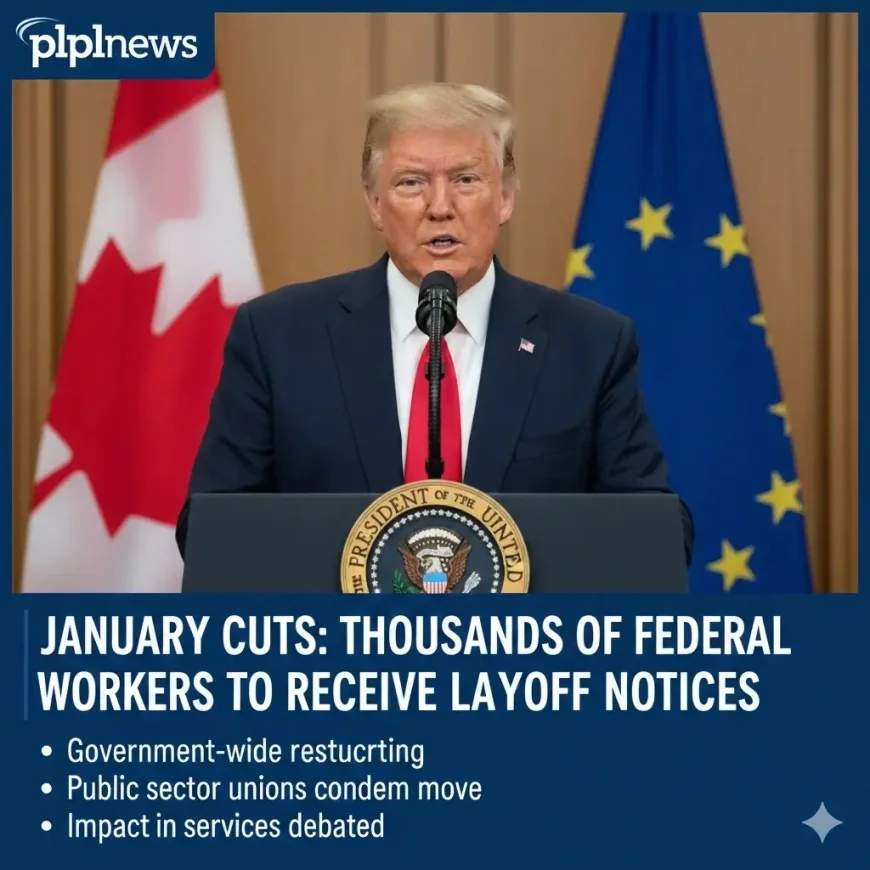
Before leaving the administration, DOGE claimed that Musk was able to save the government an estimated $175 billion through a combination of selling assets such as buildings, canceling contracts and leases, eliminating fraud and improper payments, program changes, workforce reductions, and more. Nevertheless, the cuts made by DOGE to the number of federal employees became a major cause of layoffs in 2025, affecting more than 290,000 people.
Those who remain are now working in person. Trump issued a presidential memorandum in January ordering a return to in-person work, directing all department heads to end remote work arrangements and terminate COVID-19-era work accommodations. March: Alien Enemies Act and Immigration Crackdown
On March 15, Trump announced the implementation of the Alien Enemies Act, an 18th-century wartime law, allowing him to deport alleged members of the Tren de Aragua gang from Venezuela. This marked the first time the act had been used since World War II and granted the president broad powers to deport individuals.
The administration insisted it was deporting violent criminals, but some believe it included individuals who should not have been deported, including Kilmer Abrego Garcia, who was sent to El Salvador in March. He gained national attention as his legal battle dragged on for months.
This was a significant turning point in the administration's ongoing efforts to reform the nation's immigration system. Department of Homeland Security Secretary Kristi Noem has enforced stricter immigration laws throughout the year, and the administration claims that for several months, not a single migrant has crossed the U.S. border illegally.
Immigration and Customs Enforcement officers have gone into American suburbs and cities at the administration's direction in an effort to apprehend criminals. This effort has been met with resistance from opponents who say they do not want officers in their neighborhoods and that innocent people who have committed no crimes are being detained.
April: Liberation Day and Tariffs
In April, after signaling his intention to impose tariffs, Trump declared that "Liberation Day" had arrived. Reciprocal tariffs were implemented after Trump declared a national emergency over the country's trade deficit and invoked the International Emergency Economic Powers Act.
The executive order imposed a 10% baseline tariff on imports from nearly all countries, and there were also several country-specific tariffs.
Over the next several months, Trump engaged in negotiations with several countries, including the United Kingdom, Japan, South Korea, and the European Union.
In January, he first imposed tariffs targeting China, Canada, and Mexico.
The announcement of Liberation Day caused a global market crash in early April, and market volatility ensued as China retaliated with tariffs on the US. Trump later announced that country-specific retaliatory tariffs would be suspended for 90 days, leading to a market recovery.
June: National Guard Deployment and Anti-Immigration Protests
Trump first deployed the National Guard to suppress anti-ICE protests in Los Angeles, California. In doing so, he bypassed Governor Gavin Newsom and Los Angeles Mayor Karen Bass.
Software Services
 |
Start your own gaming platform for just $3,000 |
He was able to deploy troops in June because he declared the anti-immigration protests an emergency. Several weeks later, in mid-August, Trump deployed more National Guard members to Washington, D.C. He was able to do this under the District's Home Rule Act, which allows the president to place the city's law enforcement under "federal control." Trump said he would bring National Guard troops to Washington to combat crime in the nation's capital.
Since then, efforts to send troops to other US cities have continued.
He announced in September that troops would be seen on the ground in Memphis, Tennessee. This was the first city in a Republican-governed state to receive the president's attention, after he clashed with Illinois Governor J.B. Pritzker, a Democrat, and ultimately decided to avoid legal battles and focus elsewhere. Despite criticism from local Democrats in Memphis, Trump was able to proceed with his plans for troops in the city because he had the blessing of Republican Governor Bill Lee.
Trump stated in September that he was directing the Department of Defense to provide the necessary troops to defend "war-torn Portland." Portland and the state of Oregon resisted his efforts. He also claimed that San Francisco, New York, and other Democrat-run cities are "very unsafe" and that his administration would "fix them one by one."
The president has justified his actions by saying that past leaders had used the armed forces to maintain domestic order and peace, but the deployment of troops in American cities has sparked legal battles and raised questions about his executive authority and potential federal overreach.
August: Court Battles and Executive Authority
Trump is no stranger to legal battles during his second term. Several federal court judges have ruled against his policies, although some of these decisions were overturned by the nation's highest court.
In 2024, the Supreme Court ruled on a case involving Trump that ultimately granted presidents broad, almost complete immunity for "official acts" performed while in office. This ruling effectively foreshadowed what would happen when Trump was challenged in lower courts.
Although the 2024-25 term was relatively less controversial than recent terms, several major decisions were made through increased use of the emergency docket, also commonly known as the Court's shadow docket.
Experts say this is changing the way the federal government operates.
Congress has been passing fewer laws in recent years, while governance by executive action has increased under both Democratic and Republican presidents. This creates legal challenges and leads administrations to seek emergency actions to defend their agendas.
"These decisions have a huge impact. They affect a lot of people," said Steven Vladeck, a Supreme Court expert at George Washington University, noting that the emergency docket provides less transparency to the public about why a decision was made in a particular direction. Experts told the Deseret News that with an administration like Trump's, which tests legal boundaries, and a court that doesn't always explain the reasoning behind its decisions, this could further divide an already fractured democracy.
And with another major case looming, the court will once again be in the spotlight. Trump issued an order to end birthright citizenship in the country, and the justices decided to hear oral arguments in the case this spring.
October: New US Roles in the Middle East
In October, Trump achieved one of his biggest victories. He successfully negotiated a ceasefire to end the war between Israel and Hamas, which began on October 7, 2023, nearly two years earlier.
He and others supported other efforts to end the war throughout the year, including with Iran, but his work in Gaza was seen as a major achievement of his first term. All remaining hostages held by Hamas, both living and deceased, were returned to Israel as part of the deal, and Israel agreed to a partial withdrawal from Gaza.
The situation remains fragile, but Trump's negotiations have opened the door to greater US involvement in the Middle East.
Under Trump's plan, Gaza would be governed for a period by an international committee, overseen by a "Board of Peace" led by Trump himself. This is the same idea he proposed for ending the war between Russia and Ukraine. This committee would oversee daily public services and reconstruction in Gaza.
The US would also create an international stabilization force, in conjunction with Arab nations, to be deployed in Gaza to provide assistance to Palestinians, including infrastructure development, border security, and other forms of support.
December: Transparency and Trump in the Epstein Files
The Trump administration faced months of public pressure regarding the release of files related to the case of sex offender and financier Jeffrey Epstein. Trump had promised to make the files public during his campaign last year, but after taking office, his administration appeared to be avoiding the responsibility of releasing them.
Attorney General Pam Bondi stated in July that Epstein did not have a "client list" and that he was not murdered in the federal prison in New York City. This announcement came after months of promises from Bondi and the Department of Justice to provide transparency regarding an alleged list of 200 prominent figures associated with Epstein. The department said they wanted to keep the public informed about Epstein's crimes and the federal investigation, but that no further information would be released due to concerns about fairness to the victims.
Under pressure after a bill ordering the release of the investigation passed both houses of Congress, Trump signed it into law, forcing the DOJ to begin releasing the files last Friday.
Thousands of documents were made public on Friday, many containing images of former President Bill Clinton and other high-ranking officials. Most identifying information was redacted to protect the privacy of the victims. A second batch was released on Tuesday and included several mentions of Trump. It was known that Trump and Epstein were associates at one time, but the new documents reveal information that was not previously known to the public. Trump has not been accused of any wrongdoing in connection with Epstein, and the new documents do not contain any information that suggests illegal activity.
However, the impact of the president's name appearing in the documents is still largely unknown, but it could change how the federal government releases investigative documents and how the public views their commander-in-chief.
Thank you for reading this content.
What's Your Reaction?
 Like
0
Like
0
 Dislike
0
Dislike
0
 Love
0
Love
0
 Funny
0
Funny
0
 Angry
0
Angry
0
 Sad
0
Sad
0
 Wow
0
Wow
0