
































Japan Halts World’s Largest Nuclear Plant Hours After Restart
Japan suspends operations at the Kashiwazaki-Kariwa nuclear plant hours after restart, as Tepco probes an alarm fault at the world’s largest facility.

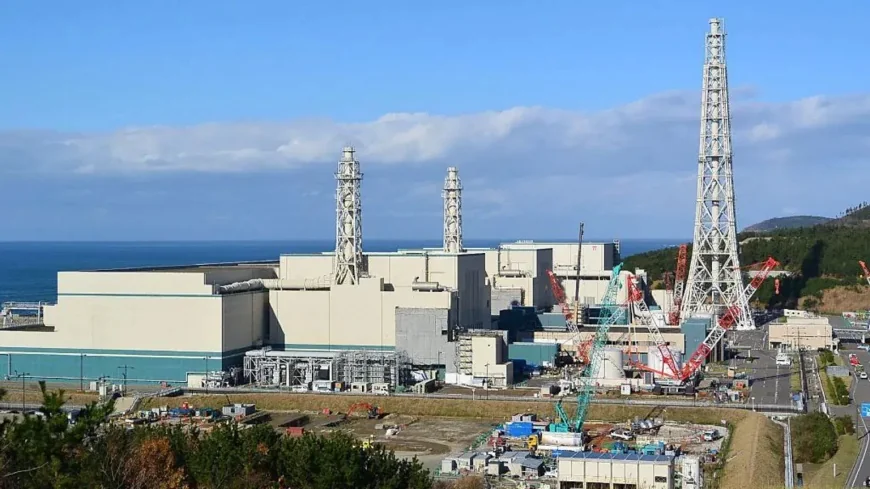
Japan has suspended operations at the world's largest nuclear power plant just hours after they began, its operator said.
Takashi Kobayashi, a spokesman for Tokyo Electric Power Company (Tepco), said an alarm sounded "during reactor start-up procedures" at the Kashiwazaki-Kariwa plant northwest of Tokyo, but the reactor remained "stable."
Reactor No. 6 started up on Wednesday, a day later than planned due to a malfunction in the alarm system – it was the first reactor at the plant to restart since the 2011 Fukushima disaster.
Japan shut down all of its 54 reactors after the 9.0-magnitude earthquake 15 years ago, which triggered a meltdown at the Fukushima plant and one of the worst nuclear disasters in history.
At the time, more than 150,000 people were forced to leave their homes due to radiation leaks from the plant. Many have not returned despite assurances that it is now safe.
Following the suspension of Reactor No. 6 on Thursday, Kobayashi said it was "stable and there is no radioactive impact outside."
The reactor was initially scheduled to start up on Tuesday, but this was delayed due to a technical problem. It is due to begin commercial operation next month.
Kobayashi said Tepco is "currently investigating the cause of the incident" and did not say when operations would resume.
The seventh reactor at Kashiwazaki-Kariwa is not expected to restart until 2030, while the remaining five may be decommissioned.
This would significantly reduce the plant's operational capacity, which previously had all seven reactors running.
Software Services

Reactor No. 6 was given the green light to restart despite safety concerns from local residents. Last week, a small crowd of people gathered outside TEPCO's headquarters to protest, while in December, hundreds gathered outside the Niigata Prefectural Assembly. Japan was one of the early adopters of nuclear power – before 2011, it generated nearly 30% of its electricity from nuclear power and had planned to increase that to 50% by 2030.
Following the Fukushima disaster, it had to shut down all its plants, and for the past decade, it has been trying to restart them to meet its net-zero emissions target by 2050.
Since 2015, Japan has restarted 15 of its 33 operational reactors.
A previous version of this story stated that the Kashiwazaki-Kariwa nuclear plant was located in Tokyo; it has now been corrected to state that it is located northwest of Tokyo.
Thank you for reading this content.
Thank you for reading this content.
What's Your Reaction?
 Like
0
Like
0
 Dislike
0
Dislike
0
 Love
0
Love
0
 Funny
0
Funny
0
 Angry
0
Angry
0
 Sad
0
Sad
0
 Wow
0
Wow
0