
























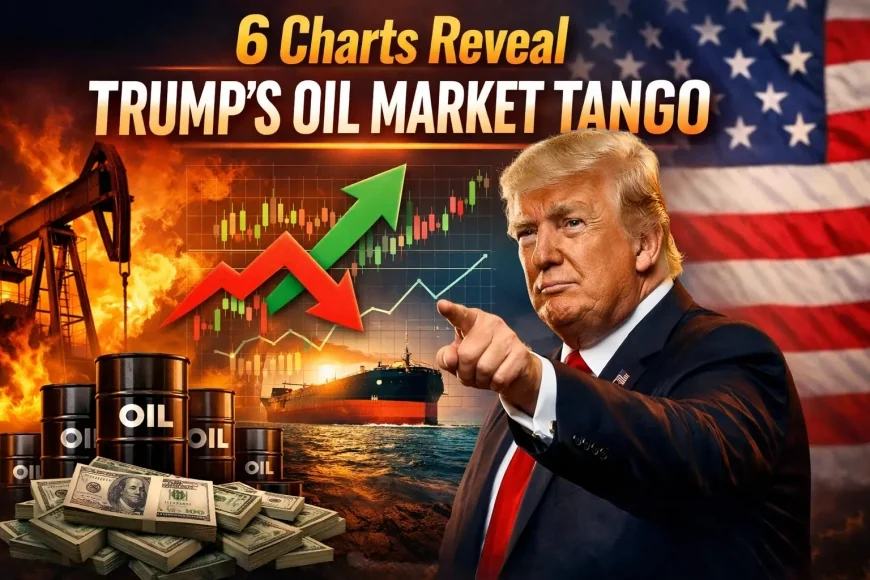
6 Charts Reveal Trump’s Oil Market Tango
Discover how oil market volatility spikes as Trump’s statements sway prices, with investors reacting to war tensions and shifting signals in real time.

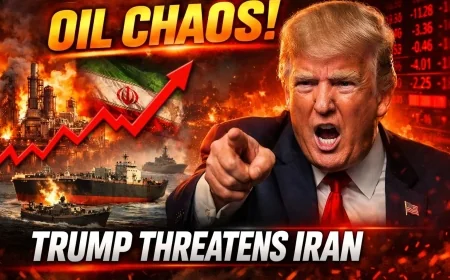
It can be difficult to discern what is guiding Donald Trump a month into the U.S. and Israeli campaign of strikes against Iran.
But it is clear that his eyes are fixed on the oil markets.
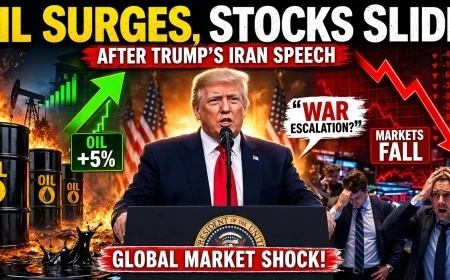
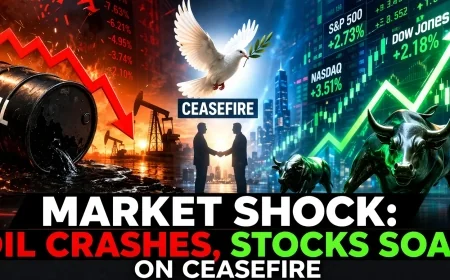
A single word—or social media post—from the U.S. President regarding his plans used to trigger significant price swings, as investors reacted instantly to signals indicating whether the conflict might escalate or wind down.
However, in recent days, traders appear to be growing more skeptical regarding the significance of his comments.
Prior to February 28, when the strikes on Iran began, oil was trading at approximately $72 per barrel.
Last week, on March 19, it peaked at $118 per barrel; by Friday afternoon, it stood just under $112—a figure significantly higher than the pre-war price.
Jonathan Raymond, an investment manager at Quilter Cheviot, notes that energy prices have become a barometer for broader geopolitical and economic risks; prices rise when Trump’s language is aggressive, and they fall when his rhetoric softens.
He adds that markets are naturally sensitive to these signals, given the substantial economic risks associated with rising oil prices.
"Investors are attempting to price in the genuine uncertainty," he says. "The markets may appear jittery or confused, but in reality, they are managing the risks associated with unfolding events in real time—and oil sits right at the very center of this entire process."
However, investors may find it difficult to determine how to trade—particularly because some of Trump’s comments appear designed to influence oil prices rather than to articulate policy, according to Brian Zeitel of the Bahnsen Group.
"As the saying goes," he observes, "the first casualty of war is truth." "I suspect that much of the rhetoric currently circulating regarding 'meaningful dialogue'—and the lack thereof—is largely intended merely to manipulate oil price fluctuations."
Software Services

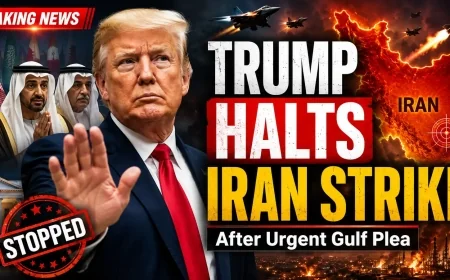
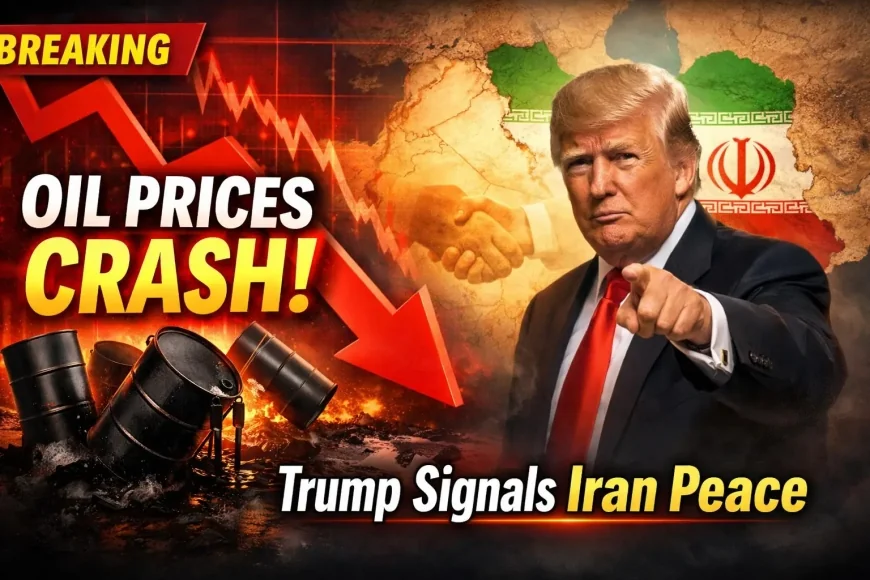
On Thursday—just minutes after U.S. stock markets experienced their sharpest decline since the onset of the Iran conflict—Trump stated that talks with Iran were proceeding "very well" and that he was postponing military strikes against Iran's energy infrastructure until at least April 6.
Yet, oil prices continued to rise. Jane Foley, Head of FX Strategy at Rabobank, notes that market reactions are becoming "increasingly muted," as there exists a "significant disconnect" between Trump's assurances and the complete absence of any corresponding acknowledgment from Tehran.
"Given the circumstances, many investors do not foresee a swift resolution to this conflict, and markets remain apprehensive."
Russ Mould, Investment Director at AJ Bell, observes that markets have now grown accustomed to Trump's pattern of behavior—specifically, his tendency to "frequently reverse course at the first sign of a political, stock market, or economic crisis."
He adds, "A certain degree of skepticism—or even outright pessimism—is gradually taking root among investors."
Thank you for reading this content.
Thank you for reading this content.
What's Your Reaction?
 Like
0
Like
0
 Dislike
0
Dislike
0
 Love
0
Love
0
 Funny
0
Funny
0
 Angry
0
Angry
0
 Sad
0
Sad
0
 Wow
0
Wow
0