





























AI Teachers & Cyber Humans: How 2050 Will Change Life Forever
By 2050, AI teachers, cybernetics, and digital twins could transform health, education, and human identity. Experts reveal what the future may hold.

The past 25 years have seen some astonishing technological advancements.
At the turn of the century, most computers connected to the internet via noisy dial-up connections, Netflix was an online DVD rental company, and most people hadn't even heard of smartphones.
Fast forward two and a half decades, and AI, robotics, and countless other innovations are emerging at an incredible pace.
So we asked experts what the next 25 years might bring.
Here are their predictions for the technologies we'll be using by 2050 – and how they could transform our lives.
The Fusion of Humans and Machines
Science fiction set in the 2050s often features examples of humans using technological enhancements to make themselves fitter, happier, and more productive.
In the 2000 hit game Deus Ex – which is set in 2052 – the player can inject themselves with tiny robots called "nanites."

These microscopic robots alter things at the atomic level, granting superhuman abilities such as enhanced speed and night vision.
This might sound like something from the distant future, but nanotechnology – engineering at the scale of a millionth of a millimeter – is already used in many everyday technologies.
In fact, it's working right now as you read these words – every smartphone or computer is powered by a central chip made up of billions of tiny transistors – these electrical components are built at the nanoscale to speed up data processing.
Professor Steven Bramwell of the London Centre for Nanotechnology explained that by 2050 we should expect the lines between machines, electronics, and biology to become "quite blurred." This means that by then we could see nanotechnology implants – but instead of disappearing like in Deus Ex, they would be used to "monitor your health or assist with communication."
Professor Bramwell said that machines on the nanometer scale could also become commonplace in medicine to "deliver drugs precisely where they need to go."
Cybernetics professor Kevin Warwick is equally interested in the study of augmentation, and is a step ahead of most people.
In 1998, he became the first person to have a microchip implanted in his nervous system, earning him the title of "Captain Cyborg." Professor Warwick believes that by 2050, advances in cybernetics – the science of the relationship between natural and mechanical systems – could lead to new treatments for diseases.
Software Services
 |
Turn your casino idea into a live platform — start your journey today |
He predicts that instead of medication, "deep brain electronic stimulation" will be used to partially treat some conditions such as schizophrenia.
He further suggests that we are likely to see more of the same kind of cybernetic enhancements that he has already trialed himself, allowing "your mind and body to be in different places."
And what if we wanted to test how the latest enhancement, or a new diet, affects our bodies without the risk of side effects?
Professor Roger Highfield, director of the Science Museum Group, believes that "digital twins" – virtual versions of a physical object, updated using real-time data – could become a regular part of our lives.
He envisions a world where each of us could have "thousands of easy-to-use twins" that could be used to find out "how different medications or lifestyle changes affect your unique biology."
In other words, we could preview our future before living it.
The Next Generation of AI
Several technology companies, including Google and IBM, are currently engaged in a multi-billion dollar race to revolutionize fields like AI through quantum computing.
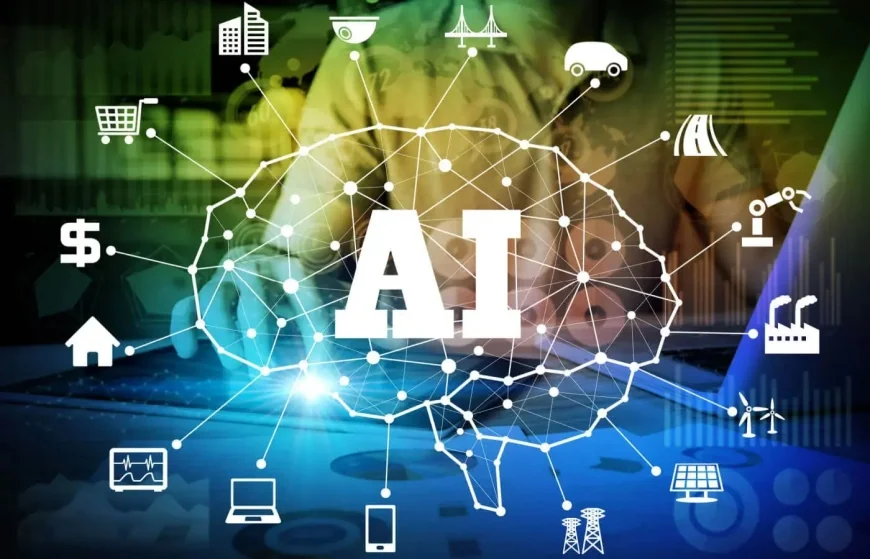
Quantum computers are machines that can perform incredibly complex calculations at incredibly high speeds – for example, simulating molecular interactions to design new drugs more quickly.
In January 2025, Jensen Huang, the boss of leading chip firm Nvidia, said he believed that "very useful" quantum computing would arrive within 20 years.
As we approach the halfway point of the century, AI itself will undoubtedly continue to play a major role in our society.
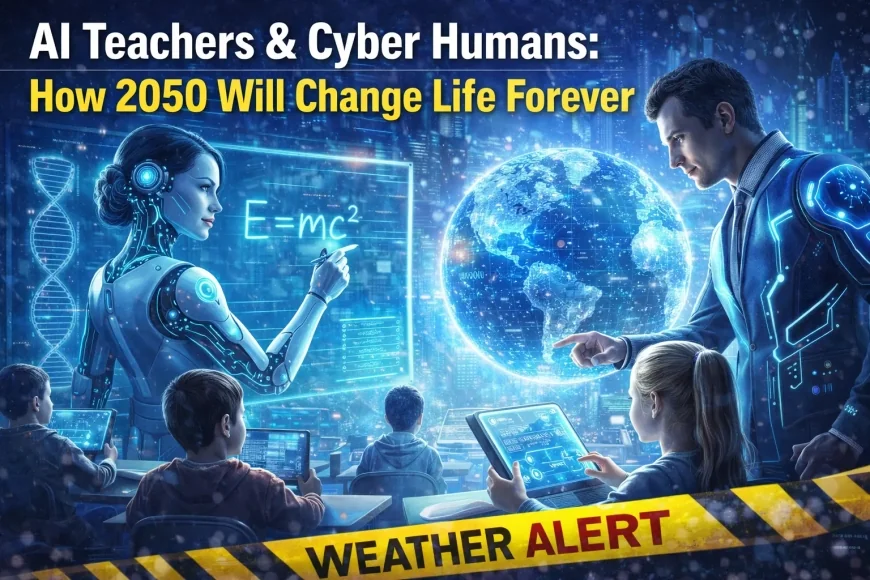
Futurist and author Tracey Follows, who helped write a government white paper on UK education in 2050, believes that learning will take place in "virtual and physical realities" using AI teachers that "adjust in real time."
Instead of books, she predicts that children will use "immersive simulations."
Meanwhile, education will become less standardized, with each child's individual DNA or biometric data being studied to understand how they learn best.
Thank you for reading this content.
Thank you for reading this content.
What's Your Reaction?
 Like
1
Like
1
 Dislike
0
Dislike
0
 Love
0
Love
0
 Funny
0
Funny
0
 Angry
0
Angry
0
 Sad
0
Sad
0
 Wow
0
Wow
0