

























China Visit: Mark Carney’s High-Stakes Balancing Act
Mark Carney’s China visit tests Canada’s trade diversification strategy as Beijing talks, human rights, and US ties collide in a high-risk diplomatic reset.

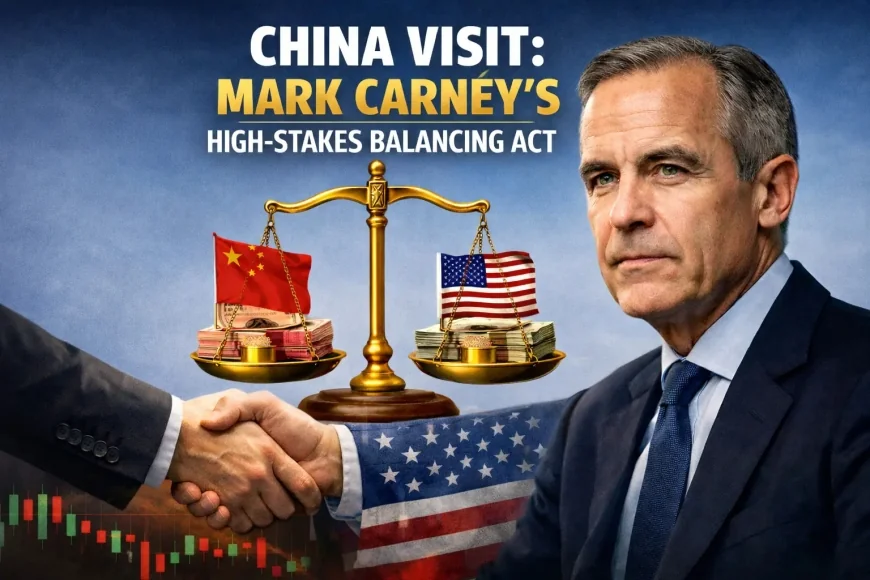
Canadian Prime Minister Justin Trudeau is traveling to China on a crucial visit aimed at repairing relations with Beijing and finding new economic opportunities for his country outside of the United States.
This will be no easy task, as Canada is under pressure to balance its goal of diversifying its trade with the need to avoid damaging its relationship with Donald Trump and compromising its commitments to national security and human rights.
But with ongoing uncertainty surrounding the future of Canada's trade with the United States – its largest trading partner – the country is now seeking to mend strained relations to protect its economy.
Senior Canadian officials have described the trip, the first by a Canadian prime minister to China since 2017, as "important and historic" and part of an "ambitious" plan to double Canada's non-U.S. exports over the next decade.
Trudeau's office said trade, agriculture, and international security would be on the agenda.Beijing's Foreign Ministry said the two countries have "shared interests" and should work to "enhance people-to-people ties and cultural exchanges."
Read Also
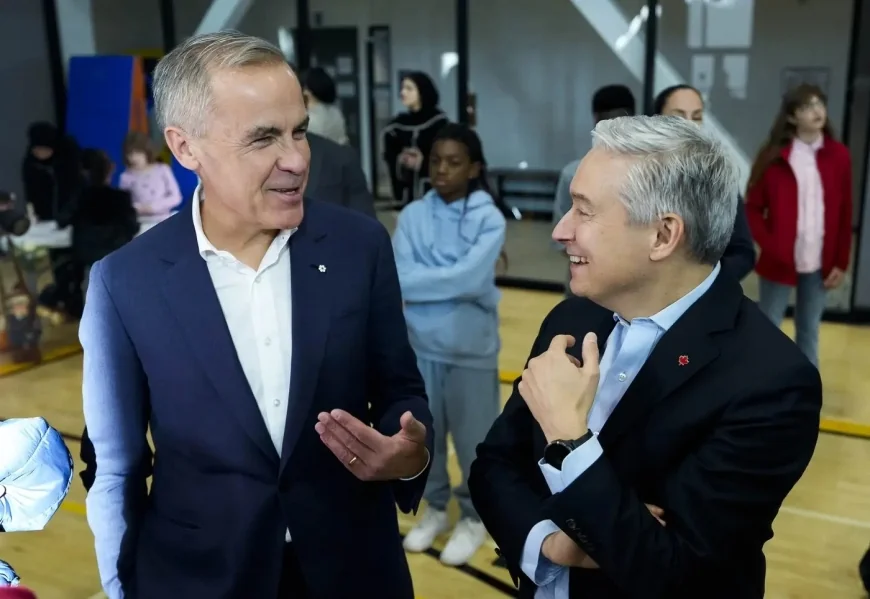
On Thursday, Trudeau will meet with Chinese Premier Li Qiang, as well as Zhao Leji, chairman of the Standing Committee of China's National People's Congress.
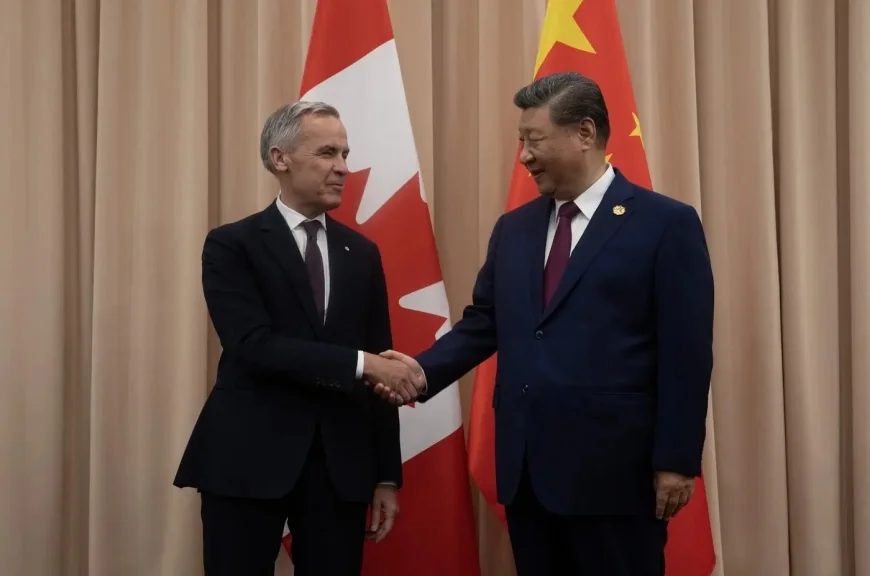
On Friday, the prime minister is scheduled to meet privately with Chinese President Xi Jinping, whom he last met on the sidelines of the Asia-Pacific Economic Cooperation summit in South Korea last year.
This official visit marks a significant step toward reconciliation, as Canada-China relations soured in 2018 when Huawei executive Meng Wanzhou was arrested in Vancouver on a U.S. warrant related to fraud charges stemming from alleged violations of sanctions against Iran.
The detention of the executive of a Chinese telecommunications giant in Canada angered Beijing, and China subsequently arrested two Canadian citizens on espionage charges. The three were released in 2021 after Meng reached a deal with US prosecutors.
More recently, China has been accused of interfering in Canadian politics, although a public inquiry into foreign interference found that its impact on recent federal elections was minimal. China has repeatedly denied the allegations of foreign interference.
Software Services
 |
All-in-one casino solution ready to launch — talk to our experts now |
Canada and China have struggled to build a meaningful relationship in the past.
Ottawa views China as "an increasingly disruptive global power" that "increasingly disregards" international rules and norms, although it acknowledges that some cooperation is necessary given China's size and influence. The Trudeau government does not see this upcoming visit as deviating from that perspective, senior Canadian government officials told reporters this week. But they also said that Canada cannot achieve its goal of reducing economic dependence on the United States without increasing trade with China.
Trudeau is reportedly focusing on increasing cooperation in areas of mutual interest such as energy and climate, and setting boundaries in areas where the two countries clash, such as defense and critical minerals.
"I think we're now approaching this relationship with a realism that we haven't seen in decades," former Canadian diplomat Colin Robertson told the BBC.
Robertson added that "if both sides understand where they're coming from and what the red lines are, then it can be a healthy relationship."
It has already proven to be a difficult path. Ahead of Trudeau's trip, two Liberal MPs cut short a Taiwan-sponsored visit, telling the Globe and Mail newspaper that while Canada's position on Taiwan "has not changed," the trip was shortened to "avoid any confusion with our foreign policy, given the Prime Minister's engagements in Beijing." One of Canada's main objectives during this trip is to reduce Chinese tariffs on Canadian canola, which have hurt farmers in the country's prairie provinces.
China imposed the agricultural tariffs last year, seen as retaliation for Canadian levies announced in 2024 on Chinese electric vehicles, similar to those imposed by the United States.
In an editorial this week, the state-run Global Times newspaper pointed to the frustration expressed by Canadian farmers, suggesting that "perhaps this was the heavy price (Canada) paid for blindly following the United States." China has made it clear that it wants the tariffs on EVs removed.
For China, Canada is a significant trading partner, with trade between the two countries valued at approximately $118 billion in 2024. But most importantly for Beijing, if President Xi Jinping can strike a deal with Prime Minister Justin Trudeau, it would give China greater influence in a country that is on America's doorstep.
The Global Times editorial called on Ottawa to pursue a foreign policy path independent of the United States and to exercise "strategic autonomy."

A major uncertainty surrounding this trip is how the United States will react to any deal struck between Canada and China. The Canadian economy has been impacted by U.S. tariffs, particularly on its steel, aluminum, and automotive sectors. Negotiations to reduce these tariffs remain stalled.
However, Canada will soon be involved in crucial negotiations to renew the long-standing North American Free Trade Agreement with the United States and Mexico, which has shielded it from Trump's significant tariffs. This review is expected to be completed later this year.
Former diplomat Robertson said it's likely the U.S. is watching Canadian-Chinese relations "very closely," and that Canada is keeping the U.S. "well-informed" about its intentions.
But he added: "Ultimately, we are looking out for Canada's interests."
Thank you for reading this content.
What's Your Reaction?
 Like
0
Like
0
 Dislike
0
Dislike
0
 Love
0
Love
0
 Funny
0
Funny
0
 Angry
0
Angry
0
 Sad
0
Sad
0
 Wow
0
Wow
0