




























Donation, composting, animal feed, and surplus food markets
"There's no single solution, but rather a combination of solutions. We view it as a food waste supply chain," said McAuley. He added that grocery stores, in particular, find this market a good fit for their excess food waste.

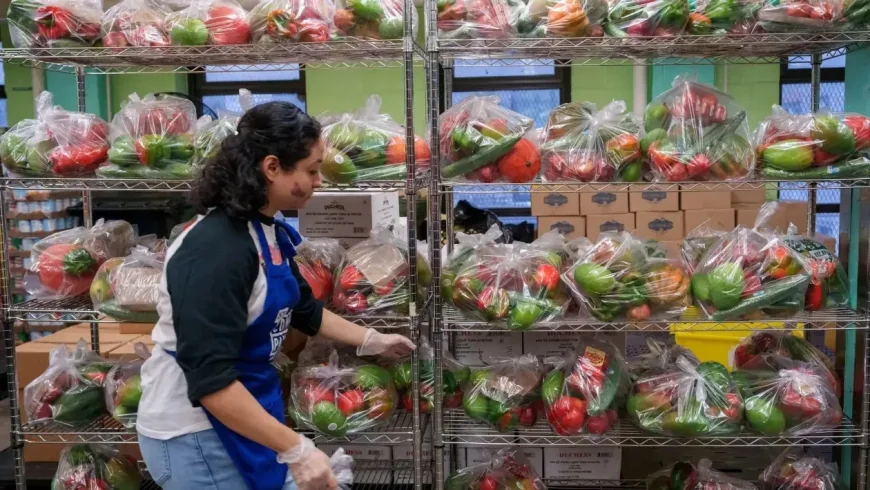
"There's no single solution, but rather a combination of solutions. We view it as a food waste supply chain," said McAuley. He added that grocery stores, in particular, find this market a good fit for their excess food waste.
His organization isn't alone in recognizing the need for more solutions to this problem. From large investors to small businesses, everyone is realizing that food waste businesses can save money and feed people.
Efram Kaplan, senior managing director at Brown Gibbons Lang & Co., who heads investment banking in environmental services, environmental infrastructure, and energy transition, said, "The volume of transaction activity and interest in this sector is quite impressive."
Kaplan says that while waste management businesses are nothing new, the consistency and predictability of returns are attracting investor attention. He said, "I've been in this business for 25 years, and I believe it's been undervalued for some time."
Experienced and wealthy infrastructure investors looking for stable returns are discovering that profits can be made from waste in the US. "While this kind of capital has been prevalent in Europe for some time, it's just beginning here," Kaplan said.
The barriers to entry into this business are decreasing, but it still requires significant investment, often in equipment.
"I think it's easier than ever because if you have a good idea, technology lowers the barriers to entry," McAuley said.
Food Waste from Home to Commercial Kitchens
Some solutions are reaching the consumer directly. Mill, a startup founded by one of the companies that makes the Nest smart thermostat, has received a $100 million investment for its smart kitchen bin, which dries, shrinks, and deodorizes leftover food, eliminating food waste.
Other methods are also entering the commercial waste landscape. MetaFoodX, a startup that raised $9.4 million in Series A funding in May 2024, has created a 3D AI scanner that monitors food in commercial kitchens—what's being used, what's being wasted, and where there's room for improvement.
Buddy Bockweg, CEO of WeSimple, which works with industrial and environmental services companies (including waste management providers) to digitize and streamline operations, from field dispatch to invoicing, says startups have a unique ability to use technology to compete with larger companies.
"AI is capable of streamlining everything in terms of dispatch," Bockweg said. "Those who are investing in technology to advance their operations are winning and making more money."
Tyler Frank, president and founder of Portland, Maine-based Garbage to Garden, started small and has now expanded. He started his business in 2012 with $300 and a truck when, while living in his apartment, he realized there wasn't an easy way to compost waste. Garbage to Garden offers compost buckets and subscription-based route pickup. Waste is composted and delivered to nearby fields, or customers can order soil back.
"I think the barriers to entry were low when I started, but it's a very long and arduous climb. You have to achieve economies of scale," Frank said. He realized that garbage would remain a business regardless of other economic factors. "It's a recession-proof business and an idea whose time has come," Frank said.
What started as a bucket subscription business is now expanding into more and more municipal contracts. Garbage to Garden now serves 50,000 customers and has secured pickup contracts in cities like Boston and Medford, Massachusetts.
What's Your Reaction?
 Like
0
Like
0
 Dislike
0
Dislike
0
 Love
0
Love
0
 Funny
0
Funny
0
 Angry
0
Angry
0
 Sad
0
Sad
0
 Wow
0
Wow
0