











England Freezing Rail Fares Next Year
The British government has announced that rail fares will be frozen next year for the first time in 30 years.

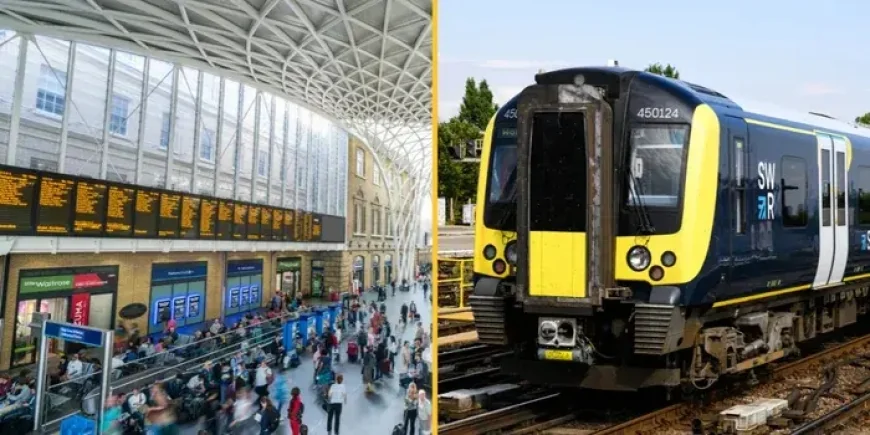
The British government has announced that rail fares will be frozen next year for the first time in 30 years.This freeze will apply to regulated fares, including season tickets and off-peak returns, until March 2027.
The most recent fare increase, in March 2025, was 4.6%. Rail fares traditionally increase in January based on the July rate of the Retail Price Index (RPI) + 1% – although this formula has not always been followed.
The announcement comes just days before the Chancellor outlines the government's financial plans in the Budget on Wednesday, in which Rachel Reeves has indicated that reducing the cost of living will be a key focus.
However, the Chancellor is also expected to raise taxes to help fill a multi-billion pound gap in her spending plans.
Approximately 45% of rail fares in England, Wales, and Scotland are regulated by the government – but this freeze only applies to travel within England. The announcement applies only to services operated by companies operating trains in England.
Regulated fares include season tickets for most round-trip routes, some off-peak return tickets for long-distance journeys, and flexible tickets for travel in and around major cities.
Train operators are free to set prices for unregulated fares, but they generally rise at the same rate.
The government stated that the aim of freezing rail fares was to "directly offset inflation" by keeping a "large proportion of everyday expenses" low.
Since 2021, annual increases have occurred in March instead of January.
A government source acknowledged that it is possible that unregulated fares may still rise, but stressed that they generally remain in line with regulated fares.
Unregulated fares increased by 5.5% in the year to March 2025, 1.1% more than regulated fares – bringing the total rail fare increase to 5.1% in that time.
Asked whether other ticket prices would increase to compensate for the freeze on regulated fares, Transport Secretary Heidi Alexander insisted the policy was "fully funded."
She told the Laura Kuenssberg Program on Sunday that regulated fares influenced the price of unregulated fares and that they generally "track against each other."
When pressed on whether the policy would mean the government would have to spend less on upgrading the transport system, Alexander said investment in the rail network would be protected "because we believe investing in this country's infrastructure is the right long-term decision."
The Rail Delivery Group, a representative body of UK rail operators, said the freeze would be "good news for customers."
A spokesperson said, "We want our railways to thrive, which is why we are committed to working closely with the government to ensure that upcoming railway reforms deliver real benefits to customers."
Since 1996, the government has regulated some train fares following the privatization of British Rail.
This freeze is the first time fares have been frozen since then, although there have been periods when price increases were lower than the RPI, and prices fell after the financial crash in 2010.
The government estimates that this move will save those traveling on more expensive routes more than £300.
The Chancellor said the freeze is being implemented to ease the pressure on the cost of living and "make travel to work, school, or to visit friends and family a little easier."
The Transport Secretary said this was part of "big plans to rebuild Great British Railways."
Great British Railways is a public body being created, and it is part of the government's plans to bring parts of the railway system into public ownership.
The government has said it will take over the running and management of tracks and trains, which will "end years of fragmentation, improve standards for passengers, and provide easier journeys and better value for money."
The government has said that part of its plan for the new body is to "gradually move away from flat annual increases."
Labour said that under the previous Tory government, passengers faced "constant" fare increases every year.
However, Shadow Transport Secretary Richard Holden said: "In government, the Conservatives kept fares on track with increases below inflation and consistently called for no further increases to protect hardworking passengers."
Liberal Democrat transport spokesman Ollie Glover welcomed the moratorium but said it was "too little, too late for millions of passengers who have suffered exorbitant price increases for years."
He added: "We need a genuine long-term plan to deliver a reliable, affordable railway, not just a temporary political solution just days before a difficult budget."
Meanwhile, the government is expected to announce an additional £1.3 billion in funding for a scheme to promote the use of electric vehicles in the budget.
But it's also possible that electric vehicle owners could face a new tax in the form of a pay-per-mile charge.
The Chancellor is expected to set out several small tax increases in her budget, after backing away from raising income tax rates – a move that would have been a clear violation of Labour's election promise not to raise "the basic, higher, or additional rates of income tax."
However, the government has not ruled out extending the freeze on the income tax threshold – the level at which people start paying tax or are required to pay higher rates.
The freeze means that any salary increase will result in higher tax, pushing more people into higher tax bands or having to pay tax on their income for the first time.
Reeves is also expected to abolish the two-child benefit cap, a limit that means parents can only claim Universal Credit or tax credits for their first two children.
There has been pressure from Labour MPs to remove this cap, which was introduced under the Conservatives – a move that could cost over £3 billion.
Speculation about which taxes might be increased continued for months before the budget, and the media discussed a number of potential measures.
Former Chief Economist of the Bank of England, Andy Haldane, said that these leaks had been "costly to the economy" and "disrupted businesses and consumers."
However, he acknowledged that leaks had occurred before the budget under previous governments and that "the budget process has been deteriorating for many years."
In response, Alexander said that the budget process took place in "changing circumstances," with productivity estimates falling and the "global economic environment being very difficult."
The Transport Secretary said that speculation always occurs before the budget, but the Chancellor was clear about her priorities and was "open and honest" with the public.
What's Your Reaction?
 Like
0
Like
0
 Dislike
0
Dislike
0
 Love
0
Love
0
 Funny
0
Funny
0
 Angry
0
Angry
0
 Sad
0
Sad
0
 Wow
0
Wow
0