
























Starmer Refuses to Pick Sides Between the US and China
Labour leader Sir Keir Starmer refuses to choose between the US or China, highlighting 5 key reasons the UK is balancing trade, security, and diplomacy.

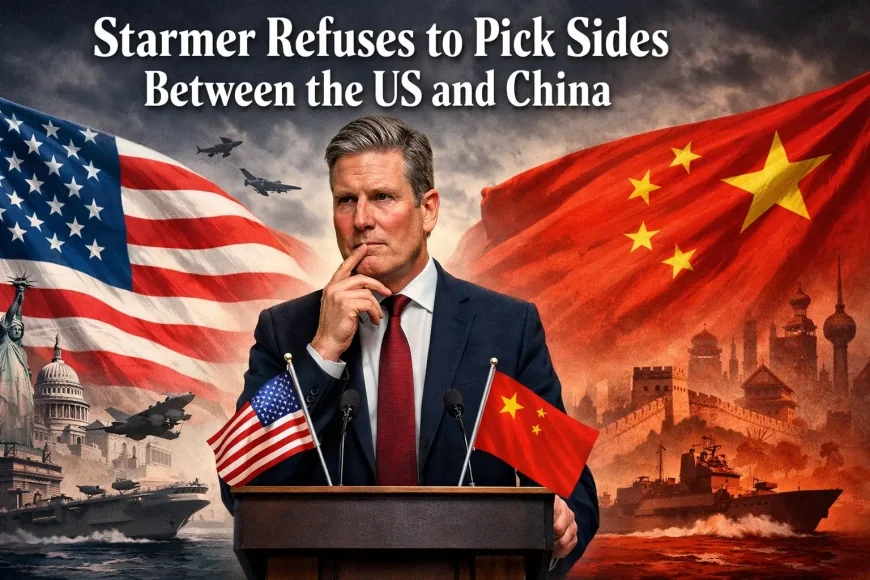
Labour leader Sir Keir Starmer has said he will not be forced to "choose between" the US and China in his relationships with the two countries, ahead of the first visit to Beijing by a British leader in eight years.
Sir Keir said the UK would maintain its "close relationship" with the US on trade, security and defence matters, but added that "burying our heads in the sand and ignoring China... would not be sensible".
In an interview with, he said the trip to the world's second-largest economy could bring "significant opportunities" for British companies. Dozens of UK business leaders are expected to travel with him.
The visit comes days after the UK approved controversial plans for a vast new Chinese embassy in London.
The long-delayed decision was taken despite warnings from opponents that it could be used as a base for Chinese espionage.
"I'm often asked to choose between countries. I don't do that," Sir Keir said in the interview.
"I remember when I was doing the US trade deal, and everyone said to me I had to choose between the US and Europe, and I said, 'I'm not making that choice.'"
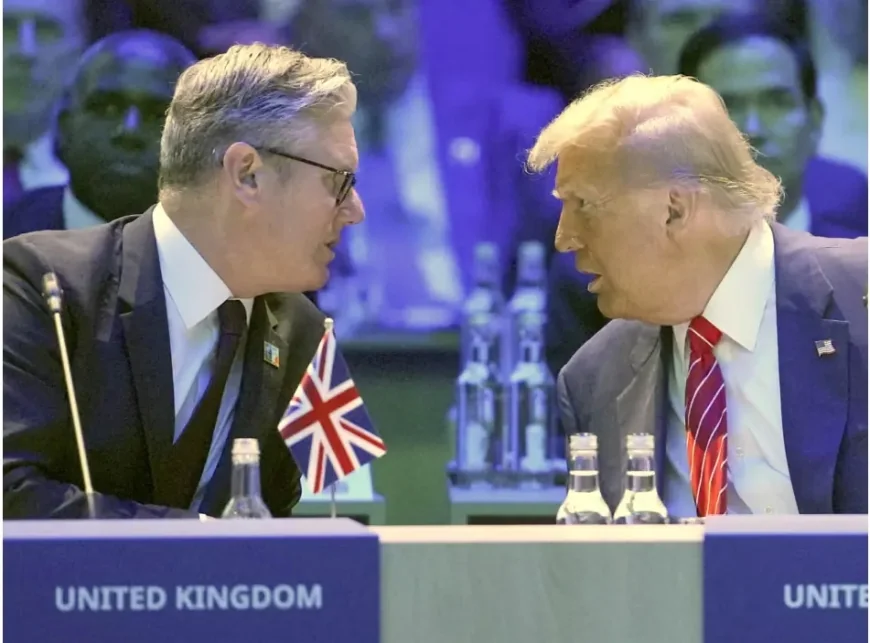
He added: "We have a very close relationship with the US – of course, we want to – and we will maintain that on security and defence, as well as trade."
"Equally, when China is the second-largest economy in the world and there are trade opportunities there, it would not be sensible to bury our heads in the sand and ignore China."
Regarding the delegation accompanying him on the trip to China, Sir Keir said: "They understand what the opportunities are... It doesn't mean compromising national security – quite the opposite."
The trip, which includes stops in Beijing and Shanghai, comes after several turbulent weeks in relations between the US and its allies. In recent weeks, US President Donald Trump had threatened to impose tariffs on allies who opposed his demand to acquire Greenland, and later sparked outrage in the UK by suggesting that NATO troops should "pull back a little" from the front lines in Afghanistan.
Trump also threatened to impose 100% tariffs on Canadian goods if Canada struck a trade deal with China. Sir Keir had previously said that failing to properly manage the relationship with China would be a "dereliction of duty," and he rejected the "isolationism" advocated by critics of the Chinese government in the UK.
Software Services
 |
Start your own gaming platform for just $3,000 |
"For years we've been hot and cold," he said. "We've had a golden era, which then turned into a frosty era. We reject this binary choice."
Sir Keir suggested he would raise differences with Beijing on human rights, including the case of Jimmy Lai, the Hong Kong pro-democracy media tycoon who was convicted in December of colluding with foreign forces.
Lord Chris Patten, Hong Kong's last British governor, told the Press Association that it would be "pathetic" if Sir Keir did not raise the case of Lai, who is a British citizen.
Lord Patten added that British policy towards China was based on a "lie" that "in order to trade with them, we have to avoid saying anything they don't like or doing anything they don't like."
He continued: "What won't work is if it becomes an 'oh, by the way' issue in meetings, where you don't actually raise anything until the very end, as you're walking out, just so you can tell the press that you did."
Thank you for reading this content.
Thank you for reading this content.
What's Your Reaction?
 Like
0
Like
0
 Dislike
0
Dislike
0
 Love
0
Love
0
 Funny
0
Funny
0
 Angry
0
Angry
0
 Sad
0
Sad
0
 Wow
0
Wow
0