




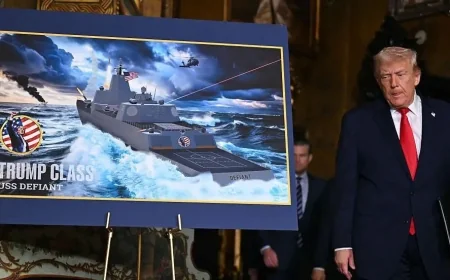






Trump’s Venezuela Raid Sparks Chaos — China Now at Risk
Trump’s Venezuela raid sparks chaos, threatens Chinese influence, and reshapes global power. Experts warn US-China rivalry may escalate in Latin America.


It took Donald Trump just a few hours to shatter decades of carefully cultivated relations with China.
Hours before being captured in a nighttime raid, Venezuelan President Nicolás Maduro was meeting with senior diplomats in Beijing, praising his Chinese counterpart Xi Jinping, calling him a “big brother” and someone who was sending “a powerful message to the world as a leader.”
China has invested heavily in oil-rich Venezuela, one of its closest South American partners. And its state media showed footage of that meeting to prove it: smiling men in suits reviewing some of the 600 existing agreements between their two countries—except that the next image of Maduro was taken aboard an American warship, blindfolded and handcuffed, wearing a gray sweatsuit.
China joined many countries around the world in condemning Washington’s shocking move against a sovereign nation. It accused the U.S. of acting like the “judge of the world” and insisted that “the sovereignty and security of all countries should be fully protected under international law.”
Beyond these strong words, Beijing will be carefully calculating its next moves, not only to consolidate its foothold in South America but also to manage its already difficult relationship with Trump, as the great power rivalry between the U.S. and China takes a new, entirely unpredictable turn.
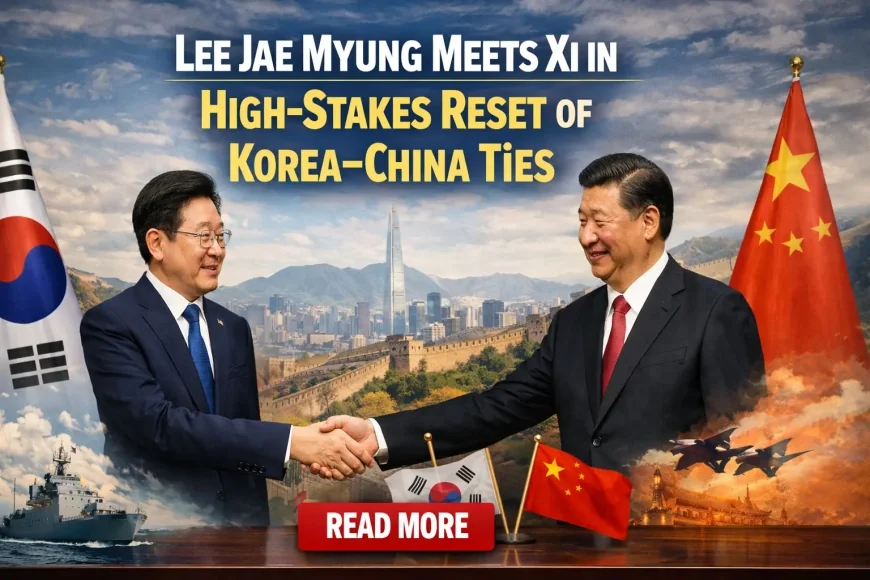
Many see this as an opportunity for China’s authoritarian Communist Party rulers. But there are also risks, uncertainties, and frustrations, as Beijing tries to figure out what to do after Trump has torn up the international rulebook that it spent decades trying to play by.
Beijing, which likes to play the long game, abhors chaos. It is facing a lot of it in Trump’s second term. He had planned ahead and weathered the intermittent trade war. Xi likely felt he had shown the US and the world just how dependent they are on Chinese manufacturing and technology.
But now Beijing faces a new challenge.
Trump's move on Venezuelan oil has likely reinforced China's deep suspicions about American intentions – how far will the US go to contain Chinese influence?
Speaking to NBC on Sunday, US Secretary of State Marco Rubio declared: "This is the Western Hemisphere. This is where we live – and we are not going to allow the Western Hemisphere to become a base of operations for America's adversaries, competitors, and rivals." The implicit message was for Beijing: Stay out of our backyard.
Software Services
 |
Turn your casino idea into a live platform — start your journey today |
Beijing is unlikely to heed the warning. But it will wait to see what happens next.
On Wednesday, Beijing strongly condemned a US report suggesting Washington would order Venezuela's interim president to sever economic ties with China and Russia.
Chinese Foreign Ministry spokesperson Mao Ning told reporters that this was "a typical act of bullying, a serious violation of international law, a serious attack on Venezuela's sovereignty, and will seriously harm the rights of the Venezuelan people."
Some are wondering if China is waiting to see if it can do something similar in Taiwan, the self-governing island it considers a breakaway province.
Xi has vowed that Taiwan will one day be "reunified" with the mainland and has not ruled out the use of force to achieve this. And some nationalists on Chinese social media are asking: If the US can take unilateral action in Caracas, what's stopping Beijing from kidnapping the Taiwanese president?
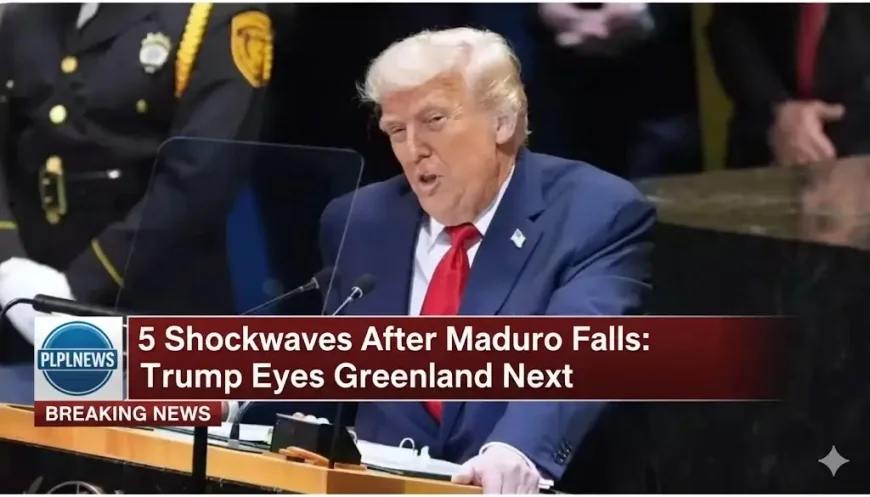
One reason Beijing might not see these parallels is that it considers Taiwan an internal matter, not a concern of the international order. But more importantly, if Xi decides to attack the island, it won't be because the U.S. has set a precedent, according to David Sacks of the Council on Foreign Relations. He writes that China is "not confident that it can succeed at an acceptable cost."
"However, until that day comes, China will continue its strategy of applying pressure to weaken the Taiwanese people, with the goal of bringing Taiwan to the negotiating table. U.S. actions against Venezuela do not change this situation."
Rather, these actions represent a challenge that China didn't need and didn't want—and they are risky for its long-term plans to win over the Global South.
The relationship between Beijing and Caracas was fairly straightforward. China needed oil. Venezuela needed cash. From around 2000 to 2023, Beijing provided Venezuela with more than $100 billion for railways, power plants, and other infrastructure projects. In return, Caracas supplied Beijing with the oil it needed to fuel its booming economy.
Software Services
|
Create, launch, and scale your gaming platform — get instant access |
Last year, nearly 80% of Venezuela's oil exports went to China. This still only accounts for about 4% of the country's total oil imports. Therefore, when it comes to China's financial exposure in Caracas, "it's important to put things into perspective," says Eric Olander, editor-in-chief of The China-Global South Project.
"Chinese companies like CNPC and Sinopec are among the largest players there, and there's a risk that those assets could either be nationalized by Venezuela, possibly at the behest of the U.S., or simply sidelined amidst the chaos."
Venezuela also owes Chinese creditors approximately $10 billion in outstanding loans, but again, Olander advises caution, as it's unclear whether any of the investments in the country are currently at risk.
But this could deter future investors. Cui Shoujun of Renmin University's School of International Relations told Chinese state media, "Chinese enterprises should fully assess the risks and scope of potential U.S. intervention before investing in relevant projects."
Beijing won't want to jeopardize the delicate trade agreement it just signed with the U.S., but it also won't want to lose its foothold in Latin America. Striking that balance will be difficult, especially with an unpredictable figure like Trump.
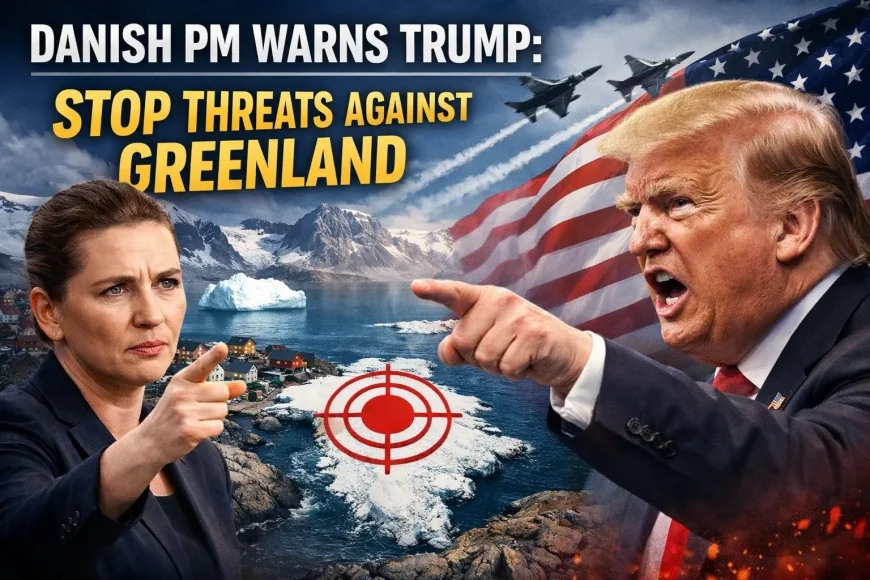
The concern for China is that other South American countries will begin to worry about significant Chinese investments "out of fear of attracting unwanted U.S. attention," Olander says. "This region is a vital source of food, energy, and natural resources for China, with two-way trade now exceeding half a trillion dollars."
The US has also made it clear that it wants the Panamanian government to revoke all Chinese port holdings and investments related to the Panama Canal, which, it says, "is undoubtedly a matter of concern for China."
Therefore, Beijing may have to win the battle in Washington's backyard through other means.
China has shown patience and persistence in courting South America. The Global South is a group of countries that have signed up for a "community with a shared future" and appeal against "unilateral bullying."
This message resonates with governments that have grown wary of the West, and especially of Washington under Trump. China typically makes it clear from the outset what it expects from its partners – that they adhere to the "One China" principle and recognize Taiwan as an "inseparable part" of China.
Beijing has had considerable success in persuading Latin American countries to switch diplomatic recognition from Taiwan to China, with Costa Rica, Panama, the Dominican Republic, El Salvador, Nicaragua, and Honduras joining the $19 trillion economy's strategic partnership over the past 20 years.
In contrast, Trump has demonstrated that a relationship with Washington can be volatile. And this could work to China's advantage, as it now seeks to present Xi as a more stable leader than ever before.
"This is important because the situation in Venezuela could easily descend into chaos," says Olander. "Also, don't forget the lessons from Iraq, where the US also said that the country's oil reserves would pay for the reconstruction of the economy. That didn't happen, and China is now the largest buyer of Iraqi crude oil. Something similar could easily happen in Venezuela." For years, anti-China voices in Congress had been urging the U.S. to counter Beijing's growing influence in South America. It has now taken a step in that direction, but no one is certain what will happen next.
Everything about this is a gamble—and by all accounts, Beijing doesn't like to gamble.
Thank you for reading this content.
Thank you for reading this content.
What's Your Reaction?
 Like
0
Like
0
 Dislike
0
Dislike
0
 Love
0
Love
0
 Funny
0
Funny
0
 Angry
0
Angry
0
 Sad
0
Sad
0
 Wow
0
Wow
0