




Europe Faces Russia Alone
Kaja Kallas, the European Union foreign policy chief, asked her officials this week to dig up the number of times Russia had – in its various guises – invaded other states in the 20th and 21st centuries.

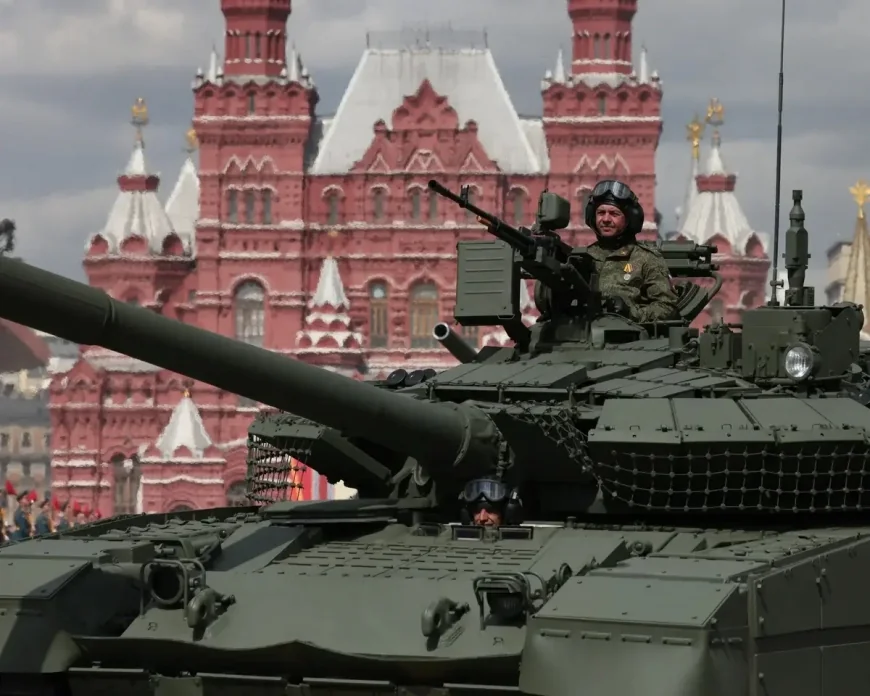
The answer that came back was 19 states, on 33 occasions. Kallas, the former Estonian prime minister, was not just indulging in some form of historical mathematics. She was seeking to make a point that lies at the heart of the dispute between the US and Europe over Ukraine’s future, a dispute that has again revealed the chasm across the Atlantic about the true nature of the Russian regime.
Kallas reads history books as a leisure activity and – drawing on her own country’s history of Soviet occupation – has long maintained that the Soviet Union fell, but its imperialism never did. “Russia has never truly had to come to terms with its brutal past or bear the consequences of its actions,” she has said, arguing that the nature of the Russian regime means “rewarding aggression will bring more war, not less”: Putin will come back for more.
A similar warning was made this week by the German foreign minister, Johann Wadephul, who said: “Our intelligence services are telling us urgently: Russia is at least creating the option of a war against Nato by 2029 at the latest.” Putin is recruiting nearly one new division a month, Wadephul said, adding: “Divisions that are undoubtedly also targeting us, at the EU, at Nato.”
The French president, Emmanuel Macron, has described Russia “as a constant destabilising power, trying to revise the borders to extend his power”. Putin, he said, is “a predator, an ogre at our gates who constantly needs to eat for his own survival”. In short, “he is a threat to Europeans”.
The British prime minister, Keir Starmer, told MPs: “We know that without that deterrence, [Putin] has the ambition to go again, and he will go again – and we must guard against that.”
All this is diametrically opposite to the view of US isolationists. Steve Witkoff, the New York property developer currently representing the US on the world stage – but also coaching Russia on how to win over Donald Trump – has admitted he knows little history, telling the Atlantic in May that he had been watching some Netflix documentaries to rectify this.
But based on his four visits to Moscow, he largely treats Russia like any other country, and Vladimir Putin like any other world leader. He told Tucker Carlson he was certain that Russia would not want to take further territory in Europe once Putin was given four regions of Ukraine. “I think there’s this sort of notion of: ‘We’ve all got to be like Winston Churchill – the Russians are gonna march across Europe’ – I think that’s preposterous,” he said.
Witkoff added: “I don’t regard Putin as a bad guy. That is a complicated situation, that war and all the ingredients that led up to it. You know, it’s never just one person, right?” Russia genuinely wants peace, he opines. Trump largely holds the same benign view of Putin. His vice-president, JD Vance, has ridiculed the idea that Putin had expansionist designs. Putin was not Hitler, he explained – setting the bar for acceptability quite low. Putin on Thursday offered to put in writing he would not invade another European country.
Depressingly for Europe, that means that no matter how frequently it managed to push the Trump pendulum away from Russia, the pendulum reverts back to a natural position of sympathy for Putin. Every time Europe feels it is on the verge of locking Trump into the belief that Russia is an aggressor that threatens European and, by extension, US security, Trump gives Putin another chance, “another two weeks”, another phone call. Trump’s one fixed belief is that Ukraine cannot win the war, and should cut its losses.
But never until the emergence this month of a 28-point US-Russian plan to end the war – and the subsequent revelation that Witkoff had apparently coached Russian officials on how to win Trump round – had European leaders seen precisely how US officials envisioned a new European order in which Russia, in the name of realism, is rewarded and not punished for its unlawful invasion of Ukraine. Once again blind-sided by Trump, European leaders read paragraph after paragraph of the US proposal with a mixture of disbelief and panic.
The former French president François Hollande said: “We are living through a moment that is both historic and dramatic. It is historic because this plan not only marks Ukraine’s capitulation, but also Europe’s relegation to the tutelage of a Russian-American condominium. It is dramatic because, for Ukraine, it means the definitive loss of a third of its territory and offers no security guarantees to protect it from further Russian aggression. It is dramatic, too, because this plan is nothing more than Trump adopting Vladimir Putin’s demands, reducing Europe to the role of a besieged bystander”.
Josep Borrell, Kallas’s predecessor as head of EU foreign affairs, said: “Trump’s plan to end the war in Ukraine exposes the failure of the EU’s appeasement strategy. Giving in to his demands on military spending, tariffs, digital deregulation, multinational taxation and energy supplies has achieved nothing. With the 28-point plan to end the war in Ukraine, Trump’s United States can no longer be considered an ally of Europe, which is not even consulted on matters affecting its own security. Europe must acknowledge this shift in US policy and respond accordingly.”
François Heisbourg, senior adviser for Europe at the International Institute for Strategic Studies, compared the plan to the 1940 armistice signed between Nazi Germany and a defeated France. “It is essentially a peace arranged on Russia’s terms,” he said.
John Bolton, Trump’s former national security adviser turned critic, was even more scathing. “I’m thinking of all those people over the past year who have been saying: ‘Hey, Trump’s changed his mind, he’s going to support Ukraine.’ I don’t know how many times it will take to prove it. He doesn’t care about Ukraine,” he said.
What's Your Reaction?
 Like
0
Like
0
 Dislike
0
Dislike
0
 Love
0
Love
0
 Funny
0
Funny
0
 Angry
0
Angry
0
 Sad
0
Sad
0
 Wow
0
Wow
0