

















Global Tensions Rise as Trump Keeps Iran Plan Under Wraps
Trump’s Iran strategy remains uncertain after his State of the Union, as nuclear negotiations intensify and Middle East tensions surge globally.

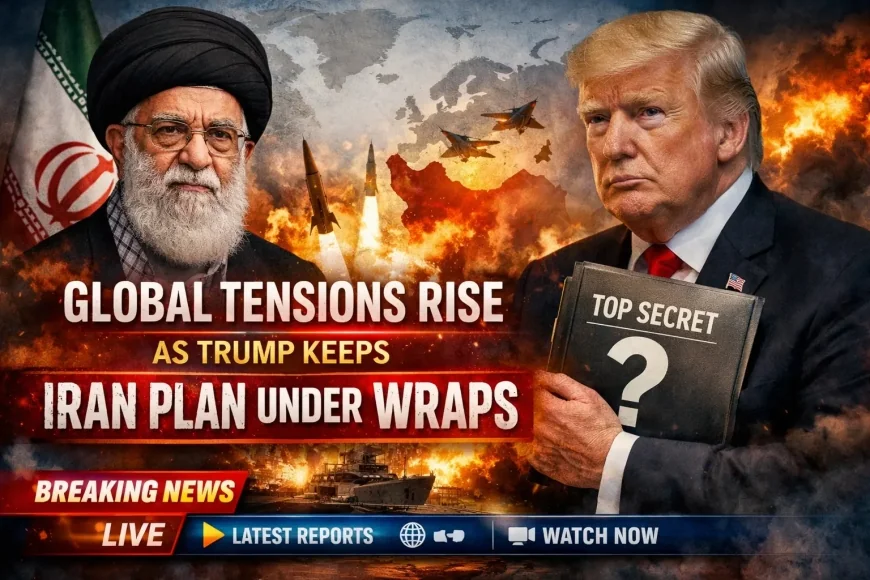
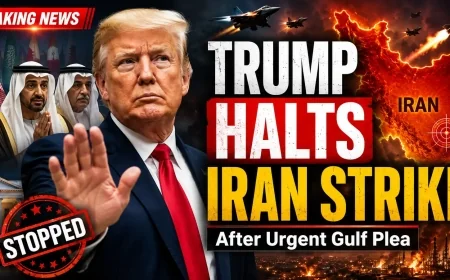
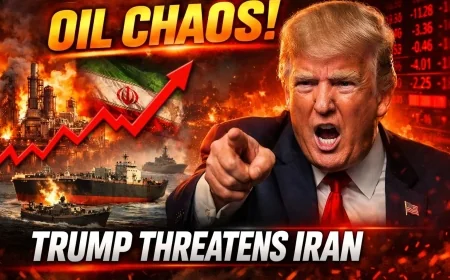
The world is waiting to see what US President Donald Trump will do next in the Middle East, but he offered no clear indication in delivering the longest State of the Union speech ever.
The world's most powerful commander-in-chief chose not to fully address potential military action against Iran during the largest concentration of American forces in the Middle East since the US-led invasion of Iraq in 2003.
Two decades ago, President George W. Bush toured the US and beyond to lay the groundwork for a major military intervention, albeit based on faulty intelligence.
Trump may have decided it's not an issue when his political base, which elected him to avoid wars, is more focused on the state of the economy and the fight over immigration just months before the crucial midterm elections.
Or it could reflect his repeated assertions that he hasn't yet decided which path to take. He has consistently maintained that he prefers to strike a deal rather than launch a deadly war.
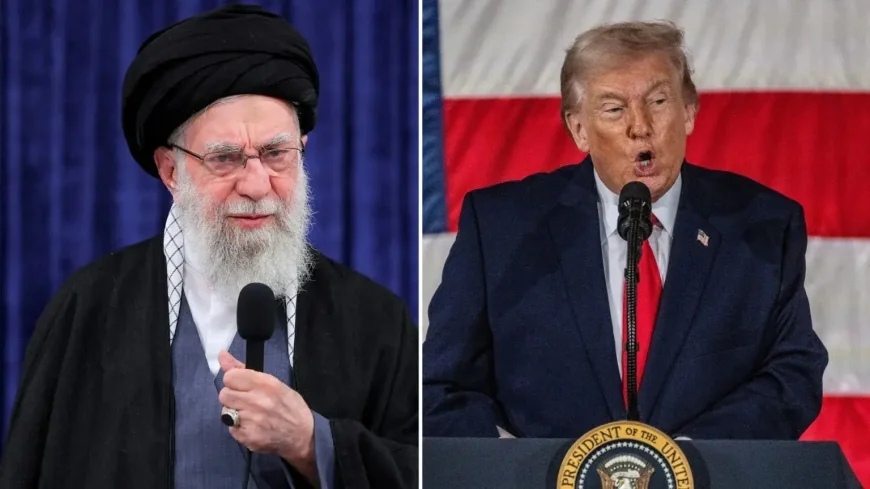
The next crucial round of talks in Geneva on Thursday – the third this month – is expected to be crucial for his decision-making.
A diplomat familiar with the process said, "If President Trump does not receive an approved text from Tehran through his emissaries, he could order some kind of military action soon."
The president, who has repeatedly shifted his stance on his endgame in Iran – from minor nuclear issues to major regime change – emphasized one of his consistent demands in his speech: "We have not heard those secret words from them: 'We will never want nuclear weapons.'"
Yet, just hours earlier, Iran's Foreign Minister and top nuclear negotiator, Abbas Araghchi, reiterated much the same point on X: "Iran will never, under any circumstances, develop nuclear weapons."
This is definitive evidence that Tehran is moving in the direction of a key issue in the ongoing negotiations, mediated by the Gulf nation of Oman.
Iran has indicated it is willing to compromise on its nuclear program in exchange for the lifting of sanctions crippling its economy.
Software Services

In January, rising prices and a falling currency led to a wave of unrest, which was suppressed with great force.
The US Human Rights Activists News Agency (HRANA) puts the confirmed death toll at more than 7,000, including 6,488 protesters, and is still investigating reports of thousands more deaths. The Iranian government says the figure is around 3,100.
In his speech, Trump said authorities appear to have killed "at least, it appears, 32,000 protesters."
Iranian Foreign Ministry spokesman Esmail Baqai immediately dismissed the president's claims about the death toll as a "blatant lie."
Trump also alleged for the first time that Iran was "working on missiles that will soon reach the United States." This appeared to be another red line. Iran has repeatedly refused to include its ballistic missile program in the talks.
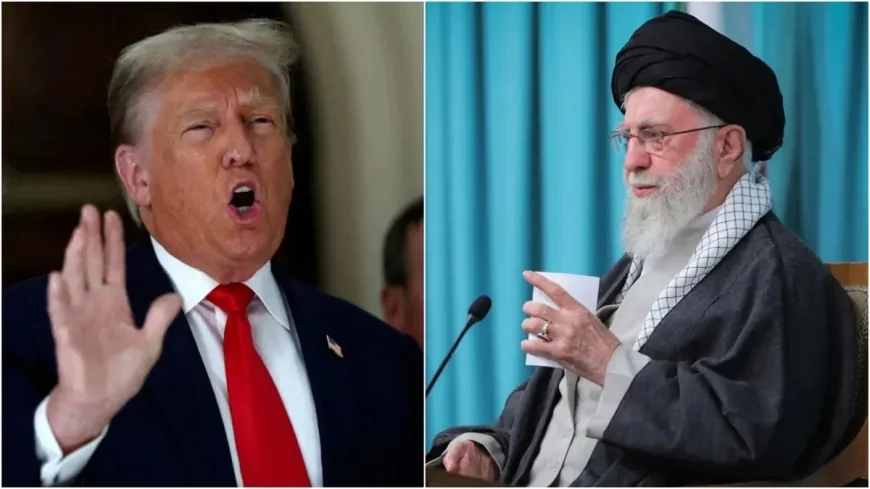
Deputy Foreign Minister Majid Takht-Ravanchi, a leading member of the negotiating team, said, "When we were attacked by the Israelis and the Americans, our missiles came to our aid, so how can we consider distancing ourselves from our defensive capabilities?"
This next round, which includes Trump's top envoy, Steve Witkoff, and his son-in-law, Jared Kushner, is expected to provide greater clarity about where the gaps lie and whether they can be filled. Both sides know that time is running out.
"Washington and Tehran have been locked in decades of deadlocked diplomacy," said Elie Geranmayeh, senior policy fellow at the European Council on Foreign Relations.
"What's different now is the largest-ever US military build-up against Iran, the proven willingness of both sides to confront each other, and the worst crisis of legitimacy for the Islamic Republic, including the threat of regime change."
This round of talks is a clear departure from last year's five rounds of talks, which were shattered by Israel's attack on Iran, which escalated into a 12-day war and involved the US striking three key Iranian nuclear sites.
This time, Rafael Grossi, head of the world's nuclear watchdog, the International Atomic Energy Agency (IAEA), has been much more involved in the highly detailed technical discussions required for any nuclear agreement, including robust inspections.
Read Also
And Iran is now putting forward new proposals, such as diluting its highly enriched uranium, which at 60% purity is dangerously close to weapons-grade.
Ali Larijani, secretary of Iran's Supreme National Security Council and a senior adviser to Supreme Leader Ayatollah Ali Khamenei, is also closely involved in this project.
"It's clear that negotiators on both sides want to reach a deal," a source said. "But it's unclear what the key decision-makers are willing to accept."
With just a few hours left before the negotiating table is in focus, the question remains perilous.
Will Trump accept a smaller deal on Iran's nuclear program, which many believe is still difficult but possible?
How much will Khamenei be willing to compromise on crucial issues at a time when the Islamic Republic faces greater external and internal threats than ever before?
Thank you for reading this content.
Thank you for reading this content.
What's Your Reaction?
 Like
0
Like
0
 Dislike
0
Dislike
0
 Love
0
Love
0
 Funny
0
Funny
0
 Angry
0
Angry
0
 Sad
0
Sad
0
 Wow
0
Wow
0