


















Pakistan’s Iran War Diplomacy: Is India Being Sidelined?
Pakistan’s Iran crisis diplomacy raises concerns for India’s global role. Explore key shifts in India-Pakistan rivalry and regional power dynamics.

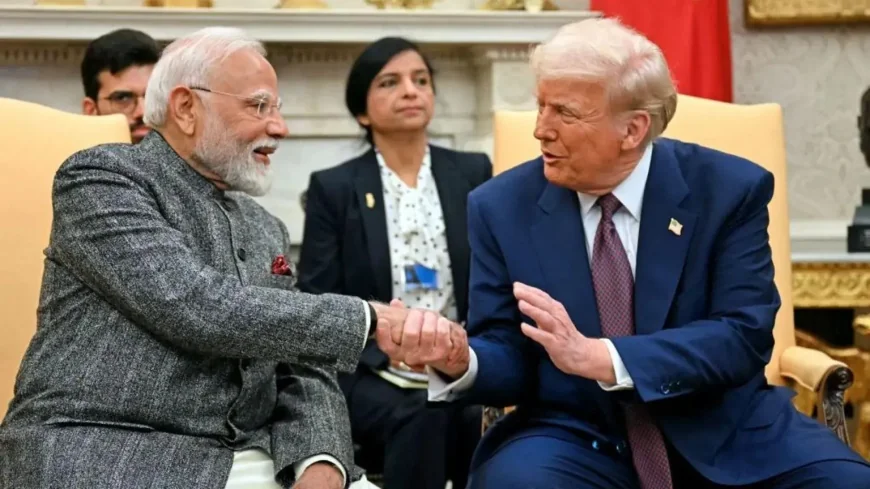
The conversation currently unfolding in Delhi is clear: As Pakistan positions itself as a mediator in the US-Iran crisis, is India being sidelined?
Islamabad has moved with remarkable speed, presenting itself as an intermediary between Washington and Tehran.
Last week, according to reports, it conveyed a 15-point US peace plan to Iran and offered to host negotiations—an offer Tehran rejected. This week, Pakistan took the initiative once again; its Foreign Minister traveled to Beijing to seek China's support for a five-point peace plan aimed at de-escalating the conflict.
For India—Pakistan's larger neighbor and arch-rival—this situation feels somewhat awkward. This unease has been compounded by the recent turbulent phase in India-US relations, even as Pakistan, conversely, appears to be strengthening its ties with President Donald Trump.
Consequently, a familiar debate has once again flared up within India's strategic community.
Some opposition parties and analysts argue that Delhi—which possesses a wide web of interconnected relationships across the region—should have at least attempted to assume a mediating role; by failing to do so, India's absence becomes glaringly conspicuous amidst this period of geopolitical upheaval.
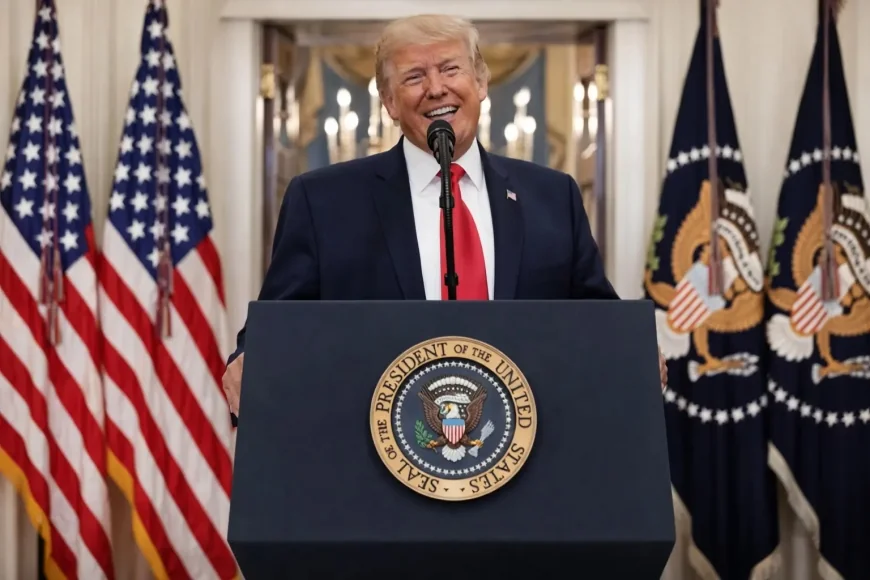
Attacking the government, the opposition Congress party has stated that reports of Pakistan being chosen as a mediator are "shameful" for Indian diplomacy.
Brahma Chellaney, an expert on strategic affairs, wrote on X: "By displaying greater agility and aggression in this 'war of narratives,' Pakistan has repeatedly outmaneuvered India diplomatically."
Meanwhile, others see little tangible benefit in merely staying in the headlines. They warn that attempting to mediate without any leverage or invitation could backfire. They believe that India's interests would be best served by maintaining quiet diplomacy and strategic distance.
The government, too, appears to subscribe to this view. During an all-party meeting held last week, India's External Affairs Minister, S. Jaishankar, reportedly dismissed Pakistan's role as mere "brokerage" (acting as a middleman); he noted that Pakistan has been playing such a role since 1981—a history that includes the US-Taliban negotiations.
He is reported to have remarked, "We do not go around asking other countries what kind of brokerage we can undertake."
However, some analysts believe that this heated debate currently unfolding in Delhi reveals less about actual policy than it does about public perception.
Happymon Jacob of Shiv Nadar University argues that, at the root of this issue, psychology is at play more than strategy. "India's reaction to this has been one that betrays a kind of competitive anxiety: If Pakistan can do it, why can't we?" he observed in an op-ed.
Software Services
 |
Create, launch, and scale your gaming platform — get instant access |
"At best, this could be termed a 'fear of missing out' (FOMO). And in the worst-case scenario, it represents envy toward a smaller neighbor—a neighbor that is garnering the kind of attention which some within our strategic community believe India rightfully deserves. Yet, neither the 'fear of missing out' nor envy can serve as a solid foundation for a sound foreign policy."
Michael Kugelman, a Senior Fellow for South Asia at the Atlantic Council, also rejects the "zero-sum approach" (wherein one party's gain constitutes another's loss) to the India-Pakistan rivalry. He argues that India was never truly in the race to mediate, and it is highly unlikely to intervene in this matter without a formal invitation.
He suggests that Pakistan's diplomatic activism may be short-lived and limited merely to the role of a "go-between," given that—due to the prevailing mistrust between the two sides—the likelihood of direct talks between the U.S. and Iran is virtually non-existent in the near future. As he puts it, "This misrepresents the reality of the situation."
If India was never actually in the race to mediate, then—according to many observers—the more pertinent question is what role it *should* be playing instead.
According to Ajay Bisaria, India's former High Commissioner to Pakistan, the answer to this question lies in understanding both India's strengths and its limitations.
He notes that while India possesses the capacity to foster peace—particularly given its interests and relationships across the region—it is not a "tool" that Washington can "use or direct" at its own whim.
Read Also
Bisaria adds, "That is precisely why India is ill-suited for this role." He argues that Delhi should instead play a more concrete and meaningful role in promoting peace—though "not the kind that Pakistan is playing." "Nor in the current era."
Between these two perspectives lies a more pragmatic and balanced path: India need not involve itself in any mediation effort where the risks are excessive; yet, at the same time, it cannot afford the risk of remaining completely passive or silent.
Expectations of India's global role have been elevated in recent years, both by its growing economic weight and by official rhetoric projecting it as a leading voice on the world stage.
As Modi's government has framed India's rise in expansive terms, projecting it as a leading voice for the Global South and a bridge across geopolitical divides, the temptation to be present in every global crisis has grown.
But that ambition, Jacob says, needs tempering. "India has demonstrated leadership on climate and energy; it need not - and cannot - do everything."
"The real challenge is managing the gap between capability and expectation - and having the wisdom to know what to do, and just as importantly, what not to."
Thank you for reading this content.
What's Your Reaction?
 Like
0
Like
0
 Dislike
0
Dislike
0
 Love
0
Love
0
 Funny
0
Funny
0
 Angry
0
Angry
0
 Sad
0
Sad
0
 Wow
0
Wow
0