























Shock Pick: Trump Taps Beauty Salon Owner for U.S. Ban Decisions
Trump names Mora Namdar, lawyer and salon owner, to oversee U.S. visa bans, giving her unprecedented power over who enters the country.

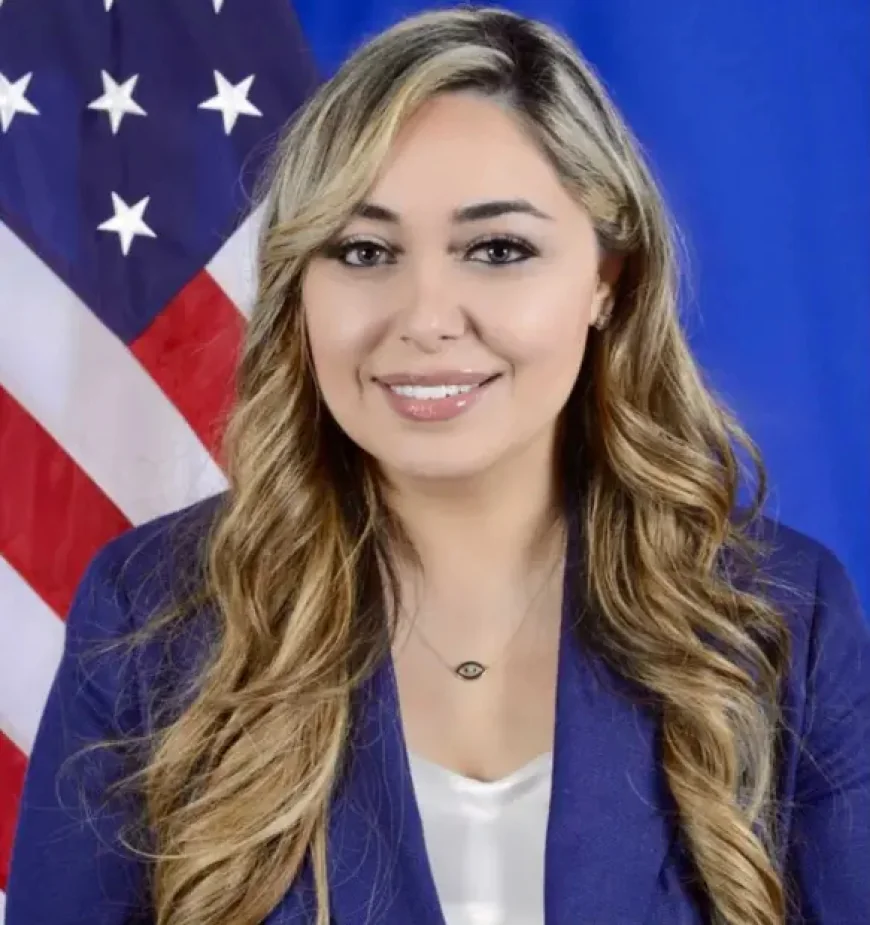
President Donald Trump has appointed a lawyer and part-time beauty salon owner to help determine which foreigners will be allowed to enter the United States.
The State Department announced that Mora Namdar has been promoted from her post working on U.S. foreign policy in the Middle East and North Africa to Assistant Secretary for Consular Affairs, overseeing everything from passport issuance to visa approvals and revocations.
Namdar, the daughter of Iranian immigrants, previously held the position on an interim basis during Trump's first term in 2020.
Namdar runs a mini-chain of beauty salons called "BAM" in her home state of Texas, with outlets in Dallas's West Village, as well as Fort Worth and Plano.
She told Voyage Dallas magazine that the original salon was intended to be "glamorous, sophisticated, and evoke dreams of a Parisian paradise in Dallas," featuring a 20-foot flower wall, and that it started when her friends asked her to do their makeup for their weddings. "I realized there was a need for a glamorous place that treated women's styling as an art," she said, while telling DMagazine in 2017 that it was "fun and sassy." Blowouts start at $45 and professional makeup sessions at $55.
The chain has also branched into hair extensions, starting at $325, and offers event services, including on-site lash and braid bars for $100 per person, and home visits.
In addition to running the salons, Namdar also ran a solo female-owned law firm. On Christmas Day, she announced that the firm was no longer active. According to the Columbia Journalism Review, she was one of the contributors to the infamous Project 2025, which has heavily influenced a potential second Trump term, writing a section on the U.S. Agency for Global Media.
In it, Namdar accused USAGM—the federal umbrella for U.S.-funded broadcasters including Voice of America and Radio Free Europe—of serious mismanagement, “espionage-related security risks,” and “using anti-American narratives to echo the propaganda of America’s adversaries,” while calling for its reform or complete closure. Namdar’s Senate confirmation earlier this month now places a politically connected operative with media experience in charge of a bureau that can effectively determine who gets into the United States and who is denied entry.
Software Services
 |
Start your own gaming platform for just $3,000 |
In her prepared testimony for her Senate hearing in October, she described visa decisions as critical to national security, and said she agreed with Rubio’s assessment that if someone “undermines our foreign policy, consular officers have the right to revoke their visa.”
Namdar’s record within the government has already raised questions. Several media outlets have reported that her interim leadership of the State Department’s Bureau of Near Eastern Affairs this year sparked internal concerns about management and morale.
She will now lead the administration’s efforts to ban people from entering the U.S., including actions against citizens of various European countries, whom the president, 79, and Secretary of State Marco Rubio, 54, announced on Wednesday would be barred from entering the U.S. for “egregious” censorship of “American ideas” on social media platforms, and promised that more such actions could follow.
When contacted for comment, State Department Principal Deputy Spokesperson Tommy Pigott told the Daily Beast, “This is a shameful, pathetic, and frankly sexist way to describe her career. Assistant Secretary Mora Namdar is a skilled attorney, business owner, and government official. Americans should be proud that patriotic public servants like her are stepping forward to serve our country and advance our national interests.”
Trump repeatedly tried to distance himself from Project 2025 during the campaign. But by the end of the year, PBS reported that outside trackers estimated the administration had implemented nearly half of the agenda’s goals, citing “personnel is policy” appointments—such as Namdar, and Federal Communications Commission (FCC) Chairman Brendan Carr—as a key mechanism.
The FCC is an independent regulator that oversees broadcast licensing, telecommunications, and the government’s increasing stake in media power and “viewpoint” controversies.
Thank you for reading this content.
Thank you for reading this content.
What's Your Reaction?
 Like
0
Like
0
 Dislike
0
Dislike
0
 Love
0
Love
0
 Funny
0
Funny
0
 Angry
0
Angry
0
 Sad
0
Sad
0
 Wow
0
Wow
0