
























Trump’s Iran Crisis Deepens as Wary Allies Hold Back
Allies hesitate as Strait of Hormuz crisis deepens. Discover 5 key reasons global powers fear escalation in Iran tensions with Donald Trump.

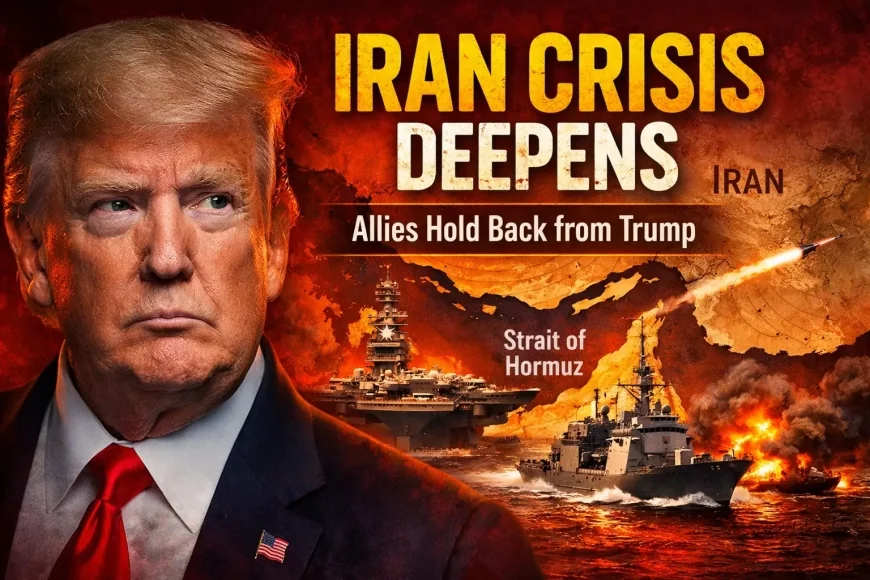
Throughout his two terms, US President Donald Trump never shied away from criticizing—and even attacking—Washington's NATO allies.
However, his recent suggestion—that a failure to secure the Strait of Hormuz "would be very bad for the future of NATO"—reflects an understanding of the alliance's purpose that has already been called into question.
"This was not an alliance designed in such a way that a single ally could unilaterally wage war and then compel all the others to join in," he stated. He added, "I do not believe any of us wished to be part of such a NATO."
These remarks come from a President who, just two months ago, laid claim to Greenland—a sovereign territory of a NATO member state; consequently, his recent statements appear deeply contradictory.
Perhaps for this very reason, the reactions from some nations have been quite sharp.
In Germany, a government spokesperson stated that a war with Iran "has nothing to do with NATO," while Defense Minister Boris Pistorius scoffed at the notion that Europe's relatively modest navies could make any meaningful difference in this matter.

He asked, "What exactly does Trump expect from Europe's handful of frigates that the powerful US Navy cannot accomplish?"
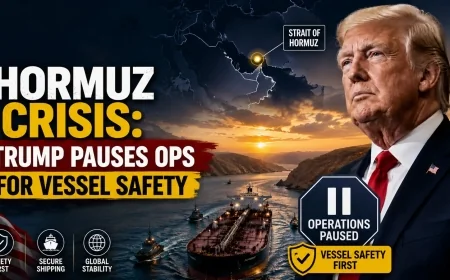
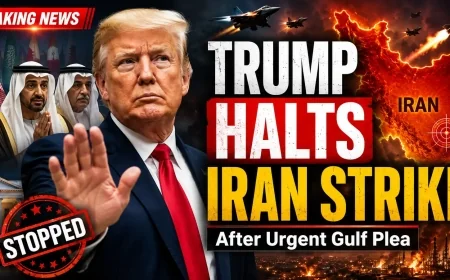
Yet, none of this can obscure the reality that there is now an urgent and growing imperative to find a resolution to the crisis unfolding in the Gulf region. With Iran having effectively blockaded the Strait of Hormuz—save for a few vessels delivering its own oil to allies like India and China—Western governments are now scrambling to find a solution to this crisis.
While this crisis may have stemmed from Trump's decision to wage war, it is imperative that it be resolved as soon as possible to prevent its adverse effects on the global economy from escalating further.
However, it has now become abundantly clear that there is no quick or easy solution to this problem.
In a press conference on Monday, British Prime Minister Sir Keir Starmer stated that discussions are underway with allies in the US, Europe, and the Gulf region with the aim of formulating a "practical plan," though we are not yet "in a position to reach a decision."
The Prime Minister referred to "autonomous mine-hunting systems" and noted that these systems are already deployed in the region. HMS Middleton, a Mine Countermeasures Vessel (MCMV), has returned to Portsmouth for major maintenance; this marks the first time in decades that no British mine-clearing vessel is present in the region.
Software Services
 |
Start your own gaming platform for just $3,000 |
Instead, the Royal Navy is expected to introduce newly developed maritime drones, designed to detect and neutralize mines without putting any crew members at risk.
However, one of the challenges Trump faces is that minesweeping—once a core function of almost all navies—has long ceased to be a top priority.
Former Royal Navy Commander Tom Sharpe noted that Britain's latest technologies have not yet been tested in a combat environment. General Carter noted that Western nations last conducted a large-scale mine-clearing operation at sea in 1991; this occurred during the First Gulf War, when Iraq laid mines in the waters off the coast of Kuwait to thwart an amphibious landing.
"No navy has invested in this area on the scale that they should have—and the Americans certainly haven't."
The U.S. Navy's own specialized 'Avenger-class' minesweepers—whose hulls are constructed of wood to prevent them from triggering magnetic naval mines—are now being retired from service. They are being replaced by 'Independence-class' Littoral Combat Ships, which utilize a variety of unmanned systems.
Read Also
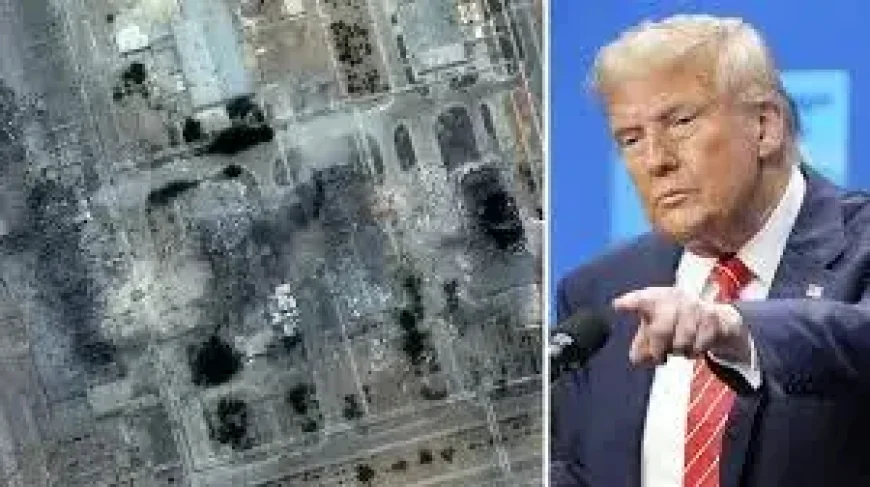
However, the issue is not limited solely to minesweeping. Iran's Revolutionary Guard is also capable of employing armed fast boats, naval "suicide" drones, and shore-based missiles to disrupt maritime traffic.
Recent photographs released by Iran's *Fars News Agency* appear to show large numbers of boats and drones stockpiled within underground tunnels; this suggests that Tehran has long been preparing for just such a moment.
Trump has signaled that keeping the Strait of Hormuz open—a task he described last night as a "very minor effort"—could potentially necessitate launching attacks on the Iranian coast.
He stated that he is looking for "people" who can "take out some of the 'bad actors' situated along the coast."
The U.S. has already targeted mine-laying boats anchored in; However, it is difficult to see how many of Washington's allies would be willing to support it in this matter—especially when it involves putting their own troops on the ground.
Thank you for reading this content.
What's Your Reaction?
 Like
0
Like
0
 Dislike
0
Dislike
0
 Love
0
Love
0
 Funny
0
Funny
0
 Angry
0
Angry
0
 Sad
0
Sad
0
 Wow
0
Wow
0