































Asante King Celebrates Return of Royal Artefacts
Ghana's Ashanti king has welcomed the return of 130 gold and bronze artifacts from Britain and South Africa

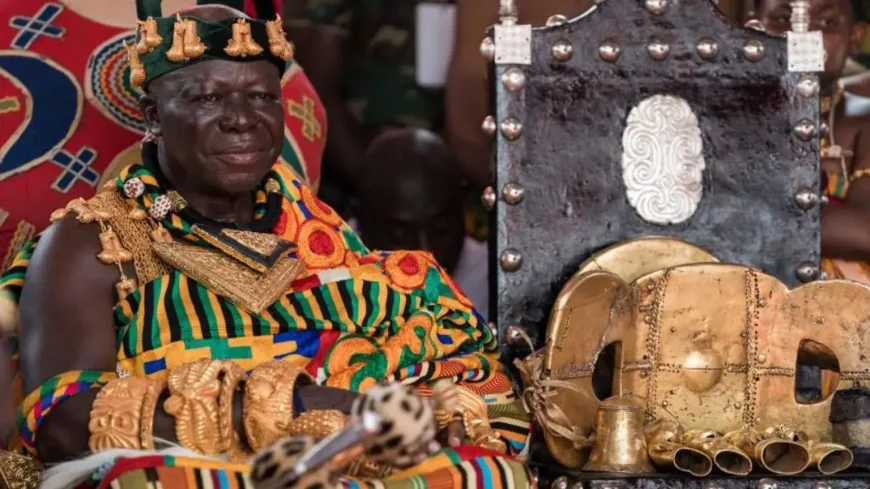
Some artifacts looted from the Ashanti Kingdom were returned to the king last year.
some of which were looted during the colonial era and others purchased on the open market.
The items included royal regalia, drums, and ceremonial gold weights dating back to the 1870s – and reflect the cultural role of gold in Ashanti society.
Twenty-five of the items were donated by British art historian Hermione Waterfield, and the rest by South African mining company AngloGold Ashanti.
Handing over the items at a ceremony at the Manhyia Palace in Kumasi, AngloGold Ashanti officials said the move was taken as a symbol of cultural respect and reconciliation.
There has been tension between AngloGold Ashanti and residents in the central Ashanti region, who have accused the company of exploiting mineral resources without doing enough to develop the area or create jobs.
Ashanti King Otumfuo Osei Tutu II thanked AngloGold Ashanti for voluntarily returning the artifacts, including those legally acquired from open markets.
The king said it demonstrated "goodwill and respect for the source and heritage of the Ashanti Kingdom."
The handover ceremony took place on Sunday, according to a statement released by the palace after the event.
Ms. Waterfield was a leading figure and curator at Christie's auction house in London and had a particular interest in African art, establishing a department focused on tribal art in the 1970s.
She has long been a supporter of the repatriation of West African art. According to Ivor Agyeman-Duah, director of the Manhyia Palace Museum, Ms. Waterfield's gifts included a wooden drum that was looted by British colonial forces during the siege of Kumasi in 1900.
British soldiers were involved in several conflicts in the late 19th century, known as the Anglo-Ashanti Wars. The king's palace, or Asantehene's palace, was looted twice.
African countries' demands for the return of looted artifacts have met with some success in recent years – although some items have only been returned on loan. Last year, 32 looted artifacts were put on display at the Manhyia Palace Museum. This was part of a three-year loan agreement between two British museums – the Victoria and Albert Museum (V&A) and the British Museum – and the Asante king.
In 2022, Germany became the first country to return Benin Bronzes to Nigeria as part of its efforts to confront its "dark colonial history."
These were looted by British soldiers from the West African kingdom of Benin, in what is now Edo State in Nigeria, in 1897 – and many of them were auctioned off in London and are now in collections around the world.
What's Your Reaction?
 Like
0
Like
0
 Dislike
0
Dislike
0
 Love
0
Love
0
 Funny
0
Funny
0
 Angry
0
Angry
0
 Sad
0
Sad
0
 Wow
0
Wow
0