
































BREAKING: Winter Storm Slams US, Hundreds of Thousands Lose Power
A massive US winter storm leaves over 1M homes without power, causes deadly accidents, flight cancellations, and hazardous ice across multiple states.

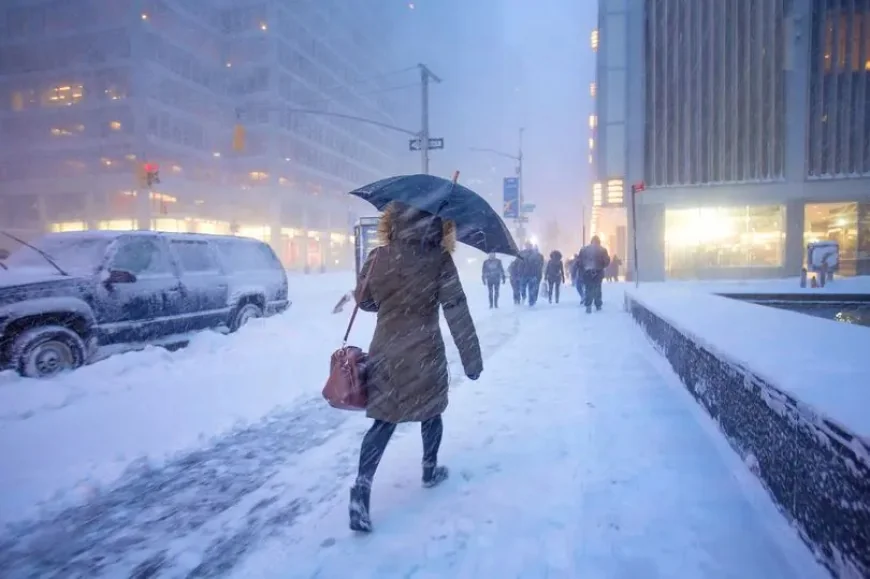
A major winter storm sweeping across the United States has left millions of homes without power, causing flight cancellations and road closures.
According to the National Weather Service (NWS), snow, sleet, and freezing rain are creating "life-threatening" conditions from Texas to New England that could last for several days.
At least two people have died from hypothermia in Louisiana, with state health officials linking their deaths to the storm, and another death has been reported in Texas.
More than one million homes were without power by Sunday afternoon, according to poweroutage.us. Meanwhile, FlightAware reported that more than 10,000 flights had been canceled.
Nearly 180 million Americans – more than half the population – are expected to be affected by the widespread heavy snow, sleet, and freezing rain, a dangerous phenomenon where supercooled raindrops freeze instantly upon contact with surfaces.
Kentucky Governor Andy Beshear said at a press conference Sunday that the state was experiencing more ice and less snow than anticipated.
"That's not good news for Kentucky," he said. "It means the roads are even more dangerous and the hazardous conditions will persist into next week."
Weather experts have warned that one of the biggest dangers of the storm is the ice, which can damage trees, bring down power lines, and make roads treacherous.
More than 200 car accidents were reported in Virginia as the storm moved into the state, according to local media.
The Louisiana Department of Health confirmed Sunday that the two people who died from hypothermia were in Caddo Parish, the area that includes the city of Shreveport.
Austin, Texas Mayor Kirk Watson posted on social media Sunday that "we have seen our first death related to this winter storm. This death was due to hypothermia." New York City Mayor Eric Adams wrote in a post on X that at least five people had died in the city on Saturday, but said the cause of their deaths was not yet known. However, he added, "This is a reminder that New Yorkers die from the cold every year."
Software Services
 |
All-in-one casino solution ready to launch — talk to our experts now |
States of emergency have been declared in nearly half the states, and schools across the country have already canceled classes through Monday due to the anticipated continuation of the storm. The US Senate has also canceled a vote scheduled for Monday evening.
Declaring a state of emergency in the nation's capital, Washington Mayor Muriel Bowser said: "We are experiencing the biggest snowstorm in a decade here in DC this weekend."
While northern regions like the Dakotas and Minnesota are accustomed to sub-freezing temperatures in the winter, it is unusual to see such extreme cold in states like Texas, Louisiana, and Tennessee, where temperatures are roughly 15-20°C below seasonal averages.
Freezing rain in those states could lead to the accumulation of nearly an inch of ice, a dangerous phenomenon where supercooled raindrops freeze instantly upon contact with surfaces.
Mayor Watson and other officials in those areas are warning residents that ice and snow may melt during the day and refreeze after sunset, creating hazardous conditions on roads and potentially weighing down power lines.
Read Also
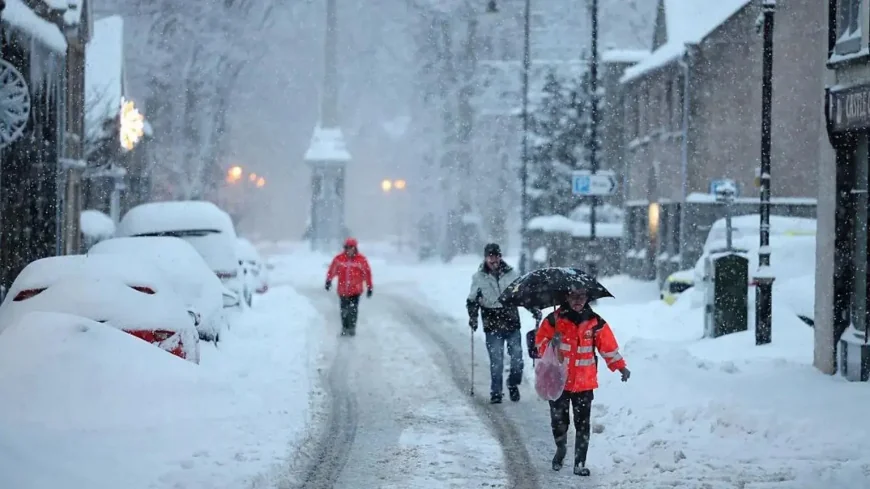
Nashville Electric Service says more than 200,000 power outages in Tennessee have occurred in and around the Nashville area. And residents could be without power for several days.
"We are very concerned about the ice accumulation and its impact on road safety and our power infrastructure," Tennessee Emergency Management Director Patrick Sheehan said in a video statement.
According to weather experts, the polar vortex – a ring of strong westerly winds that forms every winter above the Arctic and contains a pool of very cold air – gave rise to this powerful storm. When the winds are strong, the polar vortex remains in place, but when the winds weaken, the vortex stretches and loops southward, bringing cold air toward the United States. As this cold air meets warmer air to the south, the air rises, and storm fronts form.
In this case, the winter storm is moving north and east, clearing the Canadian Maritimes by Tuesday, but leaving even colder air in its wake. Dangerously cold temperatures are expected to persist into early February. Some experts believe that climate change, driven by changes in sea surface temperatures in our warming world, may be influencing the behavior of the polar vortex.
Thank you for reading this content.
Thank you for reading this content.
What's Your Reaction?
 Like
0
Like
0
 Dislike
0
Dislike
0
 Love
0
Love
0
 Funny
0
Funny
0
 Angry
0
Angry
0
 Sad
0
Sad
0
 Wow
0
Wow
0