
































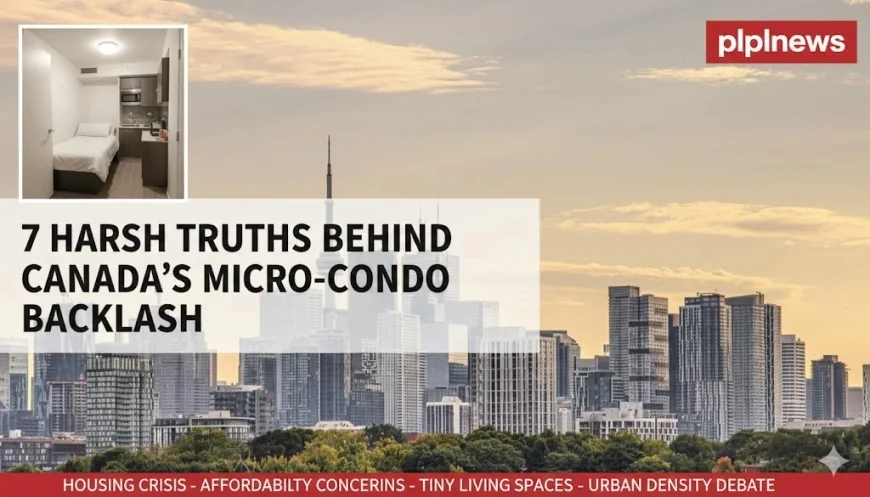
7 Harsh Truths Behind Canada’s Micro-Condo Backlash
Once seen as a housing fix, Canada’s tiny units now face backlash. Micro-condo affordability is fading as buyers reject cramped living.

TORONTO —
Once marketed as a bold solution to Canada’s housing crisis, micro-condos are rapidly losing their shine. Designed as ultra-compact urban units, critics now describe them as “somewhere to put worker bees,” and buyers appear to agree.
Across major cities like Toronto and Vancouver, demand for these tiny homes is cooling as affordability pressures, changing lifestyles, and shifting market realities collide.
 |
All-in-one casino solution ready to launch — talk to our experts now. |
🏙️ From Solution to Symbol
Micro-condos — often under 400 square feet — were promoted as an answer to soaring real estate prices and limited urban land. Developers pitched them as efficient, modern, and ideal for young professionals.
But many residents say the promise fell short. Rising condo fees, limited storage, and layouts that prioritize density over livability have turned what was once a trend into a warning sign of investor-driven housing.
💰 Affordability Without Comfort?
While smaller units were meant to lower costs, buyers now question the value. With interest rates elevated and condo prices still high, micro-condo affordability is no longer guaranteed.
Real estate agents report that buyers increasingly favor slightly larger units, even if it means moving farther from city centers. Renters, too, are pushing back against paying premium prices for minimal space.
🧠 Lifestyle Shift After the Pandemic

Remote work has reshaped how Canadians view their homes. Spaces once meant for sleeping and commuting no longer work for people who need room for desks, storage, and daily life.
Urban planners say the pandemic exposed the limitations of ultra-small living, particularly for long-term residents rather than short-stay renters.
📉 Investors Step Back
Investors — once the backbone of the micro-condo market — are also pulling back. Slower resale growth and higher carrying costs have reduced profit margins, leaving many units sitting longer on the market.
“This model was never built for people to live in long term,” said one housing analyst. “It was built for turnover.”
🔮 What Comes Next?
Housing experts say Canada now faces a critical question: Should future construction focus on quantity alone, or quality of life?

As policymakers debate zoning, density, and affordability, micro-condos may become a cautionary tale — not of too little housing, but of housing built without people in mind.
Thank you for reading this content.
If you find it helpful, then checkout : https://plplnews.com/4-explosive-moves-nyc-mayor-scraps-israel-antisemitism-orders
Also check out the latest Mazda Mx 5 : https://plplnews.com/why-the-mazda-mx-5-remains-the-world-s-favorite-roadster
What's Your Reaction?
 Like
0
Like
0
 Dislike
0
Dislike
0
 Love
0
Love
0
 Funny
0
Funny
0
 Angry
0
Angry
0
 Sad
0
Sad
0
 Wow
0
Wow
0