













G20 Ends Without US as Trump Boycotts
JOHANNESBURG (AP) — The Group of 20 summit in South Africa ended Sunday with the glaring absence of the United States — the next country to lead the bloc — after the Trump administration boycotted the two days of talks involving leaders of the world's richest and top developing economies

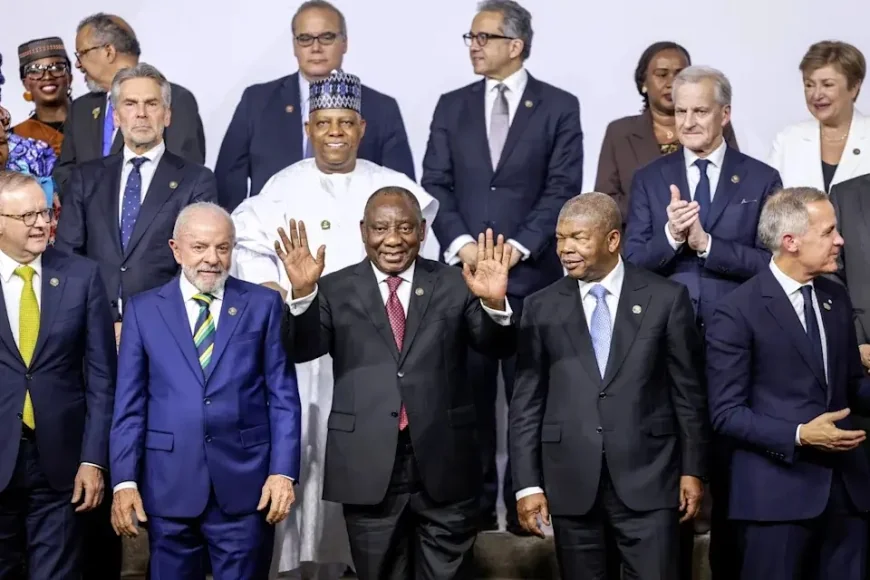
In keeping with G-20 tradition, South African President Cyril Ramaphosa declared the summit in Johannesburg closed. He struck a block with a wooden hammer, like a judge. Normally, this hammer is passed to the leader of the next country holding the rotating presidency, but no US official was present to receive it.
The world's largest economy boycotted the summit, designed to bring together wealthy and developing nations, in response to President Donald Trump's claim that South Africa was violently oppressing its African white minority.
The White House said it wanted to include an official from its embassy in South Africa in the G-20 handover, a last-minute decision. But South Africa refused, saying that handing over the reins to a junior embassy official would be disrespectful to Ramaphosa. According to South Africa's Foreign Ministry, Trump finally agreed that the US would host the summit next year at his golf club in Doral, Florida. Concluding the summit, Ramaphosa said, "This hammer of this G20 summit officially closes this summit and now goes to the next President of the G20, the United States, where we will meet again next year." He made no mention of the US absence in his speech.
Breaking Tradition
The first G20 summit in Africa also broke tradition by issuing the Leaders' Declaration on the first day of discussions on Saturday, whereas declarations usually come at the end of the summit.
The declaration was significant because it came despite opposition from the United States, which has for months criticized South Africa's agenda for the group, which focuses largely on climate change and global wealth inequality – focuses that the Trump administration had ridiculed. Argentina said it also opposed the declaration because President Javier Mila, a Trump ally, did not attend the summit. Other G20 countries, including China, Russia, France, Germany, the UK, Japan, and Canada, supported the declaration, which called for greater global attention to issues particularly affecting poor countries, such as the need for financial assistance for their recovery efforts after climate-related disasters, finding ways to reduce their debt levels, and helping them adopt climate-friendly green energy sources.
Ramaphosa said, "South Africa has used this presidency to firmly place the priorities of Africa and the Global South at the center of the G20 agenda."
Following his speech, Ramaphosa was embraced by other leaders and congratulated for hosting a summit largely affected by the US boycott, and he was heard saying in a hot-mic moment that was not meant to be broadcast: "It wasn't easy." However, G20 declarations are general agreements between member countries that are not mandatory, and their long-term impact has been questioned.
Furthermore, the declaration included several of South Africa's priorities, but some concrete proposals were not included in the document. There was no mention of a new international panel on wealth inequality, similar to the United Nations Intergovernmental Panel on Climate Change, which South Africa and others had called for.
The G20 was created in 1999 in response to the Asian Financial Crisis and comprises 19 wealthy and developing economies, the European Union, and the African Union. However, some have questioned its effectiveness in resolving major global crises such as the Russia-Ukraine war and tensions in the Middle East.
The 122-point Johannesburg Declaration, a general appeal to end global conflicts, mentioned Ukraine only once, and the summit appeared to have made no difference to the nearly four-year-long war, even though leaders or high-level delegations from all major European countries, the EU, and Russia were in the same room for the G20 meeting.
French President Emmanuel Macron said, "Meeting on the African continent for the first time is an important milestone," but he also noted that the group is "struggling to establish a common standard on geopolitical crises."
A Symbolic Summit for Poor Countries
Nevertheless, some hailed the summit as a necessary symbolic moment for the G20.
"This is the first meeting of world leaders in history where the inequality emergency has been placed at the center of the agenda," said Max Lawson of Oxfam, an international non-profit organization that works to reduce global poverty.
Namibia's President, Netumbo Nandi-Ndaitwah, said, "The importance of addressing development needs from an African perspective cannot be underestimated." Namibia, a southern African country of 3 million people, was one of more than 20 smaller countries invited to the summit as guests alongside G20 members.
What's Your Reaction?
 Like
0
Like
0
 Dislike
0
Dislike
0
 Love
0
Love
0
 Funny
0
Funny
0
 Angry
0
Angry
0
 Sad
0
Sad
0
 Wow
0
Wow
0