


















No Going Back: Trump Reignites Greenland Push Ahead of Davos
Trump escalates the Greenland takeover debate with Nato tensions, tariffs, and Davos drama as world leaders push back against US pressure.

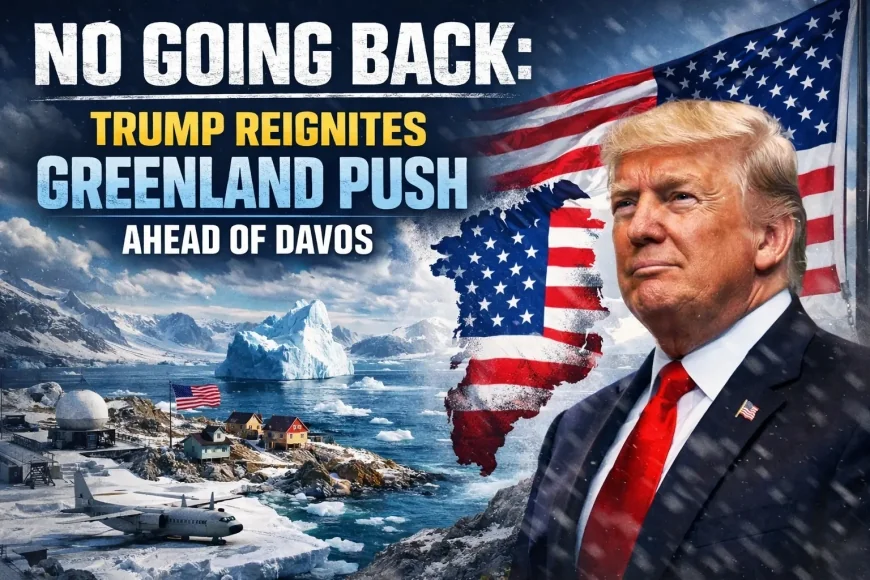
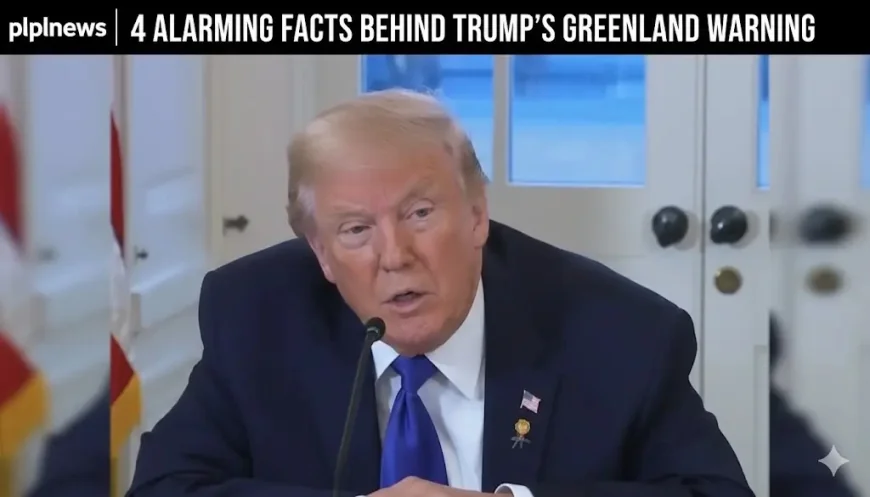
US President Donald Trump has reiterated his threats to take control of Greenland, saying there is "no question of backing down."
When asked at a press conference how far he was prepared to go to acquire the semi-autonomous Danish territory, he replied: "You'll find out."
This came as French President Emmanuel Macron warned of a "shift towards a world without rules," and Canadian Prime Minister Mark Carney said the "old order is not coming back."
Trump was due to arrive in Davos on Wednesday ahead of his speech at the World Economic Forum, but a minor electrical problem on Air Force One forced the plane to turn back.
It was unclear what impact the delay would have on his schedule. The White House said the plane had returned and Trump would travel to Switzerland on another aircraft.
Trump said that "several meetings are scheduled regarding Greenland."
Read Also
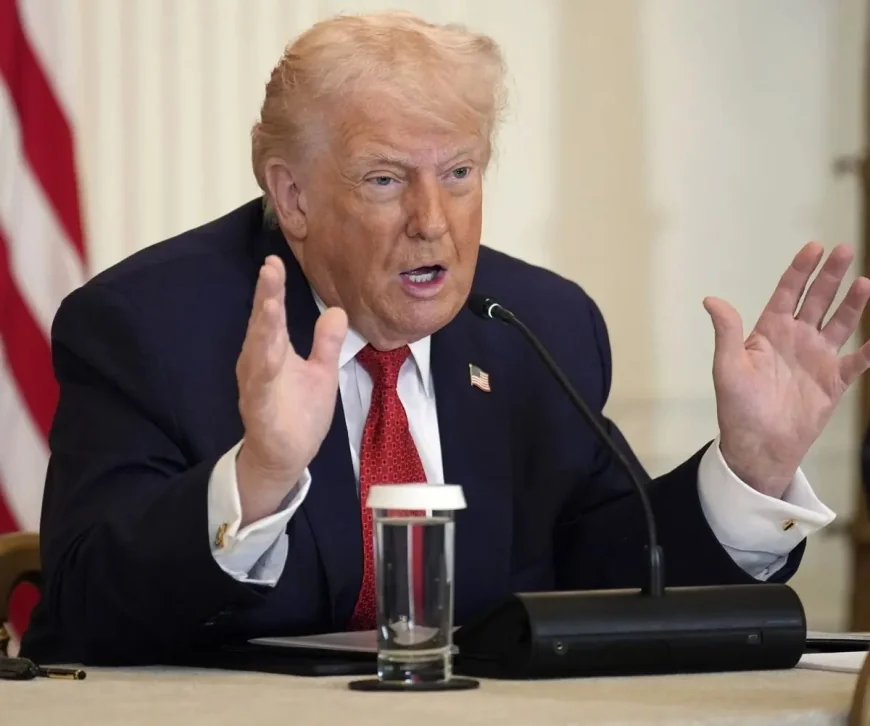
Earlier, during a lengthy press briefing, Trump also told reporters that "things will work out very well" in Greenland. When asked if a potential breakup of NATO was a price he was willing to pay for Greenland, Trump replied: "Nobody has done more for NATO than I have, in every way.
"NATO will be happy and we'll be happy [...] We need it for the security of the world."
But he had earlier questioned whether NATO would come to America's aid if needed.
"I know we would come to [NATO's] aid, but I really doubt that they would come to our aid," he told reporters.
NATO currently has 32 member states, with the US being one of the 12 founding members.
Created to safeguard freedom and security through collective defense, one of the core principles of the NATO alliance is outlined in Article 5, which states that an armed attack against one or more members shall be considered an attack against all.
Trump has not ruled out using military force to acquire Greenland. When asked on Tuesday whether he would use force to seize the territory, the president replied: "No comment."
Software Services
 |
Start your own gaming platform for just $3,000 |
Greenland's Minister of Industry and Natural Resources, Naaja Nathanielsen, said that the people of Greenland were "shocked" by the president's demands.
"We don't want to be American, and we've made that quite clear," Nathanielsen said.
"What value do you place on our culture and our right to decide what happens to us in the future?"
Ahead of the World Economic Forum meeting in Davos, Switzerland, Trump shared screenshots that he claimed showed text messages sent to him by Macron and NATO Secretary General Mark Rutte.
In the messages, Rutte is seen saying he is committed to finding a way forward on Greenland, while Macron said he "didn't understand what you're doing," but offered to host a meeting with other leaders in Paris.
European Commission President Ursula Von der Leyen addressed the issue directly in a speech to attendees on Tuesday, emphasizing that Europe is "fully committed" when it comes to the security of the Arctic.
However, she said this could only be achieved together, and called Trump's tariff threats "a mistake."
The US president has said he will impose a 10% tariff on "any and all goods" imported from eight European countries starting February 1 if those countries oppose his proposed acquisition of Greenland.
In her speech, von der Leyen said the European Union stands in "full solidarity" with Greenland and the Kingdom of Denmark – and stated that their sovereignty is "beyond negotiation."
Her remarks were echoed by Canadian Prime Minister Mark Carney, who said his country's commitment to NATO's Article 5 is "unwavering."
"We stand firmly with Greenland and Denmark and fully support their unique right to determine Greenland's future," Carney said.
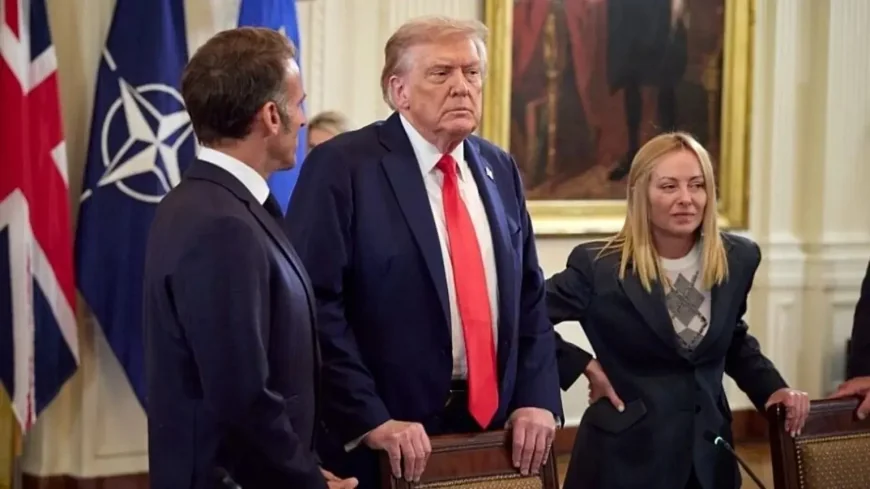
During his speech in Davos, Macron said he preferred "respect rather than intimidation" and "the rule of law rather than brutality."
Earlier on Tuesday, Trump reportedly threatened to impose a 200% tariff on French wine and champagne after Macron declined an invitation to join the US-led Gaza "Board of Peace."
The French president condemned the "ever-growing pile of new tariffs," calling them "fundamentally unacceptable," especially when used to exert pressure against territorial sovereignty.
Macron is among those urging the EU to consider retaliatory options against US tariffs, including the anti-coercion instrument, dubbed the "trade bazooka."
International Trade Committee Close sources have said that the European Parliament is planning to suspend its approval of the US trade agreement reached in July, a move that would signal a further escalation of tensions between the US and Europe.
Thank you for reading this content.
What's Your Reaction?
 Like
0
Like
0
 Dislike
0
Dislike
0
 Love
0
Love
0
 Funny
0
Funny
0
 Angry
0
Angry
0
 Sad
0
Sad
0
 Wow
0
Wow
0