






















Power Vacuum: Iran Reels After Ali Larijani Death
The death of Ali Larijani intensifies Iran leadership crisis, raising fears over war escalation, political instability, and nuclear tensions.

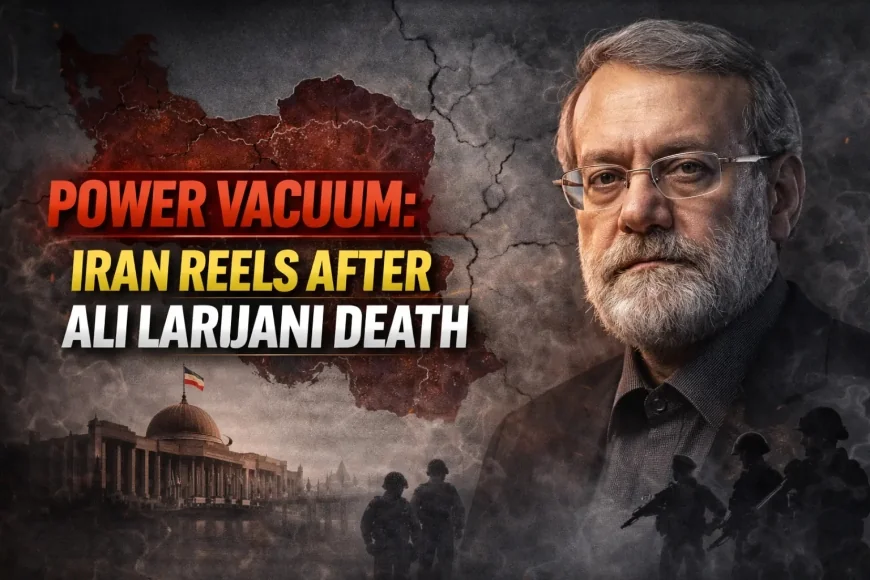
Iran's security chief, Ali Larijani, has been killed in an Israeli airstrike. This attack has eliminated one of the Islamic Republic's most seasoned and influential policymakers at a critical juncture.
Larijani was not a military commander, yet he was a central figure in shaping Iran's strategic decisions.
As the Secretary of the Supreme National Security Council, he stood at the epicenter of decision-making regarding war, diplomacy, and national security.
His voice carried significant weight throughout the entire system, particularly in managing Iran's confrontations with the United States and Israel.
Following the assassination of Supreme Leader Ali Khamenei on February 28, Larijani adopted a defiant stance, signaling that Iran was prepared for a protracted conflict.
Read Also
His death has now been confirmed by state media. This fatality occurred amidst a broader campaign in which several senior Iranian officials and commanders have been killed within the span of just a few weeks. This pattern points to persistent efforts to undermine Iran's leadership structure during wartime.
Despite his hardline stance against the West, Larijani was often viewed within Iran as a pragmatic leader. He blended ideological fidelity with a technocratic approach, prioritizing calculated strategy over mere rhetoric.
While he remained deeply skeptical of engagement with Western powers, he was nonetheless involved in key diplomatic initiatives—including serving as an envoy for Iran's long-term cooperation agreement with China.
At the time of his death, Larijani was tasked with managing three major crises.
The first crisis was the war itself. He argued that Iran must be prepared for a prolonged conflict—one that should be expanded across the entire region and beyond, potentially including the closure of the Strait of Hormuz. The second crisis was a wave of domestic unrest, which began with economic grievances but soon escalated into large-scale protests aimed at ousting the Islamic Republic from power. These protests were ruthlessly crushed, resulting in the deaths of thousands of demonstrators across the country.
Software Services
 |
Launch your own casino platform today — get started now |
The third crisis involved Iran’s nuclear program and the stalled indirect negotiations with Washington—both matters that had already been disrupted by military strikes.
His departure has left these issues unresolved; they now rest on the shoulders of a successor—as yet unknown—who will face an extremely precarious situation. Although Iran has demonstrated its capacity for belligerence by disrupting global energy markets to some extent, its airspace remains vulnerable to persistent attacks.
Any new senior official will face the constant threat of being immediately targeted. This could result in an even greater concentration of power in the hands of the military. Recent remarks by President Masoud Pezeshkian suggest that units of the armed forces have, in effect, been granted broad authority to take action should the top leadership become incapacitated. In practice, this could mean that decisions are made more rapidly, but with less central coordination.
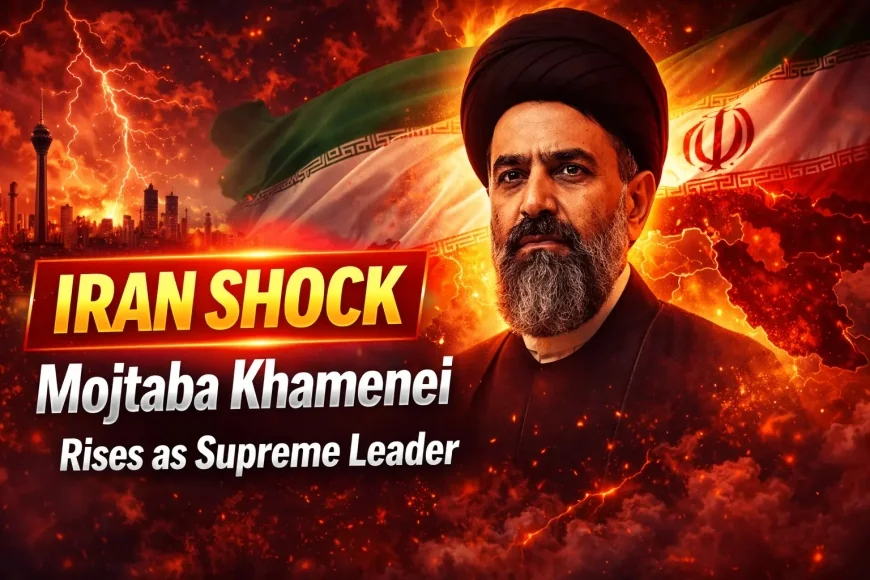
There are also indications that the leadership is struggling to manage the succession process. Iran has delayed public announcements and has kept certain key figures—including the potential new Supreme Leader, Mojtaba Khamenei—largely out of the public eye. Whether this is due to security concerns or internal uncertainty remains unclear.
In the short term, the likely outcome is that the situation will become even more volatile: the military’s posture in the ongoing conflict will harden further, and domestic repression within the country will become even more severe. However, over time, it will become increasingly difficult for a system that is constantly losing its senior officials to function effectively—especially in a country with a population of over 90 million.
Thus, the impact of Larijani's death is not limited merely to the loss of a single official. It further deepens the leadership crisis—a crisis that could impact both the trajectory of the war and the stability of the Iranian state itself.
Thank you for reading this content.
Thank you for reading this content.
What's Your Reaction?
 Like
0
Like
0
 Dislike
0
Dislike
0
 Love
0
Love
0
 Funny
0
Funny
0
 Angry
0
Angry
0
 Sad
0
Sad
0
 Wow
0
Wow
0