


























Trump Races to Phase Two of Gaza Ceasefire 'Very Quickly'
Trump pushes phase two of the Gaza ceasefire fast after meeting Netanyahu, as fears grow over delays, Hamas disarmament, and a shifting Middle East power balance.

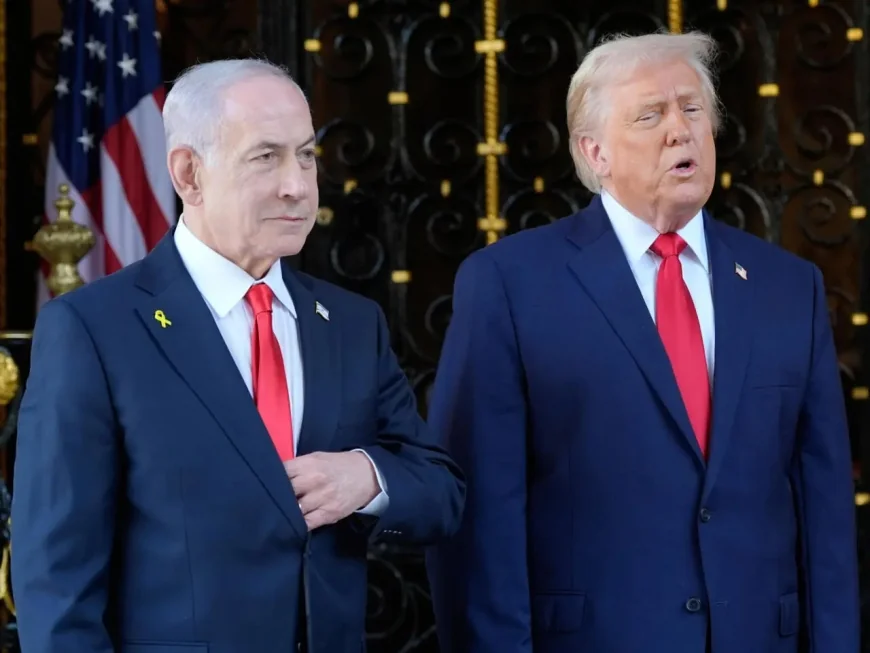
US President Donald Trump said Monday he hoped work would begin "very soon" on the second phase of the Gaza peace plan after meeting with Israeli Prime Minister Benjamin Netanyahu at his lavish Mar-a-Lago resort in Florida. His statement comes as some White House officials fear both Israel and Hamas are dragging their feet on the second phase of the ceasefire.
Trump said Netanyahu had requested the meeting, and according to reports, he is eager to announce a Palestinian technocratic government for Gaza and the deployment of an international stabilization force as early as January.
Israeli government spokeswoman Shosh Bedrosian had previously said Netanyahu would discuss the second phase, which includes ensuring that "Hamas is disarmed, and Gaza is demilitarized."
But Netanyahu will also reportedly focus on Iran during his fifth meeting with Trump in the US this year, with reports suggesting he will push for further US action against Tehran's nuclear program.
Bedrosian said before flying with the Israeli prime minister that Netanyahu would raise the "threat from Iran not only to the Middle East region but also to the United States."
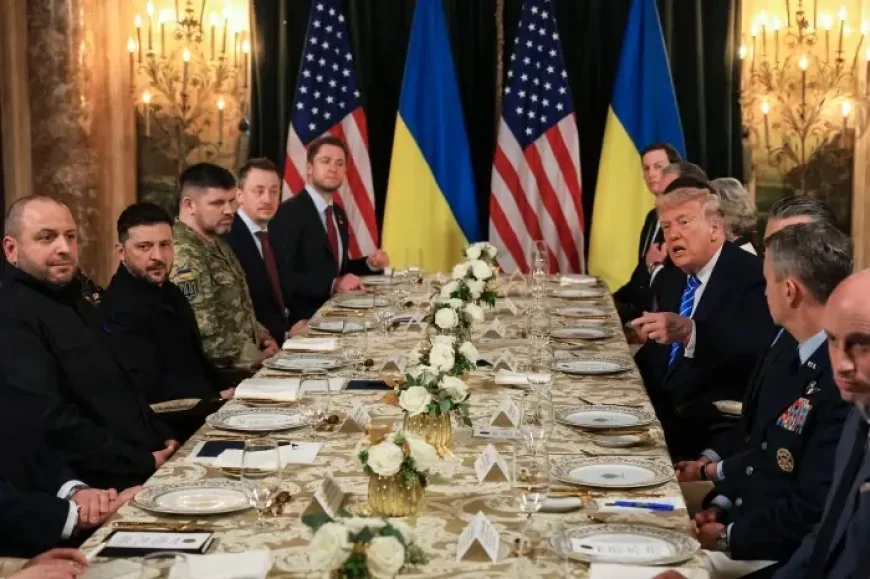
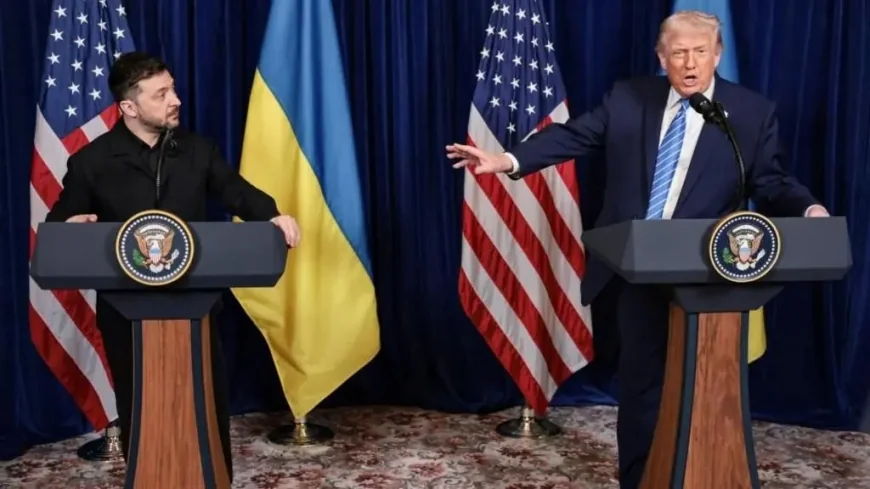
Netanyahu's visit follows several busy days of international diplomacy in Palm Beach, where Trump hosted his Ukrainian counterpart Volodymyr Zelensky on Sunday for talks on ending the Russian invasion.
The Gaza ceasefire in October was one of the key achievements of Trump's first year back in office, but his administration and regional mediators are keen to maintain the momentum.
Gaza ceasefire: Where does it stand and what is expected under the second phase?
Trump's global envoy Steve Witkoff and son-in-law Jared Kushner hosted senior officials from mediators Qatar, Egypt, and Turkey in Miami earlier this month. Gershon Baskin, co-chair of the Peacebuilding Commission's Alliance for Two States, who has participated in back-channel talks with Hamas, said the timing of Netanyahu's meeting was "very significant."
"The second phase needs to begin," he told AFP, adding, "I think the Americans realize that it's overdue because Hamas has had too much time to re-establish its presence."
Software Services
 |
All-in-one casino solution ready to launch — talk to our experts now |
'Going nowhere'
The first phase of the ceasefire agreement saw Hamas release hostages, both dead and alive, who were taken during the October 7, 2023 attack on Israel. Hamas has returned all but one hostage's body. Both sides have repeatedly accused each other of ceasefire violations.
Under the second phase, Israel is to withdraw from its positions in Gaza, while Hamas is to lay down its arms – a major sticking point for the Islamist movement.
Meanwhile, an interim authority is to govern the Palestinian territory, and an International Stabilization Force (ISF) is to be deployed.
The Axios news outlet reported on Friday that Trump wanted to convene the first meeting of a new "Board of Peace" for Gaza at the Davos Forum in Switzerland in January, which he would chair.
But it said senior White House officials were becoming frustrated with Netanyahu's attempts to stall the peace process.
"There are more and more indications that the American administration is getting frustrated with Netanyahu," said Yossi Mekelberg, a Middle East expert at the London-based think tank Chatham House.
He added, "The question is what they are going to do about it, because the second phase is going nowhere at the moment." For his part, Netanyahu is expected to focus with Trump on Iran's nuclear program, which the U.S. and Israel targeted in June, but which Israel fears Tehran is reconstituting.
Israel continues to strike Hamas targets in Gaza and Hezbollah in Lebanon, despite a ceasefire there. Syria will also be on the agenda.
Meckelberg said that as Israel enters an election year, Netanyahu may try to shift the focus away from Gaza and onto Iran.
"Everything is connected to staying in power," he said of the long-serving Israeli prime minister.
Thank you for reading this content.
Thank you for reading this content.
What's Your Reaction?
 Like
1
Like
1
 Dislike
0
Dislike
0
 Love
0
Love
0
 Funny
0
Funny
0
 Angry
0
Angry
0
 Sad
0
Sad
0
 Wow
0
Wow
0