














Rubio Reassures Europe: ‘We Belong Together’ Amid Tensions
At the Munich Security Conference, Rubio makes 7 bold promises to protect the transatlantic alliance, urging unity on defense, trade, and global security.

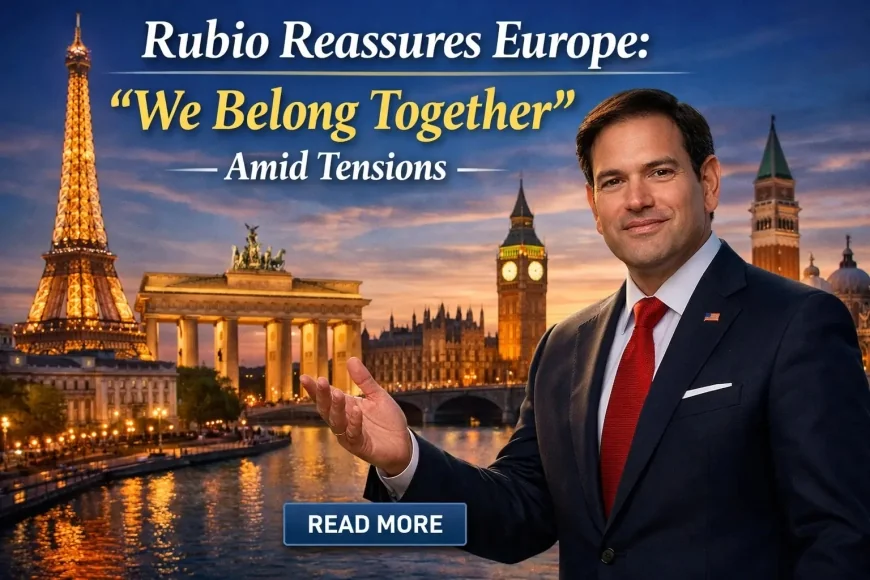
Marco Rubio has assured European leaders that the US is not planning to leave the Transatlantic Alliance, saying its fate will "always be linked to the continent."
The US Secretary of State told the Munich Security Conference: "We do not want to break away, but rather to revive old friendships and renew the greatest civilization in human history."
He criticized European immigration, trade, and climate policies, but the overall tone of the closely watched speech was significantly different from Vice President J.D. Vance's speech at the same event last year, in which he rebuked continental leaders.
European Commission President Ursula von der Leyen said she has "great confidence" in Rubio's words.
Rubio, the Trump administration's most senior diplomat, said that ending the Transatlantic Partnership is "neither our intention nor our desire." He continued: "For us Americans, our home may be in the Western Hemisphere, but we will always be children of Europe.
"And I'm here today to make it clear that America is paving the way for a new century of prosperity, and once again, we want to do it together with you, our dear colleagues and our oldest friends."
Read Also
However, he reiterated many of the Trump administration's frequent criticisms of Europe, including calling immigration policy a threat to civilization and saying that the "climate cult" has taken over economic policy.
On trade, he said that Europe and the US have "made mistakes together" by adopting a "hardline approach to free and unrestricted trade."
He reiterated the US's familiar appeals to Europe to invest more in defense, saying: "We are partners in this. We want a Europe that can defend itself so that no enemy ever tries to test our strength." Collective strength."
In response, von der Leyen said: "[Rubio] is a good friend, a strong partner. And it was very comforting for me to listen to him."
She added: "We want a strong Europe. And I think that's the message of today."
Elsewhere in his half-hour speech, Rubio said that the system of international cooperation "must be rebuilt" and specifically criticized the UN, saying it played "almost no role" in resolving conflicts in Gaza and Ukraine.
Software Services

He also said the organization is "helpless to stop Tehran's nuclear program."
In recent weeks, US President Donald Trump has threatened to attack Iran if a deal is reached to halt its nuclear program, as talks between the two countries have intensified.
The Swiss Foreign Ministry said on Saturday that Oman will host the second round of talks in Geneva next week.
Outside the conference, according to local police reports, around 200,000 protesters rallied against the Iranian government.
Protesters criticized the country's leadership following the government's crackdown on protests in January, which left thousands dead. of.
Rubio also said that the US doesn't know "if the Russians are serious about ending it." Before discussing the "war" in Ukraine, he added: "But we'll keep testing it."
Ukrainian President Volodymyr Zelensky said at a conference later Saturday that no one in Ukraine has confidence that his Russian counterpart, Vladimir Putin, will leave the country alone, calling the Russian leader a "slave of war."
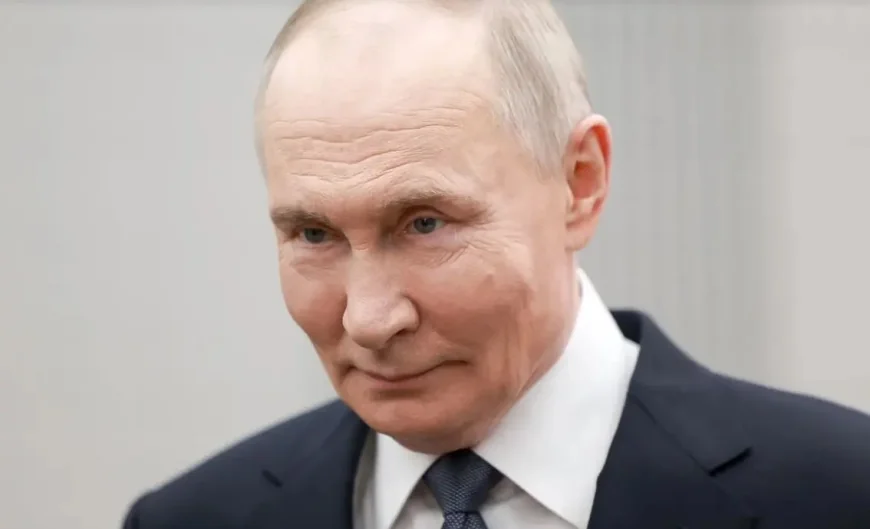
Zelensky has come under pressure from the White House to hold presidential elections, which were halted during the country's martial law.
Asked about a Financial Times report that his administration is planning to hold elections in May, Zelensky said it was "something new for me" and reiterated that "no one supports elections during a war."
He said Ukraine would need a "two-month ceasefire" and "security infrastructure" to safely conduct elections.
Second Meanwhile, UK Prime Minister Sir Keir Starmer stressed that Europe must be prepared to fight to protect its people and "stand on its own two feet" when it comes to defense commitments.
The UK PM also called for deeper links and cooperation, including "closer economic alignment," between the UK and the EU.
Speaking of Russia's threats to the continent, he told the conference: "We have to build our hard power, because that's the currency of our time."
As part of efforts to strengthen security, Sir Keir announced that the UK, along with the US, Canada, and other NATO allies, will deploy a fleet of warships, submarines, and aircraft in the Arctic and High North.
Read Also
NATO has recently acknowledged a significant increase in Russian military activity in the Arctic region – part of the rationale for Trump's desire to annex Greenland, currently a semi-autonomous territory of Denmark.
Trump insists He believes the world's largest island is vital to US security and has not ruled out taking it by force – although his administration prefers a negotiated settlement.
Its location between North America and the Arctic makes it a good location for early warning systems and monitoring ships in the region in the event of missile attacks. The US currently has over 100 personnel stationed at its monitoring base there, and under a 1951 agreement, it can deploy as many troops as it wishes to Greenland.
Speaking on the rising tensions, Danish Prime Minister Mette Frederiksen stressed that Greenland cannot be priced, and said that the sovereignty of countries must be respected.
Frederiksen, along with Spanish Prime Minister Pedro Sanchez and Finnish President Alexander Stubb, reiterated the call for a united response to Russia.
Sanchez said there was a need to "contain Putin" and strengthen European defense capabilities, but added: "Let's do this in a coordinated and targeted manner."
He also stressed the need to create a true European army "now, not in 10 years."
Frederiksen said Putin has no interest in peace and "we have to accept... that Russia will not change."
He said Europe "knows exactly what we have to give," referring to Ukraine's demand for more air defense.
Stubb said he does not currently see a "direct threat" to NATO from Russia, but Arctic training exercises involving 20,000 NATO troops will help understand potential defense scenarios.
Thank you for reading this content.
What's Your Reaction?
 Like
0
Like
0
 Dislike
0
Dislike
0
 Love
0
Love
0
 Funny
0
Funny
0
 Angry
0
Angry
0
 Sad
0
Sad
0
 Wow
0
Wow
0