

















Biggest Climate U-Turn Yet: Trump Celebrates the Shift
Trump overturns a 17-year-old climate regulation, calling it a win for jobs and fossil fuels as critics warn of major climate policy fallout.

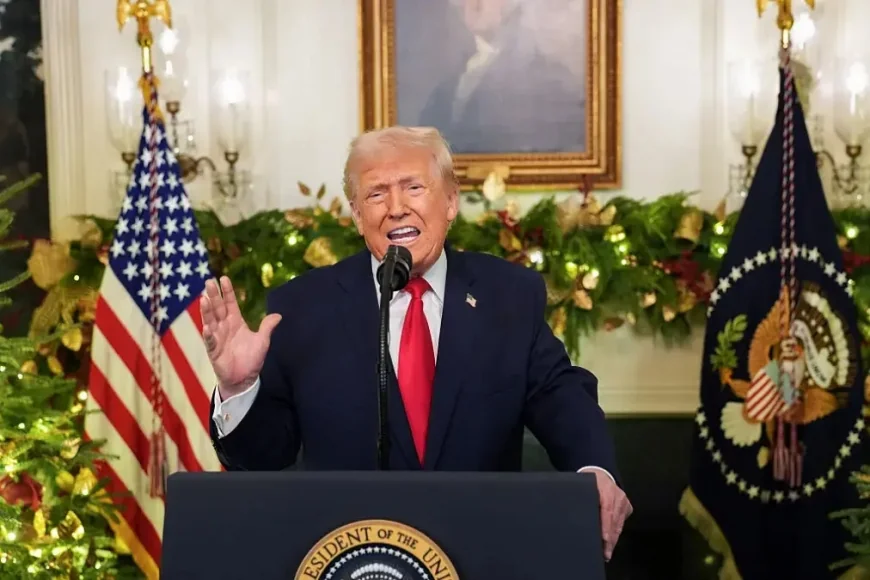
US President Donald Trump on Thursday called the complete rollback of federal climate change policy a political victory over the Democratic Party's "radical" environmental agenda. It's the same message Republicans used in the last election and may use again ahead of the crucial midterms in November.
His announcement at the White House was one of the most significant steps of his second term. The president said he was rescinding the 2009 Obama-era "endangerment finding," which stated that pollution harms public health and the environment.
For nearly 17 years, the US has used that scientific finding as the legal basis for policies to reduce emissions from cars, power plants, and other sources of global warming gases.
"This radical rule became the legal basis for the Green New Scam," Trump said, using a term popular among Republicans for Democratic environmental and climate policies.
This move is the culmination of a decade-long effort by Trump to dismantle policies that Democrats and many climate experts say are needed to curb emissions. It marks one of the biggest changes to US climate policy to date.
Trump, who has called climate change a "hoax" and a "scam," dismissed the science behind the Obama-era rule, statements that sometimes seemed to be made in celebration of his victory over his Democratic opponents.
Read Also
This was another sign that, for the president, the issue is as much political as it is scientific.
He focused on the economic impact of reversing the threat, arguing that promoting fossil fuels over clean energy would lower energy costs for American consumers.
Trump also singled out the US auto industry as the biggest beneficiary of this change.
He said that repealing the threatened outcome would end the electric vehicle "mandate" implemented by his predecessor, President Joe Biden. Under Biden, Congress passed legislation to expand the nation's electric vehicle charging network and provided tax incentives to reduce the cost of electric vehicles, but it did not include any provisions forcing buyers to purchase them. Lee Zeldin, administrator of the US Environmental Protection Agency, made the announcement alongside the president and described the 2009 scientific decision as "the holy grail of climate change religion."
Both men described the repeal as an attack on excessive federal regulation—part of Republicans' long-standing message that bureaucratic red tape is hindering economic growth.
Zeldin said that previous climate policy had "strangulated entire sectors of the United States economy."
He said the decision was "the single largest act of deregulation in the history of the United States of America."
Meanwhile, the reversal sparked anger among Democrats and environmental groups, who said it would undermine the US's ability to combat climate change. Former President Barack Obama wrote on social media, "We will be less safe, less healthy, and less able to combat climate change—all so the fossil fuel industry can make even more money."
Software Services
 |
Turn your casino idea into a live platform — start your journey today |
During his first term, Trump reversed several Obama-era energy and environmental regulations. He also withdrew the US from the Paris Climate Accord, a pact between countries worldwide to reduce emissions and address rising sea levels, natural disasters, and other problems exacerbated by global warming.
Trump took a similar step at the start of his second term, reversing Biden's decision to rejoin the US in international climate agreements.
In recent years, climate policy in the US has depended on who is in the White House. But Thursday's announcement marked Trump's biggest move yet to dismantle climate policy enacted by his Democratic predecessors.
It also reignited a campaign battle that has been brewing since the last few national elections, pitting Trump against Democrats in Congress who supported a large-scale climate and environmental policy known as the "Green New Deal."
Whether the strategy of changing climate regulations can help Republicans win votes in the November midterm elections, which will determine control of Congress for the remainder of Trump's term, remains to be seen.
Exit polls for the 2024 presidential election rarely showed this issue as a top priority for voters—with the economy and cost of living often topping the list.
Perhaps with this in mind, Trump worked hard to argue that Thursday's move would save consumers thousands on a new car. However, many environmentalists doubt this claim.
Trump and many Republicans have also argued that Democrats' climate policies are excessive and out of touch with public sentiment.
But opinion polls show that a growing percentage of Americans are concerned about global warming—a potential warning sign for Republicans who embrace Trump's climate record in November.
According to a 2024 study by the Yale Program on Climate Change Communication, 63% of Americans in the US say they are worried about global warming, while 37% say they are not.
A 2025 Gallup poll showed that a record 48% of American adults believe global warming will pose a serious threat to their lives, up from 25% in 1997.
At the White House on Thursday, Trump dismissed questions about whether he was worried the public would not approve of his decision. He said the country would have been better off without previous climate change regulations.
Thank you for reading this content.
What's Your Reaction?
 Like
0
Like
0
 Dislike
0
Dislike
0
 Love
0
Love
0
 Funny
0
Funny
0
 Angry
0
Angry
0
 Sad
0
Sad
0
 Wow
0
Wow
0