



















7 Key Takeaways from Trump & Netanyahu’s Florida Talks
Trump and Netanyahu met in Florida to discuss Gaza, Iran, and Middle East peace. Here are 7 key takeaways from their high-stakes diplomatic session.

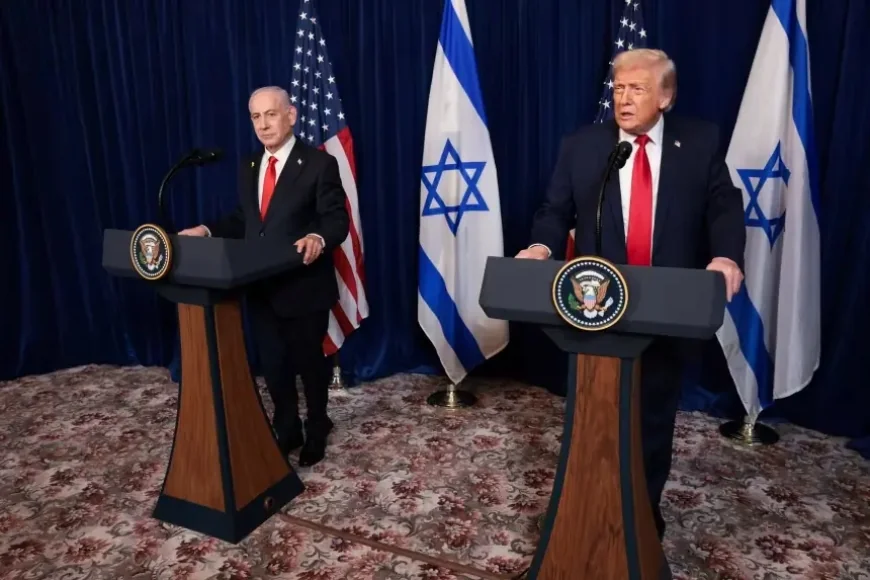
President Donald Trump's meeting with Israeli Prime Minister Benjamin Netanyahu in Florida on Monday was full of warm words – but yielded no clear progress on his peace plan for Gaza.
The two leaders held a private lunch at Mar-a-Lago, intended to address a range of issues in the Middle East, as both sides attempt to permanently end Israel's conflict with Hamas and secure broader peace across the region.
At the start of the session, Trump told reporters he planned to discuss "five big topics" with Netanyahu, later suggesting they had come close to resolving three of them within the first five minutes of their meeting.
In addition to Gaza, Trump indicated he also planned to discuss issues in the occupied West Bank and potential threats from Iran.
But more than an hour later, the two emerged without any new announcements.
Instead, they appeared content to heap praise on each other, with Netanyahu even announcing he planned to award Trump Israel's highest civilian honor.
"President Trump has broken many traditions to surprise people, so we decided to break a tradition or create a new tradition," Netanyahu said.
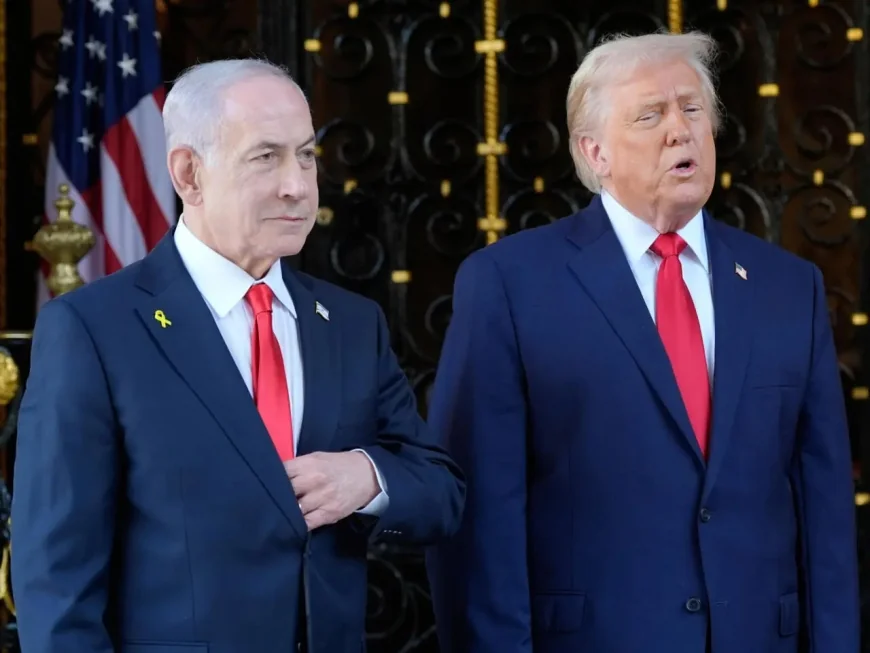
Netanyahu's visit was the second major visit by a foreign leader to Mar-a-Lago amid a flurry of foreign policy activity for Trump at the end of the year.
Trump and Netanyahu spent considerable time together publicly, exchanging compliments, as both sought to demonstrate that their relationship was stronger than ever despite occasional tensions last year – and Trump's growing caution regarding some of Israel's actions amid his efforts to broker peace in the Middle East.
"We've never had a better friend in the White House than President Trump. Not even close," Netanyahu said upon his arrival. Trump responded shortly afterward, saying that "with most other leaders, Israel wouldn't exist today."
"This relationship has been extraordinary," Trump said.
The flattery continued, culminating in Netanyahu's announcement that he would make Trump the first non-Israeli recipient of the Israel Peace Prize.
Trump, who called the award "truly amazing and very much appreciated," praised Netanyahu as a "wartime" leader and downplayed concerns that Israel wasn't moving quickly enough toward the next phase of the Gaza peace agreement. Instead, he placed almost all the blame on Hamas.
Software Services
 |
All-in-one casino solution ready to launch — talk to our experts now |
But he did acknowledge ongoing disagreements between the U.S. and Israel, primarily over the West Bank. Trump has opposed Israel's occupation of the territory, aligning himself with many Western and Arab nations on the issue. Meanwhile, the Israeli government has previously discussed annexing parts of the West Bank and has intensified its military operations in the territory since the Hamas attacks on October 7, 2023.
"We've discussed the West Bank for a long time, a lot of discussion, and I wouldn't say we're 100% in agreement on the West Bank," Trump told Kevin Liptak.
Second phase in Gaza still stalled
Trump and Netanyahu also failed to reach an agreement on moving to the second phase of the U.S.-brokered peace plan for Gaza—an issue that has slowed efforts toward lasting peace and eventual reconstruction.
On Monday, Trump downplayed the lack of progress, insisting he was "not concerned" about Israel's actions in the territory, even though its military has killed hundreds of Palestinians since the ceasefire went into effect in October. Instead, he argued that the plan's success hinged primarily on Hamas agreeing to disarm. But this is unlikely to ease concerns within the Trump administration that Netanyahu is delaying moving to the next phase, leaving the U.S. bogged down in the Middle East at a time when Republicans are urging Trump to focus on domestic issues.
Trump at one point hinted at the difficulty of the negotiations, suggesting that Netanyahu was skeptical about giving a "second chance" in an effort to make the ceasefire permanent. Yet, he told reporters that "Israel has followed the plan 100 percent."
A stern warning for Iran
Trump's message to Iran was far more direct, amid warnings from Israel that the country is attempting to rebuild its missile capabilities after U.S. strikes on three nuclear sites earlier this year.
The president vowed to strike Iran again if he learned the country was expanding its ballistic missile program, saying he had heard indications of construction at new sites within the country. "I've heard that Iran is trying to get strong again, and if they are, we're going to have to take them down," he said, adding, "We will defeat them badly."
Trump later threatened Iran with "very serious" consequences, urging the country to negotiate with the U.S. to avoid further military action. But he repeatedly struck a pessimistic tone, even as he expressed hope that further attacks could be avoided.
Regarding Iran's actions, Trump said, "That's what we're hearing." "Usually, where there's smoke, there's fire."
Trump's focus on foreign policy
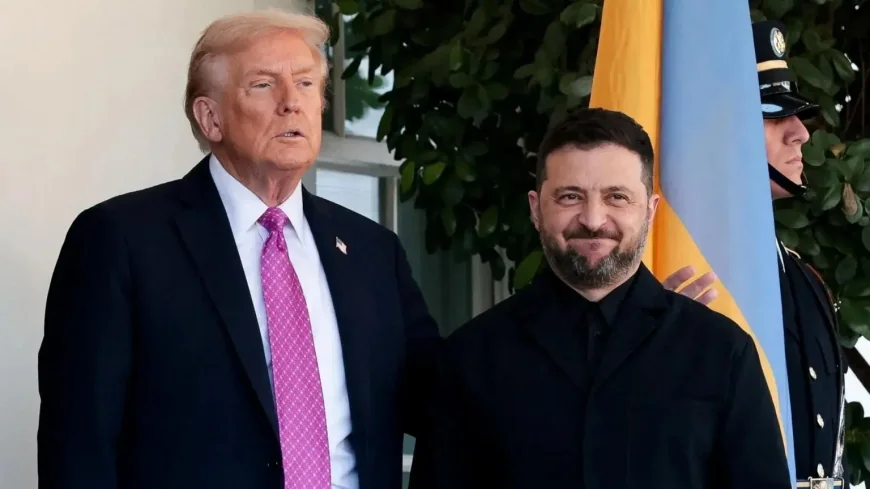
In addition to Netanyahu's visit, Trump's Mar-a-Lago vacation has so far been dominated by several foreign policy issues that have shaped his first year in office.
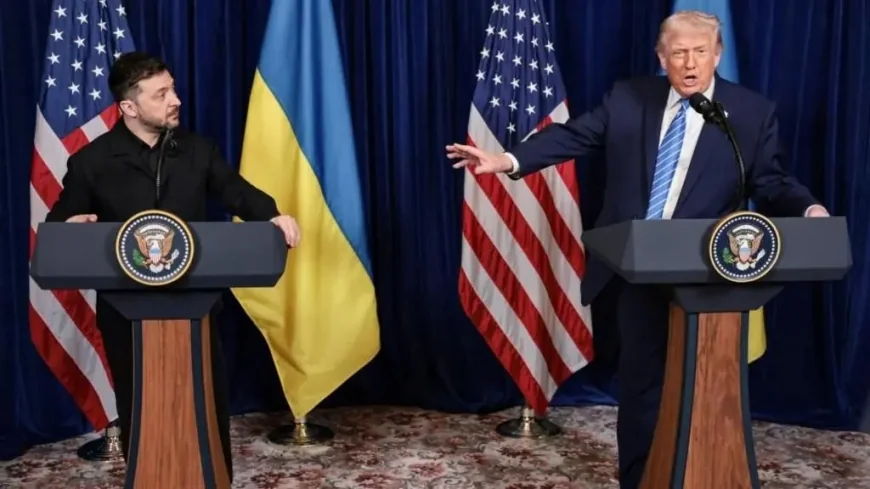
Between seeing off Ukrainian President Volodymyr Zelensky and welcoming Netanyahu, Trump spoke by phone with Russian President Vladimir Putin on Monday morning. He later said Putin told him that a Ukrainian drone attack had targeted one of his homes, an allegation Trump said made him "very angry."
"This is not the right time," Trump said, even as he acknowledged the allegation might be false.
The president also offered some new details about an operation he said targeted a "major facility" in Venezuela — an incident that only became public when he mentioned it during a previous radio interview.
"It's an implementation area," Trump said of the dock, which he claimed was being used to "load drugs onto boats."
But he declined to elaborate further, leaving the next steps in Venezuela — as well as in Ukraine and the Middle East — unclear by the end of the day.
Thank you for reading this content.
Thank you for reading this content.
What's Your Reaction?
 Like
1
Like
1
 Dislike
0
Dislike
0
 Love
0
Love
0
 Funny
0
Funny
0
 Angry
0
Angry
0
 Sad
0
Sad
0
 Wow
0
Wow
0