










After Venezuela: Who’s Next on Trump’s Radar?
After the Venezuela strike, fears of US military intervention grow. Colombia and Cuba top the list of Trump’s possible next targets in 2026.

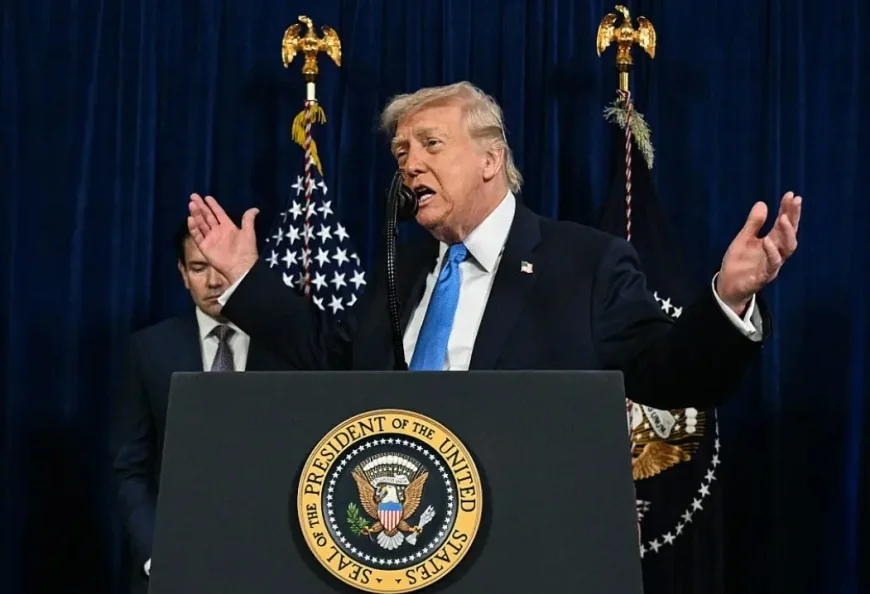
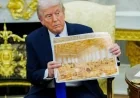
After failing to win the Nobel Peace Prize in 2025, Donald Trump began 2026 with a shocking military maneuver, attacking targets inside Venezuela and capturing its leader, Nicolás Maduro, in what many observers have called a blatant violation of sovereignty.
The weekend events in Caracas suggested the American president was reverting to the foreign intervention and entanglements he had previously campaigned against, raising concerns in several other countries, and rightly so, that they too could be targets.
Here's what to know about Trump's potential next targets.
Colombia
In Colombia, which borders Venezuela, President Gustavo Petro condemned the U.S. military action in Caracas. Petro posted on X (formerly Twitter) Saturday morning that his government "rejects the aggression against the sovereignty of Venezuela and Latin America" and also urged a meeting of the United Nations Security Council to discuss the matter.
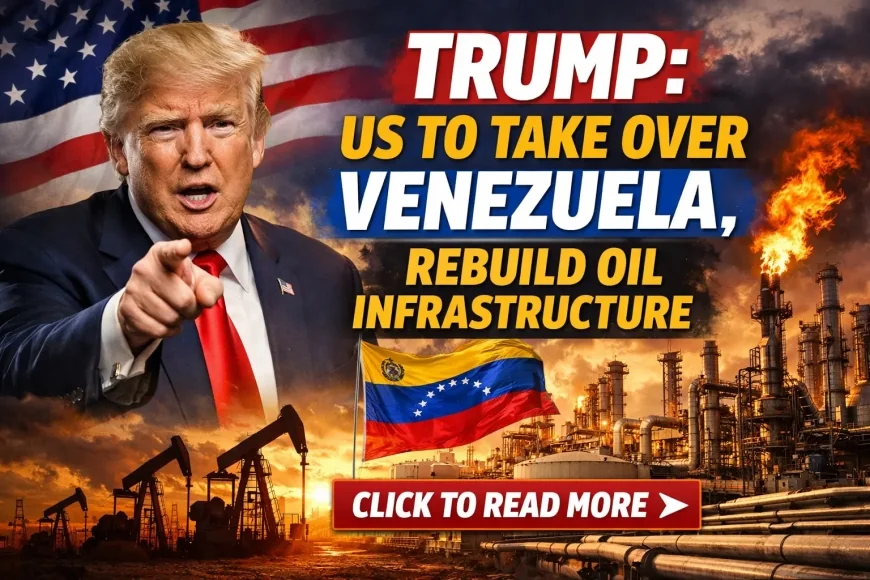
Meanwhile, Trump not only attempted to justify the intervention, claiming in a rambling speech Saturday that Venezuela under Maduro was "increasingly harboring foreign enemies" and "acquiring dangerous, offensive weapons," but also broadened the scope of his potential future interventions. Trump referenced the 1823 Monroe Doctrine, an American foreign policy principle asserting U.S. influence over the Western Hemisphere, and said: "The Monroe Doctrine is a big deal, but we've gone way beyond that, way beyond that." He suggested it could be called the "Don-roe" Doctrine. Trump's announcement comes after the administration last year released a national security strategy document that referenced a "Trump corollary" to the Monroe Doctrine, reflecting the administration's clear intention to target Latin American countries, aiming to "restore American dominance in the Western Hemisphere" and "protect our access to key geographic areas in our country and throughout the region." The administration had already deployed a strong military presence in the region for months under the pretext of stemming the flow of drugs into the United States.
Colombia and the U.S. have had a decades-long security alliance, but these relations have become increasingly strained due to feuds between their leaders. Colombia's Petro has been openly critical of Trump and his military campaign against Venezuela, while Trump has called Petro an "illegitimate drug leader" who has failed to stop the supply of cocaine from his country to the U.S.
Software Services
 |
Create, launch, and scale your gaming platform — get instant access |
In early December, when Trump threatened to expand his anti-drug-trafficking military operations—which had thus far been focused on Venezuela—to include Colombia, Petro invited Trump to visit the country to see how Bogotá has been trying to address its cocaine problem. But Petro's invitation came with a warning. "Do not threaten our sovereignty, because you will awaken the jaguar," Petro posted on X at the time. "Attacking our sovereignty is declaring war; do not jeopardize two centuries of diplomatic relations."
Weeks later, Trump claimed that there were at least three major cocaine factories in the country that needed to be shut down, and he continued his criticism of Petro. "He's not a friend of the United States," Trump said. "He's a very bad guy. A very bad man, and he should watch himself." On Sunday, aboard Air Force One, Trump again mentioned Petro: “Colombia is also very sick, run by a sick man who likes to make cocaine and sell it to the United States, and he won’t be able to do that for much longer.” When asked if this meant the U.S. would conduct military operations against Colombia, Trump replied, “I like that.”
Petro responded to Trump on X, saying: “Today I will see if the translation of Trump’s words in English is the same as what the national press is saying. So, later, when I know the true meaning of Trump’s illegitimate threat, I will respond to him.”
Cuba
At a press conference following the attack on Venezuela, Trump was asked on Saturday whether Cuba and its president, Miguel Díaz-Canel, should take a message from the U.S. intervention. Trump replied, “I think Cuba is going to be something we’re going to be talking about, because Cuba is a failed state right now.”
Secretary of State Marco Rubio—the son of Cuban immigrants and a critic of the Díaz-Canel regime—also issued a warning. Rubio said, “If I were in Havana, and I were in the government, I would be concerned—at least a little bit.” Senator Lindsey Graham (R, S.C.) also told Axios that the leaders of Cuba and Iran should be “concerned” after the attack on Venezuela.
But on Sunday, Trump appeared to back away from the idea of U.S. intervention in Cuba. He said, “I think it’s just going to collapse.” “I don’t think we need any action.”
Díaz-Canel, who condemned the attack on Venezuela and demanded the release of Maduro and his wife, has not yet publicly responded to Trump’s statements about Cuba. However, he posted on X: "Our #ZoneOfPeace is being brutally attacked... Homeland or death, we will win!"
Thank you for reading this content.
Thank you for reading this content.
What's Your Reaction?
 Like
0
Like
0
 Dislike
0
Dislike
0
 Love
0
Love
0
 Funny
0
Funny
0
 Angry
0
Angry
0
 Sad
0
Sad
0
 Wow
0
Wow
0