































Bangladesh Mourns: 80-Year Legacy of Khaleda Zia Ends
"Bangladesh mourns the passing of Khaleda Zia at 80, a trailblazer in Bangladesh politics whose rivalry shaped the nation for decades."

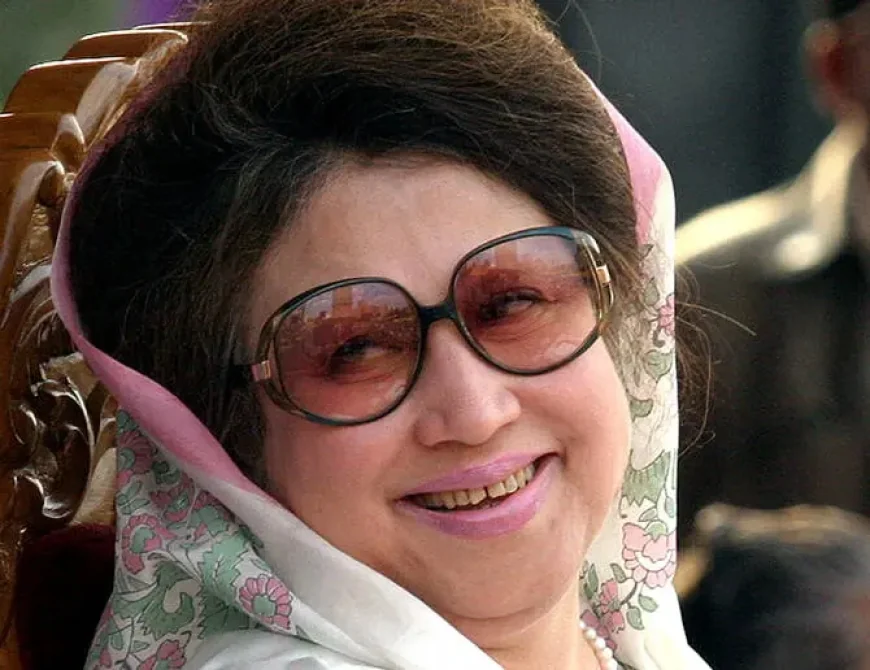
Former Bangladeshi Prime Minister Khaleda Zia, whose bitter rivalry with Sheikh Hasina defined the country's politics for a generation, has died, her political party announced on Tuesday. She was 80 years old.
"BNP Chairperson and former Prime Minister, national leader Begum Khaleda Zia passed away this morning at 6 am, right after the Fajr (morning) prayer," the Bangladesh Nationalist Party (BNP) said in a statement.
It added, "We pray for the peace of her soul and request everyone to pray for her departed soul."
Zia was the country's first female prime minister.
She had faced corruption charges, which she maintained were politically motivated, but in January 2025, the Supreme Court acquitted Zia in the last remaining corruption case against her, clearing the way for her to contest the February elections.
She had returned to the country in May after receiving medical treatment in the United Kingdom.
In early January, Bangladesh's interim government granted her permission to travel abroad, while Hasina's government had previously rejected similar requests at least 18 times.
Despite years of ill health and imprisonment, Zia had vowed in November to campaign in the elections scheduled for February 2026 – the first since the massive uprising last year that ousted her arch-rival Sheikh Hasina from power. Zia's BNP is widely considered a major contender.
But in late November, she was hospitalized, where, despite the best efforts of doctors, her condition deteriorated due to multiple health complications.
In her final days, interim leader Muhammad Yunus called on the nation to pray for Zia, describing her as a "source of supreme inspiration for the nation." The early years of Bangladesh's independence – won in a bloody war against Pakistan in 1971 – were marked by assassinations, coups, and counter-coups, as military figures and secular and Islamist leaders vied for power.
Zia's husband, President Ziaur Rahman, seized power as a military chief in 1977 and formed the BNP a year later. He is credited with bringing democracy to the country, but he was assassinated in a military coup in 1981. Zia's unwavering stance against the military dictatorship helped galvanize a major movement against it, culminating in the ouster of dictator and former army chief HM Ershad in 1990.
Former Bangladeshi Prime Minister Khaleda Zia, whose bitter rivalry with Sheikh Hasina defined the country's politics for a generation, died on Tuesday, her political party announced. She was 80 years old.
"BNP Chairperson and former Prime Minister, national leader Begum Khaleda Zia passed away this morning at 6 am, right after Fajr (dawn) prayers," the Bangladesh Nationalist Party (BNP) said in a statement.
Software Services
 |
All-in-one casino solution ready to launch — talk to our experts now |
It added, "We pray for the peace of her soul and request everyone to pray for her departed soul."
Zia was the country's first female prime minister.
She faced corruption charges, which she maintained were politically motivated, but in January 2025, the Supreme Court acquitted Zia in the last remaining corruption case against her, allowing her to contest the February elections.
She had returned to the country in May after receiving medical treatment in the UK.
In early January, Bangladesh's interim government granted her permission to travel abroad, while Hasina's government had rejected previous requests at least 18 times. Despite years of ill health and imprisonment, Zia had vowed in November to campaign for elections scheduled for February 2026 – the first since the major uprising last year that ousted her arch-rival Sheikh Hasina from power. Zia's BNP was widely seen as a leading contender.
But in late November, she was hospitalized, where, despite doctors' best efforts, her condition deteriorated due to multiple health problems.

In her final days, interim leader Muhammad Yunus called on the nation to pray for Zia, describing her as "a supreme source of inspiration for the country."
The early years of Bangladesh's independence, achieved in the bloody 1971 war against Pakistan, were marked by assassinations, coups, and counter-coups, as military figures and secular and Islamist leaders vied for power.
Zia's husband, President Ziaur Rahman, seized power as a military chief in 1977 and formed the BNP a year later. He is credited with bringing democracy to the country, but he was assassinated in a military coup in 1981. Zia's unwavering stance against military dictatorship helped galvanize a mass movement against it, culminating in the ouster of dictator and former army chief H.M. Ershad in 1990.
When Zia won her first term in 1991 and in several subsequent elections, her opponent was Hasina, the daughter of independence leader Sheikh Mujibur Rahman, who was assassinated in the 1975 coup.
Zia faced criticism over an election held in early 1996, in which her party won 278 of the 300 parliamentary seats. This election took place amid a widespread boycott by other major parties, including Hasina's Awami League, which had demanded a caretaker government during the election period. Zia's government lasted only 12 days, after which a non-partisan caretaker government was formed and new elections were held that June.

Zia returned to power in 2001 in a coalition government with Jamaat-e-Islami, the country's main Islamist party, which had a controversial past linked to Bangladesh's war of independence.
Zia's BNP had previously been in a close alliance with this party, and her government maintained the confidence of the business community by pursuing pro-investment, free-market policies. Zia was known for her soft stance toward Pakistan and for delivering anti-India political rhetoric. India alleged that during Zia's rule, particularly during her second term from 2001-06, insurgents were allowed to use Bangladeshi territory to destabilize India's northeastern states.
Zia was sentenced to 17 years in prison in two separate corruption cases, involving allegations of misappropriation of funds intended for a charity named after her late husband. Her party claimed the charges were politically motivated to weaken the opposition, but the Hasina government maintained that it did not interfere and that the matter was for the courts to decide.
Hasina was heavily criticized by both her opponents and independent critics for sending Zia to jail.
Thank you for reading this content.
Thank you for reading this content.
What's Your Reaction?
 Like
1
Like
1
 Dislike
0
Dislike
0
 Love
0
Love
0
 Funny
0
Funny
0
 Angry
0
Angry
0
 Sad
0
Sad
0
 Wow
0
Wow
0