



























Dick’s Cuts Foot Locker Stores to Protect Profits
Dick’s Sporting Goods plans to close several Foot Locker stores as part of a major restructuring to protect profits in fiscal 2026.

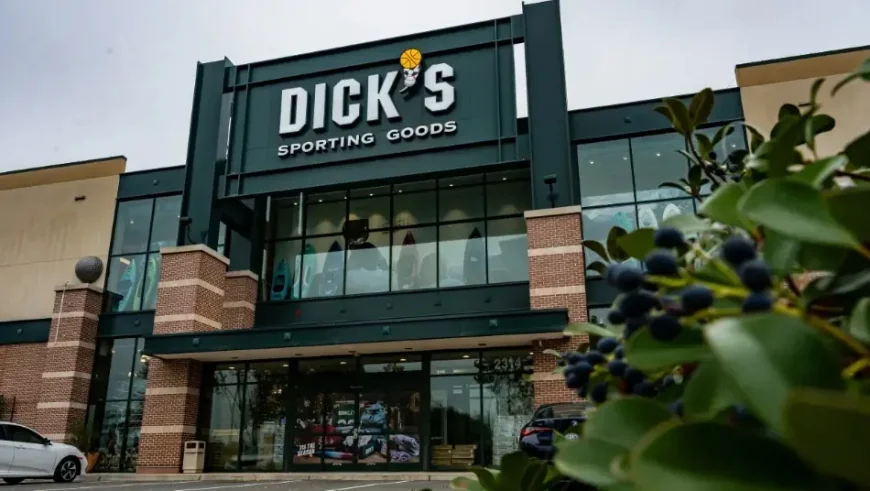
Dick's Sporting Goods
Now that the sneaker company's acquisition is complete, it plans to close several Foot Locker stores, the company said Tuesday while announcing its fiscal third-quarter earnings.
It's unclear how many stores Dick's plans to close, but these are part of a larger restructuring it's implementing to ensure Foot Locker doesn't weigh on its profits in fiscal year 2026, Dick's Executive Chairman Ed Stack told Courtney Reagan.
"We need to clean out the garage," Stack said. "We've taken some aggressive markdowns to get rid of old merchandise. We're impairing some store assets. We will be closing some stores... Everything we're doing is to save for 2026, and this is a one-time thing."
The company declined to specify how many stores will be affected or whether the restructuring will include layoffs.
Because of this, Foot Locker's comparable sales are expected to be in the mid- to high-single digits in the current quarter, and margins are expected to fall between 10 and 15 percentage points.
In addition to the Foot Locker business, Dick's stores saw a 5.7% comparable sales increase during the quarter, significantly exceeding analyst expectations of 3.6%, according to StreetAccount.
For its namesake banner, the company now expects comparable sales growth between 3.5% and 4%, up from its previous range of 2% to 3.5%. This is higher than expectations of 3.6% growth, according to StreetAccount.
According to LSEG, Dick's now expects full-year earnings per share between $14.25 and $14.55, up from a previous estimate of $13.90 to $14.50 and in line with expectations of $14.44 per share.
Based on LSEG's analyst survey, here's how the major sporting goods store performed compared to Wall Street expectations:
Dick's has been a strong performer in the retail industry and now faces the challenge of fixing Foot Locker's business so it doesn't impact its generally strong results.
Dick's acquisition of Foot Locker for $2.4 billion gave it a significant competitive advantage in the wholesale sneaker market, especially for Nike products, and access to both international and urban customers.
It's also supercharging the company's growth. Dick's sales increased 36% to $4.17 billion from $3.06 billion a year earlier, driven by Foot Locker's revenue of approximately $931 million during the quarter.
However, there were some risks. Foot Locker has approximately 2,400 stores worldwide and has underperformed for several years. Its customers generate lower incomes than Dick's, and it hasn't fared as well in a weakening economy.
Under CEO Mary Dillon, Foot Locker had worked to refresh its stores and change the way it sells sneakers. Since the acquisition, it began testing changes in 11 stores in North America to see if these improvements would improve sales, including reducing product inventory by more than 20%, bringing back clothing, and changing Foot Locker's "footwear wall."
"If you had gone into the first Foot Locker store and looked at the footwear wall... it would have been nothing but one line after another," Stack said. "It was just a whole pile of shoes thrown on the wall, and we removed all of that, resold it, focused on the shoes we really wanted to sell. ... It's still early days, but we're very excited about what we've done."
What's Your Reaction?
 Like
1
Like
1
 Dislike
0
Dislike
0
 Love
0
Love
0
 Funny
0
Funny
0
 Angry
0
Angry
0
 Sad
0
Sad
0
 Wow
0
Wow
0