
























Court Bombshell: Trump Tariffs Must Be Refunded
A US trade court orders tariff refunds for thousands of firms after the Supreme Court struck down Trump-era import taxes, marking a major setback for Donald Trump.

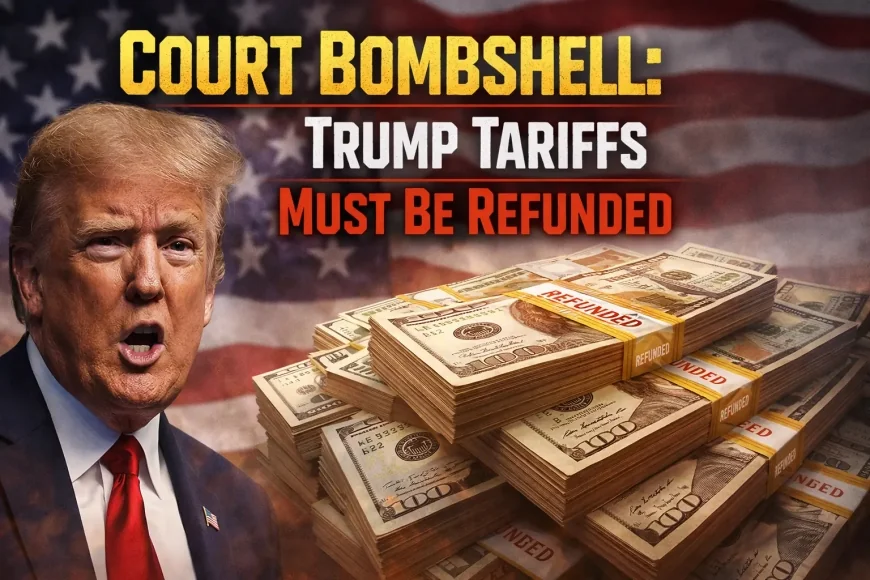
A federal judge has cleared the way for thousands of businesses to receive refunds for tariffs that the Supreme Court struck down last month.
The US Court of International Trade on Wednesday ordered Customs and Border Protection to issue refunds for the levies imposed by US President Donald Trump last year under the International Emergency Economic Powers Act (IEEPA).
Judge Richard Eaton wrote, "All importers of record whose entries were subject to IEEPA duties are entitled to benefit from the High Court's decision."
The payment process is still unclear. But the trade court's decision is a blow to Trump, who has decided to replace the import tax and has expressed disappointment over hopes for a refund.
The ruling specifically addressed a case brought by Atmos Filtration, a Tennessee-based filtration company, but the judge stated that he would be the only one to hear the case regarding refunds.

US Treasury Secretary Scott Bessant said the US could impose global tariffs of 10% to 15% this week, following President Donald Trump's varying statements about the new rates. This is intended to replace the IEEPA tariffs struck down by the Supreme Court.
The Trump administration earned approximately $130 billion (£97 billion) from tariffs imposed on most goods imported into the US through the IEEPA.
Companies such as global transportation and postal firm FedEx have filed suit seeking full refunds of the tariffs.
The White House did not immediately respond to a request for comment.
The administration is facing a growing backlog of claims from firms that previously paid the tariffs struck down by the Supreme Court.
Software Services

Dan Anthony of We Pay the Tariffs, a small business coalition formed to secure refunds, called the decision a "victory" in a statement. He said, "American small businesses have waited long enough. These businesses deserve a full, fast, and automatic refund process, and nothing less is acceptable."
Significant questions remain about what US import tax policies will look like going forward.
Last April, Trump announced "Liberation Day" tariffs on dozens of countries, with rates starting at 10% and rising to 50% in some cases.
These duties sparked a flurry of trade negotiations as countries pushed for lower rates in exchange for promises of investment and other changes.
A US Supreme Court ruling last month struck down those taxes, along with others the administration had previously imposed citing emergency powers on goods from Mexico, Canada, and China.
Thank you for reading this content.
Thank you for reading this content.
What's Your Reaction?
 Like
0
Like
0
 Dislike
0
Dislike
0
 Love
0
Love
0
 Funny
0
Funny
0
 Angry
0
Angry
0
 Sad
0
Sad
0
 Wow
0
Wow
0