
































Jury trial reforms to be announced
The UK government is preparing to propose major reforms that would limit jury trials in England and Wales to only the most serious crimes, such as murder and rape.

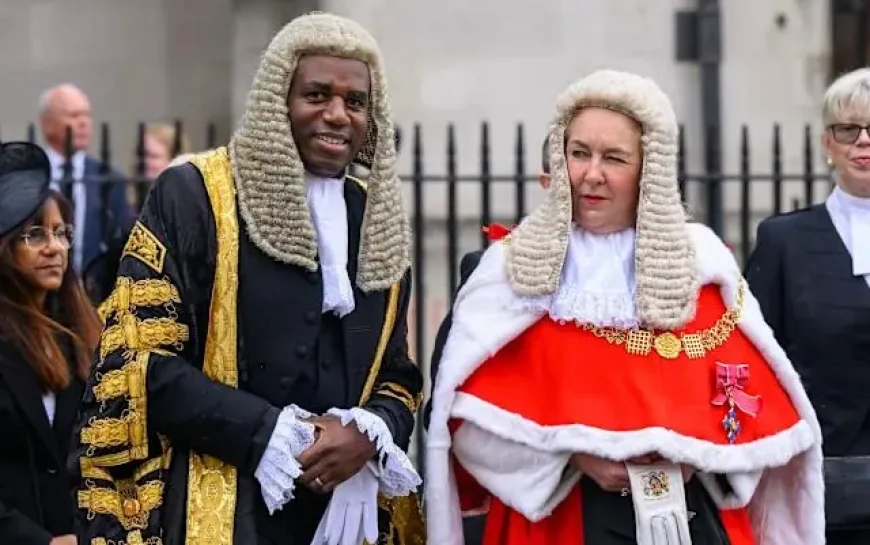
The government is set to announce plans to restrict the right to jury trials in England and Wales, in an effort to reduce the unprecedented backlog and delays in justice.
Deputy Prime Minister and Justice Secretary David Lammy will present the proposal to Parliament later on Tuesday.
But he has insisted that juries will remain "an essential part of the criminal justice system."
It is unclear whether the Cabinet has approved or backed down from this plan—which would eliminate jury trials in all but the most serious cases, including murder.
The proposals to reduce jury trials are based on the recommendations of a senior retired judge, who advised ministers that this reform would help tackle delays.
Currently, 78,000 cases are awaiting completion in Crown Court. In effect, this means that some suspects charged with serious crimes today may not face trial until late 2029 or early 2030. Officials estimate that the caseload will exceed 100,000 by then unless further action is taken.
A leaked internal government briefing last week revealed that the Ministry of Justice has final plans to introduce new jury-less trials, where cases will be decided by a single judge. Therefore, jury trials will be eliminated for most crimes currently tried in Crown Courts – including theft, most drug offenses, violent and sexual crimes, and fraud.
Cases will only go before a jury if the accused faces a potential prison sentence of more than five years or is charged with murder, culpable homicide, or rape.
Volunteer magistrates – who handle most criminal cases in lower courts – will have their sentencing power doubled to two years.
The leaked plan does not apply to Scotland or Northern Ireland and was sent to another department before Cabinet's final sign-off. It goes beyond the recommendations made earlier this year by retired Court of Appeal judge Sir Brian Leveson.
Lammy has not confirmed the package, but said there will be an additional £550 million over three years for specialist victim support services – and a £34 million target to attract more barristers to criminal work.
Speaking to Breakfast before the announcement on Tuesday, he said juries were and remain "a fundamental part of our justice system" and paid tribute to the 350,000 people who serve on them each year.
But he suggested that magistrates could be used in their place for less serious crimes to reduce Crown Court backlogs.
He said, "If you steal a phone, a trial can take two days, and more serious crimes like rape or murder can be delayed."
Lammy had previously said that cutting juries would be a mistake, but said "the facts have changed" and the government needs to introduce reforms to clear the backlog. "We must invest more, we must modernize, we must reform. I am determined to do this for victims across the country."
But Reil Carmy-Jones KC, chair of the Criminal Bar Association, said that the delays weren't caused by juries – but rather by years of underfunding.
He said, "Imposing an untried, untested layer of complexity and cost, in the form of any new division of the Crown Court, on our severely underfunded system, whose infrastructure is in a very poor state, is counterproductive."
Many criminal barristers blame the previous Conservative government for the backlog – they say the courts have been under-resourced for more than a decade.
Shadow Justice Secretary, Robert Jenrick MP, said David Lammy had previously defended juries too much – and accused him of abandoning his principles.
He said, "Labour has chosen to spend billions of extra pounds on benefits payments rather than funding the courts to reduce the backlog."
What's Your Reaction?
 Like
0
Like
0
 Dislike
0
Dislike
0
 Love
0
Love
0
 Funny
0
Funny
0
 Angry
0
Angry
0
 Sad
0
Sad
0
 Wow
0
Wow
0