























Key Takeaways from Halligan’s Disqualification
A federal judge on Monday dismissed the prosecutions that President Donald Trump orchestrated against former FBI Director James Comey and New York Attorney General Letitia James – a major early setback to his retribution campaign against his political foes.

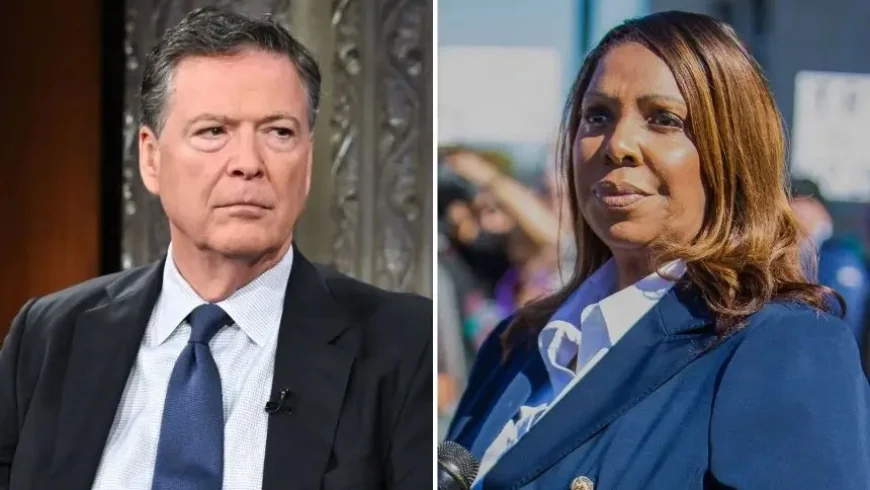
US District Judge Cameron McGowan Currie ruled that the cases were invalid because the prosecutor who brought the charges, interim US attorney Lindsey Halligan, had been unlawfully appointed.
The rulings bolster criticisms of how hastily the prosecutions were brought.
Halligan was installed and brought the cases after Trump forced out the existing US attorney who resisted bringing the cases and pleaded with Attorney General Pam Bondi to make them happen.
The opinions are subject to appeal. But for now, they close the first two major cases Trump orchestrated against his foes. And it could recast Trump’s fraught effort to exact retribution on his foes.
Trump’s role in pushing these prosecutions has no modern equivalent.
Here are the key takeaways from the rulings:
An embarrassing setback for Trump’s retribution campaign
The pervading picture of Trump’s retribution campaign has been that he just wants his foes indicted, and he doesn’t really care how or what for.
But as I wrote early on, that was a recipe for hastily orchestrated indictments that might ultimately backfire politically – by falling apart in ways that reinforce just how desperate and politicized they were.
These ones are clearly at risk of backfiring.
We already knew that Trump played an extraordinary role in making these cases happen. Now a judge has ruled that Trump and Bondi basically had to illegally try to install a replacement interim US attorney to get someone to pursue these cases.
The James and Comey opinions both begin with the judge citing how Halligan had “no prior prosecutorial experience.” The judge also dinged Bondi for trying to retroactively give Halligan different status, saying “the Government has identified no authority allowing the Attorney General to reach back in time and rewrite the terms of a past appointment.”
And that comes after plenty of other developments that seemed to reinforce how haphazard all this was.
At the start of last week, a magistrate judge dinged Halligan and the DOJ for “a disturbing pattern of profound investigative missteps,” which included possibly showing the grand jury privileged evidence and/or giving it false instructions. Later in the week, matters focused on Halligan’s strange handling of the indictments and whether she actually showed the final indictment to the full grand jury.
Indeed, it seems like the case could have been dismissed for a number of different reasons; this just happened to be the one to get resolved first.
And it’s not as if these rulings came out of nowhere. Even some conservative legal scholars predicted that these indictments would fall apart over issues with Halligan’s appointment.
Americans aren’t buying the Trump team’s spin
There is real political risk here for the White House.
Trump’s allies have pitched these indictments as more or less akin to Trump’s indictments – a legal tit-for-tat after Trump was indicted for his efforts to overturn the 2020 election, for retaining classified documents and for hush money payments.
But Americans don’t see them that way.
A Marquette University Law School poll last week showed Americans said by 16 points (58%-42%) that the cases against Trump’s foes were not justified. That’s even as they said by 10 points that the indictments against then-former President Trump were justified.
That was not the first poll to suggest Americans see these indictments as more politicized and less substantial than Trump’s.
Trump as a candidate last year repeatedly claimed that Democrats were weaponizing the justice system against him. He baselessly claimed then-President Joe Biden was behind his indictments and spoke of retribution. “Sometimes revenge can be justified,” Trump said last year after he was convicted in the Manhattan hush money case.
Trump’s indictments also involved an attempt to overturn a democratic election and involved the violent January 6, 2021, riot at the US Capitol, as well withholding sensitive documents that could jeopardize national security.
The indictments of Comey and James were much more small-bore: Comey for alleged false statements to Congress and James for alleged mortgage fraud that, even if proven, would only have gained her thousands of dollars over many years.
It’s the latest setback for Trump’s DOJ
And this isn’t the only major recent setback for the Justice Department.
Last week, a Trump-appointed federal judge in Texas led a panel that struck down a GOP-drawn map that could net Republicans a five-seat gain in Congress. The judges cited an apparently ill-advised Justice Department letter that suggested the map needed to be redrawn for racial reason – a letter Texas officials soon sought to disown. (The Supreme Court has since allowed the map to stay, at least temporarily while it considers the matter.)
The Justice Department also moved last week to suddenly dismiss its much-hyped prosecution of a woman, Miramar Martinez, it claimed had rammed a Border Patrol agent with her car, after some apparent missteps.
We also learned last week that investigators are probing the administration’s handling of the mortgage-fraud investigations of James and Democratic Sen. Adam Schiff of California. Prosecutors were looking into whether grand jury materials were shared with unauthorized people, according to sources.
Trump has also faced two rulings against his signature tariffs policy, with the Supreme Court currently considering whether to uphold those rulings – and the justices appearing skeptical of his claims to authority.
And on Friday, a high-ranking official from Costa Rica in comments to The Washington Post contradicted a claim the Justice Department had made in court.
What happens next?
The big question now is what happens next. Does Trump press forward on his retribution campaign? Or does the administration recognize it’s not going well – or recognize the hurdles are too large – and decide to cut its losses?
That starts with whether they try to resurrect these cases.
White House press secretary Karoline Leavitt said Monday that the decisions would be appealed “very soon.” Bondi also said at a Monday press conference that the Justice Department will take “all available legal action,” including an “immediate appeal,” to address the decision.
Beyond that, the judge also dismissed these cases “without prejudice.” That means the administration could try to bring the same cases in new indictments, provided it can find legally appointed prosecutors willing to do so.
The administration might reason that the Halligan rulings were unique to her – rather than a reflection of its evidence – and it can still press forward.
But that could be difficult in the Comey case, given the statute of limitations expired on September 30.
And history suggests getting a willing prosecutor could be a difficult exercise, as could getting another grand jury to indict.
If the judge’s ruling stands, it’s not clear what path exists to getting a Trump-friendly US attorney who would actually bring these cases installed. The administration could attempt a workaround to install Halligan, but that carries no guarantee of success. Otherwise you’ll have a US attorney appointed by the district court, or a Senate-confirmed US attorney. (Senate confirmation, however, that takes some time and is subject to “blue slip” approval by Virginia’s Democratic senators – another norm that Trump is trying to convince Republicans to let him skip).
Beyond that, there is no guarantee that another grand jury would sign off on charges like Comey’s. The grand jury in that case only narrowly approved the charges, and it actually rejected one of them – an extremely rare occurrence, given the standard of evidence is much lower than in a jury trial.
Currie’s reasoning was somewhat ironic
While these cases differ from Trump’s indictments for reasons mentioned above, their dismissals certainly echo one of Trump’s.
In fact, they do so quite literally.
The judge in explaining her reasoning quotes from US District Judge Aileen Cannon’s dismissal of Trump’s classified documents case. In that case, Cannon, an appointee of Trump during his first term, found that special counsel Jack Smith had been unlawfully appointed.
In ruling that every action that flowed from Halligan’s appointment was unlawful, Currie cited Cannon’s ruling in United States v. Trump which said there was “no alternative course to cure the unconstitutional problem.”
What's Your Reaction?
 Like
0
Like
0
 Dislike
0
Dislike
0
 Love
0
Love
0
 Funny
0
Funny
0
 Angry
0
Angry
0
 Sad
0
Sad
0
 Wow
0
Wow
0