






























Newborn Gets Hepatitis as Vaccine Delayed
A proposed move by the CDC’s vaccine advisory panel (ACIP) could delay hepatitis B shots for newborns, raising alarm among public health experts.

John Ellis was 16 years old when recurring stomach pain led to an unexpected diagnosis.
His mother suggested he go to the doctor, and after several tests, the results surprised even Mr. Ellis's mother, a nurse for 30 years: Mr. Ellis had hepatitis B.
Born in 1990, just a year before the United States began universal vaccination against the virus immediately after birth, Mr. Ellis contracted the virus shortly before he was due to receive the shot at age 12.
"My mom and I's first reaction was, 'Does anyone still get this?'" He said. "That was a difficult time for me, as a teenager, having to talk to friends and family about this chronic illness that many people don't know about."
- RFK Jr. canceled $500 million in funding for mRNA vaccines for COVID-like diseases.
- Former CDC chief says he was fired for refusing Kennedy's vaccine changes.
- RFK Jr. dismissed the entire US Vaccine Committee.
The US may soon return to a time where vaccination against hepatitis B will no longer be recommended for newborns. The leader of the Advisory Committee on Immunization Practices (ACIP), an expert panel that makes vaccine recommendations to the Centers for Disease Control and Prevention (CDC), told the Washington Post this week that the group will vote to postpone the shots for newborns until later, an indefinite time. The panel is scheduled to vote on the matter Thursday evening.
Some public health experts and people living with hepatitis B say this move is a retreat that could put all children at risk of contracting a virus that has become much less common thanks to vaccines.
"Evidence suggests that even a delay of just two months in administering the hepatitis B vaccine could result in hundreds of additional deaths from liver disease and liver cancer as children grow older," said Claudia Hawkins, director of the Center for Global Communicable and Emerging Infectious Diseases at Northwestern University's Feinberg School of Medicine.
Since the United States began giving the first of several doses of the hepatitis B vaccine to children at birth in 1991, data shows that these shots have reduced the number of childhood infections by 95% and prevented an estimated 90,000 deaths.
Hepatitis B is a liver infection that spreads through direct contact with body fluids and can lead to dangerous liver diseases such as cancer, liver failure, and cirrhosis. Pregnant women with hepatitis B can also transmit the virus to newborns during delivery, leading to a chronic infection that can damage the liver.
No Symptoms and No Cure
Most people infected with this virus have no symptoms and therefore remain unaware of their infection.
For years, this was the case for Phil Shin, who was diagnosed with hepatitis B at a doctor's visit before middle school. Soon, he learned that two of his siblings also had the virus, as well as his mother and his grandmother, all of whom were born years before the vaccine.
A runner, Mr. Shin remained asymptomatic for years until, at age 48, doctors discovered a "racquetball-sized tumor" in his liver.
He underwent emergency surgery, but the cancer returned. Eventually, a friend helped him secure a liver transplant, which saved his life, but the wait for the transplant was extremely painful.
"That was about eight months when we were completely in the dark," said Mr. Shin, a board member of the American Liver Foundation. "So that's where most of the emotional damage occurred."
Others have lost loved ones to the disease.
Helen Ouyang's father had only "mild symptoms" like fatigue before being diagnosed with end-stage liver cancer caused by hepatitis B. He died within three days. She was just three years old.
- Is RFK Jr.'s divisive plan to make America healthy again fear-mongering—or revolutionary?
- RFK Jr. appoints new US vaccine advisers after dismissing committee
"It was very difficult, especially because his death was so quick and unexpected," said Dr. Ouyang, an emergency physician at Columbia University Irving Medical Center, who wrote about the death in a New York Times essay.
Medications helped Mr. Ellis manage his illness, keeping his viral count low and allowing him to live without symptoms or complications.
But there's no cure for hepatitis B, and Mr. Ellis said there have been other challenges, such as explaining to romantic partners that he could potentially spread it to them.
Dr. Hawkins said people living with the virus often feel a great deal of stigma, social isolation, and anxiety about their future health.
Mr. Shin said people sometimes assume hepatitis B is only caused by unsafe sex or drug use. "But for us, it was completely out of our control," he said. "It was just something we got from our mother."
Concerns about solving 'an adult problem'
People affected by hepatitis B say Acip, a panel of independent vaccine advisors, considers it an immune-compromising vaccine.
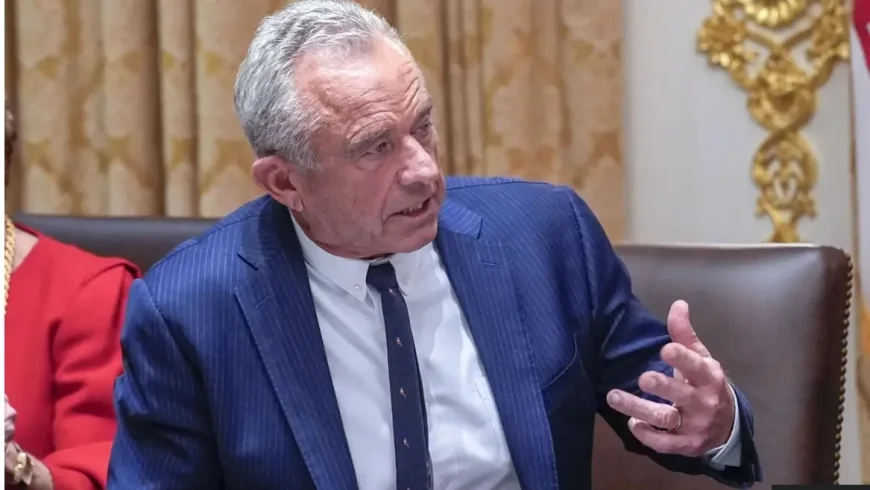
In June, Health Secretary Robert F. Kennedy Jr., a vaccine skeptic, fired all members of the ACIP and replaced them with his own people—many of whom have been critical of the vaccine.
At a meeting in September, where the hepatitis B vaccine was discussed at birth, committee member Robert Malone expressed concern about parents who were "uncomfortable with this medical procedure being unilaterally administered at birth without full information."
During the meeting, another committee member, Evelyn Griffin, asked, "Are we asking our children to solve problems for adults?"
Kennedy himself has questioned the safety of the hepatitis B vaccine and downplayed the risk of contracting the virus, claiming it is "not easily spread"—although research has shown it can also spread through indirect contact, such as sharing toothbrushes and razors.
Mr. Ellis said, "The virus doesn't discriminate. It's a problem for everyone."
Other critics have argued that children should only be vaccinated at birth if their mothers test positive for the virus. But doctors have said this approach is unsafe, pointing out that some people don't receive reliable treatment and others may test falsely negative for hepatitis B.
Health experts also worry that ending universal vaccination will prevent more parents from getting hepatitis B shots—and that insurance coverage could be compromised if companies don't consider it necessary to provide the shots.
For Mr. Ellis, it's not hard to imagine the impact the ACIP's vote could have on some children who don't receive the vaccine.
He said, "I'm living proof of what can happen. I wasn't vaccinated at birth. I was vaccinated later, and I still got hepatitis B."
What's Your Reaction?
 Like
0
Like
0
 Dislike
0
Dislike
0
 Love
0
Love
0
 Funny
0
Funny
0
 Angry
0
Angry
0
 Sad
0
Sad
0
 Wow
0
Wow
0